
Freight Forwarding
Seemleius freight forwarding manages export and import shipments from India by air, sea and road — planned, documented and cleared under one coordinator.
India is one of the world’s great trading economies, and every significant consignment that leaves or enters the country passes through a web of bookings, documentation and regulatory checkpoints. Seemleius freight forwarding is the service that holds that web together — managing your shipment from collection to final delivery with one coordinator accountable throughout.
We arrange air, sea and road freight for exporters, importers and businesses moving cargo within India and across international borders. The mode we recommend is the one that suits your cargo and your timeline, not the one that is easiest for us to arrange.
India’s freight gateways
We work across India’s major logistics hubs. For sea freight: Nhava Sheva (JNPT), Mundra, Chennai Port, Cochin and Kolkata. For air freight: Chhatrapati Shivaji Maharaj International (BOM), Indira Gandhi International (DEL), Kempegowda International (BLR), Chennai (MAA) and Hyderabad (HYD). Road freight connects manufacturing clusters — Pune, Surat, Ludhiana, Coimbatore, Faridabad — to these gateways and to land borders.
Services within freight forwarding
Air freight
Time-critical or high-value cargo moving fast through India’s international airports — see our air freight service.
Sea freight
Cost-effective FCL and LCL shipments from India’s major ports to global markets — see sea freight.
Road freight
Overland movements connecting factories, warehouses and ports across the subcontinent — see road freight.
Customs clearance
Shipping bills, bills of entry and all supporting paperwork handled so freight clears without delay — see customs clearance.
How we manage your shipment
- Understand the cargo. We start with what is moving: commodity, HS code, weight, dimensions, origin and destination, and the date it needs to arrive. This shapes the routing and documentation plan.
- Recommend and quote. You receive a clear freight recommendation — mode, route and realistic transit time — with the trade-offs explained plainly. No guesswork, no optimistic estimates.
- Book, document and collect. Space is confirmed, all export documentation is prepared in advance, and the cargo is collected from your premises or a nominated point.
- Monitor and deliver. Your coordinator tracks the shipment through each handover and clearance point, keeping you informed and resolving anything that arises before it becomes a delay.
Exporters and importers we work with
Our freight forwarding clients include manufacturers shipping finished goods, trading companies moving bulk commodity, pharmaceutical exporters managing temperature-sensitive logistics, and importers bringing in raw materials and capital equipment. The service scales: a single consignment gets the same coordinator discipline as an ongoing programme.
If you are setting up a freight arrangement for the first time, or unhappy with your current forwarder, request a quote and a coordinator will map your route and talk through the options.
How a freight quote is actually built
If you have never bought freight before, the first quote you receive can look like a puzzle — a dozen line items where you expected one number. Every honest quote out of India breaks into five parts, and understanding them puts you in charge of the conversation with any forwarder, including us.
- Origin haulage. Getting the cargo from your factory, workshop or godown to the port or airport. A Coimbatore consignment routed through Cochin pays far less for this leg than the same cargo trucked up to Nhava Sheva.
- Origin terminal and documentation charges. Terminal handling, shipping bill filing and the carrier’s documentation fee. These are largely fixed, which is why very small consignments feel proportionally expensive.
- The main carriage. The ocean or air leg itself. This is the piece that moves with the market — firm in the August-to-October export peak, softer in the quieter months that follow.
- Destination terminal charges. Handling at the arrival port or airport. On consolidated sea freight these can be substantial, and a quote that leaves them out is not a cheap quote — it is an incomplete one.
- Destination clearance and delivery. Import customs at the far end and the final truck to the door, where you have asked for door delivery rather than port-to-port.
When you compare quotes, compare all five parts against each other. The oldest trick in this industry is a low headline rate with the destination side left blank; the difference reappears later as an invoice your consignee cannot refuse to pay. We itemise everything we can price and flag anything we cannot, so the number you plan around is the number you settle.
The paperwork that gets cargo out of India
India documents its trade thoroughly, and the sequence matters as much as any single form. For a commercial export, the working set looks like this:
- An Importer-Exporter Code (IEC) from DGFT — the ten-digit registration every commercial shipper needs. It is applied for online, usually issued within days, and never expires.
- An AD code registration at the port of export, which links your bank into the customs system so export proceeds can be reconciled against shipments.
- The commercial invoice and packing list, which must agree with each other to the piece and to the rupee.
- The shipping bill, filed electronically on ICEGATE — the national customs gateway — before cargo can be examined and given Let Export Order.
- For the road leg to the gateway, an e-way bill generated under GST rules against the invoice.
At the port itself, filings go through a licensed customs house agent (CHA). We coordinate the CHA as part of the service and reconcile the documents against each other before anything is submitted, because a mismatch caught at a desk costs nothing while the same mismatch caught by an examining officer costs days of storage.
Importing runs the mirror image: a bill of entry instead of a shipping bill, duty assessment instead of export incentives, and KYC verification of the consignee. First-time importers are often surprised that goods cannot simply be collected on arrival — clearance is a process with its own clock, and it starts before the vessel berths or the flight lands.
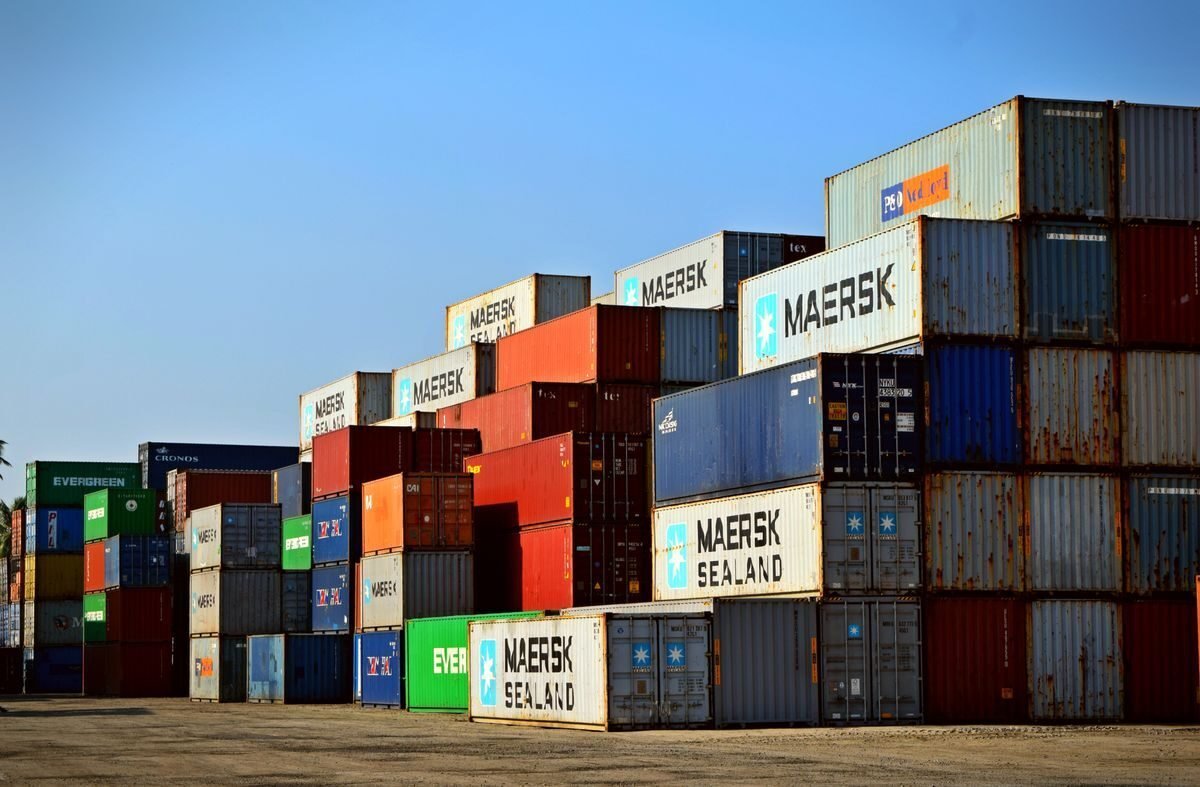
Sea, air or road — the honest trade-offs
| Question | Sea | Air | Road |
|---|---|---|---|
| Best for | Weight and volume on a sensible budget | Deadlines and high-value goods | Domestic legs and neighbouring countries |
| Typical transit from India | One to six weeks depending on lane | Two to seven days door to door | Hours to about a week |
| Cost behaviour | Lowest per tonne; fixed charges bite on tiny loads | Highest; priced on chargeable weight | Distance, vehicle type and return-load availability |
| Watch out for | Cut-off dates and destination charges | Volumetric weight on light, bulky cargo | Checkpost delays without valid documents |
Most shipments answer the mode question in seconds once cargo, budget and date are on the table. The genuinely close calls are where a forwarder earns its keep — a two-hundred-kilogram consignment with a ten-day deadline, say, where the right answer may be a sea-air combination through a Gulf hub rather than either mode on its own. Because we sell all three modes, we have no reason to steer you towards the wrong one.
Seasons change the answer
Freight from India is not priced or scheduled evenly across the calendar, and a plan that ignores the seasons will meet them the hard way.
The south-west monsoon, June through September, rarely stops a modern port outright, but it slows haulage over the ghats, complicates anything stored in open yards, and makes weather-resistant export packing worth every rupee. August to October is the export peak, when factories ship ahead of European and North American year-end retail — vessel space tightens and rates firm on the main east–west lanes. Diwali pulls drivers and loading crews home for a fortnight, thinning road capacity just when export volumes are highest. And early in the new year, Chinese New Year ripples through every Asian transhipment hub, stretching connections that looked comfortable when they were booked in December.
None of this is a reason to postpone a shipment. It is a reason to book earlier than feels necessary — two to three weeks ahead for sea freight in season, longer for anything oversized or temperature-controlled.
What happens at the far end
A shipment is not finished when the vessel sails or the aircraft rotates off the runway at BOM. The arrival end has its own sequence, and it is the half of the journey that first-time shippers think about least — usually because it happens in a country where they have no contacts and no feel for how things work.
For commercial cargo, the destination steps run: arrival notice from the carrier, import clearance filed by the local broker, duties and taxes settled, terminal release, then delivery to the consignee’s premises. Where the buyer handles their own import — common on established trading relationships — our job ends with clean documents reaching them before the cargo does, because a bill of lading that arrives after the vessel is a classic and completely avoidable source of storage charges.
Where you have asked for door-to-door, our destination partner takes the file the moment the shipment departs India. That partner unloads, delivers to the final address and, on household and office moves, can unpack and set up as well. If the receiving premises are not ready — a warehouse lease starting a fortnight after the vessel arrives, say — short-term storage at the destination bridges the gap, and it is far cheaper arranged in advance than improvised at a congested terminal. Ask about it at booking rather than mid-voyage; storage booked as part of the plan costs a fraction of demurrage paid as a penalty.
Small consignments and first orders
A meaningful share of our freight work comes from businesses shipping their first commercial order: a Jaipur furniture maker with a trial pallet for a European retailer, a Tirupur garment unit sending samples ahead of a season, a Pune components workshop with one crate for an overseas assembly line. The consignment may be small; the stakes are not, because a first order that arrives late or damaged is usually also a last order.
For this kind of shipment we default to consolidated services — sharing container or aircraft space with other cargo — and we say plainly when a load is too small for freight to make sense at all. What a first-time shipper actually buys from us is less the transport than the sequence: registrations checked before booking, documents reconciled before filing, and one coordinator who has run the route before answering the phone throughout. Twenty-plus years of moves have taught us that the second shipment is always easier — the first one just has to be done right.

Why not just book with the carrier directly?
You can, and for a large shipper with a traffic department it sometimes makes sense. For an individual consignment or a growing business, the arithmetic tends the other way. A forwarder buys space across many carriers and lanes, so a single shipment rides on negotiated terms it could never command alone. More importantly, a carrier sells you one leg of a chain that has seven or eight; when the trucker, the terminal, the line and two customs administrations each own a piece of the journey, someone still has to own the whole of it. That is the job you are actually hiring: one accountable person who has run the route before, knows which delays are normal and which are warnings, and picks up the phone when the plan needs changing. On the day everything goes smoothly, the difference is invisible. On the day it does not, it is the entire service.
Questions first-time shippers ask us
Do I need my own IEC for a one-off export?
For a commercial shipment, yes — the IEC identifies the exporter of record, and it must be your registration rather than your forwarder’s. It is inexpensive, applied for online, and we will tell you exactly what the application needs before you start. Personal and household shipments travel under different customs provisions and do not need one.
Can you handle only part of the chain?
Yes. Some clients arrive with ocean freight already booked and need clearance and haulage around it; others want everything managed from factory floor to foreign doorstep. Scope is agreed before the quote is issued, so nothing is assumed and nothing is double-charged.
How will I know where my cargo is?
Your coordinator tracks each leg — vessel position, flight status, truck movement — and contacts you when something changes or needs a decision. You will not be left refreshing a carrier portal at midnight wondering what a status code means.
What happens if customs raises a query?
Queries are a normal part of Indian clearance and most resolve with a document or a clarification inside a day. The coordinator manages the exchange with the examining officer and keeps you in the loop, so a routine query stays routine instead of turning into a stranded container accruing charges.
Is there cargo you will not carry?
We do not handle restricted or prohibited commodities, and anything regulated — chemicals, batteries, foodstuffs — moves only with its certificates in order. If a commodity needs an approval you do not yet hold, we say so at the quoting stage, not at the port gate.
Explore Freight Forwarding in detail
Air Freight
Air freight from India for time-critical or high-value consignments — booked, documented and cleared through India’s major international airports.
Learn moreCustoms Clearance
Indian customs clearance for exports and imports — shipping bills, bills of entry, IEC compliance and ICEGATE filing handled so…
Learn moreProject & Heavy Cargo
Project and heavy cargo from India — oversized industrial loads, out-of-gauge shipments and multi-leg project freight managed as a coordinated…
Learn moreRoad Freight
Road freight across India and to land borders — coordinating factory-to-port movements, cross-state consignments and multi-mode last-mile delivery.
Learn moreSea Freight
Sea freight from India’s major ports — FCL and LCL shipments planned, booked and cleared from Nhava Sheva, Mundra, Chennai,…
Learn more