
Sea Freight
Sea freight from India’s major ports — FCL and LCL shipments planned, booked and cleared from Nhava Sheva, Mundra, Chennai, Cochin and Kolkata.
India’s port infrastructure handles hundreds of millions of tonnes of trade every year, and sea freight remains the most cost-effective way to move bulk and large-volume cargo to international markets. Seemleius sea freight gives exporters and importers a coordinated service from booking through to clearance at the destination port — covering FCL and LCL loads out of India’s major gateways.
We work from Nhava Sheva (JNPT) and Mundra on the west coast, Chennai Port and Cochin on the south and south-west, and Kolkata on the east. The port we recommend is the one that makes sense for your cargo’s origin and destination — not the nearest terminal to our office.
FCL or LCL — choosing the right load type
Full-container loads (FCL) are the right answer when your cargo fills a 20-foot or 40-foot box, or when you want your goods sealed in a dedicated container without sharing with other consignments. Less-than-container loads (LCL or groupage) consolidate your cargo with others heading to the same destination — cost-effective when the volume does not justify a full box. We will tell you honestly which suits your shipment.
What the service includes
Port selection & routing
The departure port, shipping line and route chosen to balance transit time and cost for your cargo.
Container booking
FCL and LCL space confirmed with shipping lines, with reefer options for temperature-sensitive goods.
Shipping documentation
Bill of lading, packing list, certificate of origin and all supporting export documents prepared and submitted.
Customs at both ends
Indian export customs (shipping bill) and destination import clearance coordinated so the cargo clears without holds.
Export categories we handle
- Engineering goods, auto components and machinery from Pune, Chennai and NCR manufacturing clusters
- Textiles, garments and home furnishings from Surat, Tirupur, Ludhiana and Panipat
- Chemicals and petrochemicals from JNPT hinterland and Gujarat
- Rice, spices and processed food exports from Andhra Pradesh, Punjab and Kerala
- Granite and natural stone from Rajasthan and Karnataka quarries
How a sea freight shipment runs
- Describe the cargo. Commodity, HS code, volume or weight, origin, destination and required arrival window. This shapes port, load type and routing.
- Quote and confirm the route. You receive a clear quote with transit time, port-to-port charges and any surcharges itemised. Vessel schedules are explained in plain terms.
- Stuff, seal and document. The container is packed or consolidated, sealed and fully documented before it reaches the port gate.
- Track to port of discharge. We monitor vessel position and manage arrival, customs clearance and handover to the destination party.
Sea freight rewards planning — cut-off dates, vessel schedules and customs filing windows all have lead times. The earlier you come to us, the more routing options are open. Request a sea freight quote and we will match the option to your cargo.
Choosing the load port — it is rarely the nearest one
India’s gateways have personalities, and the right one for a shipment is a function of where the cargo starts, where it is going, and which services actually call. A short field guide from the booking desk:
- Nhava Sheva (JNPT) carries the deepest choice of direct services to Europe, the Mediterranean, the US East Coast and the Gulf. The hinterland reaches Pune, Nashik and much of Maharashtra by road, and north India by rail through inland container depots such as Tughlakabad and Dadri — a Ludhiana exporter can gate cargo into an ICD and see it sail from the west coast without touching a highway.
- Mundra has grown into JNPT’s genuine rival: modern terminals, strong rail connectivity to the north, and dense Gulf and Far East coverage. For Gujarat and NCR cargo it is frequently the faster gate-to-vessel option.
- Chennai and Kattupalli serve the southern manufacturing belt — automotive above all — with direct strings to South East Asia and good coverage eastwards.
- Cochin suits Kerala and the south-west: fewer direct deep-sea calls, so much of its long-haul cargo connects over Colombo — a transhipment that is entirely routine, though each connection adds a few days and a small margin of schedule risk.
- Kolkata serves the east with draft limitations that keep the largest vessels away; cargo often feeders to a hub. For eastern-India origins the road saving still usually wins.
Routing is where a forwarder either adds value or quietly costs you it. When we propose a port, the reasoning comes with it — and when two options are genuinely close, you see both priced.
Reading a sea freight quote without being caught out
Ocean quotes reward suspicion in one specific place: the destination side of an LCL shipment. The consolidation model concentrates origin competition on the headline rate while destination deconsolidation charges — levied per cubic metre at the far-end warehouse — vary enormously between agents and lanes. An LCL rate that looks improbably cheap out of India often is; the balance is waiting at the destination CFS with your consignee’s name on it. We quote LCL with the destination side estimated in writing wherever the lane allows, precisely because this is the industry’s favourite hiding place.
On FCL, the picture is cleaner. The recurring lines are the ocean rate itself, terminal handling at both ends, the bill of lading fee, and — the two worth respecting — demurrage and detention terms: the free days allowed for the container at the port and in your possession. The rate is a fact; the free time is negotiable and frequently worth more than a small rate saving, especially for importers whose clearance or unloading might run slow. It is the first thing we check on a comparison quote, and the first thing a cheap quote tends to have quietly cut.
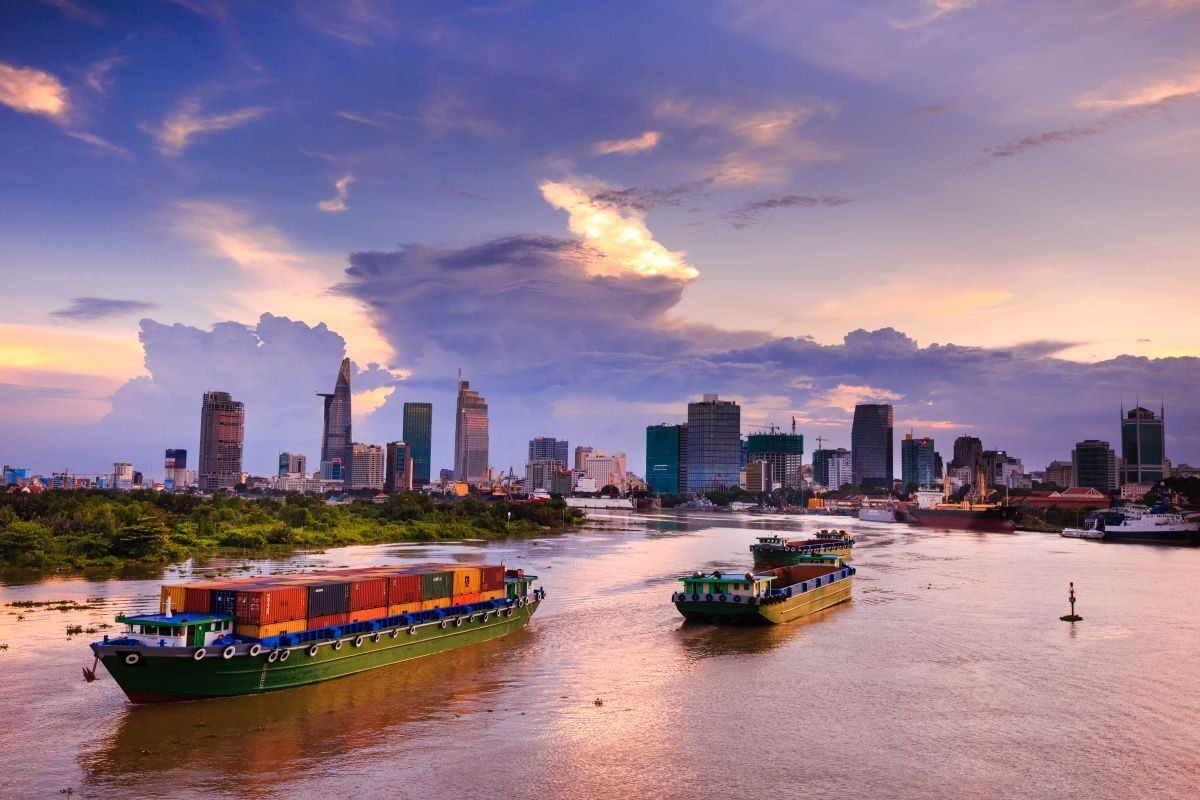
Cut-offs, VGM and the clock before sailing
Sea freight runs on deadlines that precede the vessel, and missing any one of them rolls the cargo a week. Working backwards from departure: the vessel has a gate cut-off, before which the container must be inside the terminal; a documentation cut-off, by which the shipping instruction and customs formalities must be complete; and a VGM deadline — the verified gross mass declaration required under international safety rules before any container is loaded. Around these sit the practical steps: empty container picked up from the yard, hauled to the factory for stuffing, sealed, e-way billed to the port, shipping bill cleared on ICEGATE, Let Export Order obtained, gate-in.
Planned honestly, an FCL export needs roughly a week from booking to sailing when documents are ready, and two to three weeks of lead time in busy season to hold space at a sensible rate. Transit itself depends on the lane: Gulf ports sit under a week from the west coast; South East Asia around one to two weeks from Chennai; north Europe three to four weeks from Nhava Sheva; the US East Coast four to five. Add the destination’s clearance and delivery days before promising anyone a date — port-to-port and door-to-door are different numbers, and mixing them up is how arrival commitments get broken.
Twenty-foot or forty-foot — sizing an FCL
Once a shipment justifies its own container, the size question follows, and the answer hinges on whether your cargo runs out of weight or space first. Dense commodities — stone, metal castings, machinery, rice — hit road-legal and container weight limits long before a box looks full, which is why a twenty-footer is the dense-cargo standard: the same tonnes in a forty would travel with air above them at a higher rate. Voluminous cargo — furniture, garments on hangers, insulation, finished plastic goods — fills the cube long before the scale complains, and there the forty-footer’s economics shine, carrying roughly double the volume for considerably less than double the ocean rate. High-cube variants add another foot of height for tall or awkward pieces. The trap to avoid is paying for a box the road leg cannot legally carry full; Indian axle-load rules bind the landside journey, so we size the container against the whole route’s limits, not just the ship’s.
Seasonality on the water
Ocean freight has weather, and it also has tides of demand that behave like weather. Through the monsoon months the west coast keeps working — the ports were built for it — but pilotage and anchorage operations occasionally pause on the roughest days, and cargo that sits in open yards needs packing that assumes horizontal rain. The demand tide matters more: from late summer into autumn, space out of India tightens as shippers worldwide stock for year-end, carriers push general rate increases, and the occasional blank sailing — a scheduled voyage simply cancelled — can lift a fortnight out of a lane’s capacity with a week’s notice. Early in the calendar year the pattern inverts around Chinese New Year, when Far East networks pause and transhipment connections through Singapore, Port Klang and Colombo stretch.
You cannot schedule around all of it, and you do not need to. What works is booking against the season — earlier and firmer in the tight months — and building arrival promises on the pessimistic edge of the transit range, so the surprises land inside the plan instead of on top of it.
What ships well by sea — and what needs forethought
Sea freight is the default for weight and volume: machinery, furniture, granite, project materials, packaged foods, tiles, auto components, full household consignments. A few categories deserve forethought rather than fear:
- Anything on wooden packing — pallets, crates, skids — must use ISPM-15 treated and stamped timber for most destinations; untreated wood gets consignments quarantined or re-exported at the owner’s cost.
- Temperature-sensitive cargo rides in reefer containers with the setpoint written into the booking; the discipline is in pre-cooling and stuffing quickly, not in the box itself.
- Cargo that can rust — machined surfaces, steel, electronics — needs desiccants and barrier wrapping, because a container crossing the Arabian Sea breathes humid air twice a day.
- Personal vehicles and household containers carry documentation requirements of their own at both ends; they ship by sea constantly, but the file has to be built before packing day, not discovered at the port.
Sea freight questions we hear weekly
How early should I book for a fixed arrival date?
Work backwards: delivery and clearance days at destination, the lane’s transit on its slower edge, a week from booking to sailing, and buffer for the season. For a Europe arrival in a specific week, that usually means engaging five to six weeks ahead; for the Gulf, three to four is comfortable outside peak.
Is LCL safe for fragile goods?
It can be, with packing that assumes shared space and multiple handlings — export-grade cartons, palletisation and corner protection. Where a consignment is fragile and valuable both, we often recommend stretching to a small FCL instead; a sealed box you control end to end removes most of the handling risk at surprisingly modest extra cost on some lanes.
Is a transhipment service worse than a direct one?
Not inherently. A well-run connection over Colombo, Singapore or Jebel Ali adds a few days and one more variable, and in exchange often offers a better rate or a sailing that actually fits your week. What matters is knowing which you are buying — we mark routings as direct or transhipment on every quote, because a “fourteen-day” service that quietly relays over a congested hub is where broken promises come from.
Who receives the cargo at the destination port?
Whoever the bill of lading says — which is why we confirm consignee details, notify parties and the terms of release with you before documents are issued. Door-to-door shipments are met by our destination partner, who clears and delivers; port-to-port shipments hand over to your consignee’s appointed agent at the terminal.
When do I receive the bill of lading?
After the vessel sails — the shipped-on-board date is confirmed, the draft is checked against your instructions, and originals are issued or a seaway bill released electronically, depending on how the sale is structured. Check the draft carefully when we send it: names, notify party, cargo description and container numbers, because amending a bill after issue costs time and carrier fees that checking never does.
Can you ship a full household in a container?
Constantly — it is one of the most common uses of a twenty-foot box out of India. Household sea moves run with our packing crews at origin and a destination partner at the far end, with this desk managing the ocean leg, the survey-to-delivery process described on our household moving pages.