
India to UAE: the shortest international corridor we move on
Mumbai to Jebel Ali is 5–7 sailing days and 4-hour flights run daily — what the shortest India-origin international corridor looks like, and where families occasionally trip up.
ReadPractical guidance on Incoterms, HS classification, customs documentation, freight modes and supply chain planning — written by the team that handles these shipments every day.

Mumbai to Jebel Ali is 5–7 sailing days and 4-hour flights run daily — what the shortest India-origin international corridor looks like, and where families occasionally trip up.
Read
A week-by-week shape of the first 60 days after landing abroad — survival week, settling-in services, the homesickness curve and the paperwork rhythm.
Read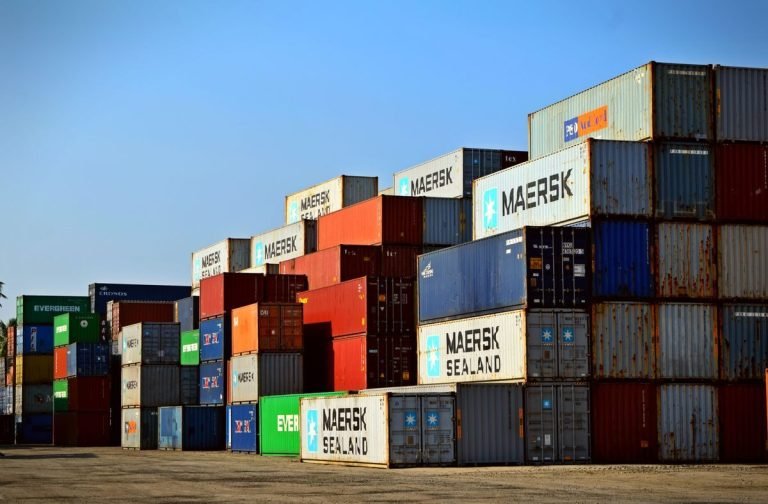
You do not need a full container to ship by sea. LCL consolidation lets small exporters share space and pay only for what they use — with a few trade-offs to understand.
Read
The India–South Africa corridor in 2026 from our Mumbai coordinators’ perspective — Durban’s 165-year-old Indian community, the Critical Skills and Retired Person visa routes, the SARS clearance process, and how the consignment to Durban differs from one to Johannesburg or Cape Town.
Read
A first-hand walkthrough of pack-day in an Indian household from our crew lead’s perspective — the early arrival, the materials staging, the room-by-room sequence, the kitchen as the longest job, and the inventory that travels with the consignment.
Read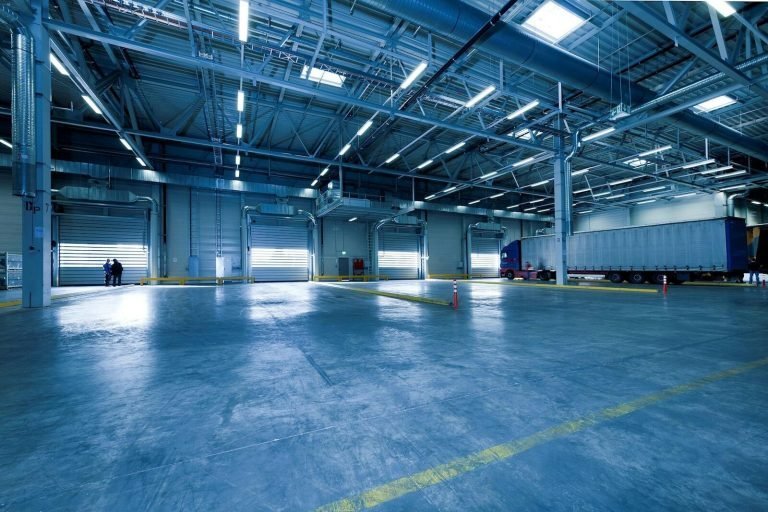
Not everything fits in a container. When cargo is too big, too heavy or too awkward, breakbulk and specialised equipment take over — and the planning changes completely.
Read
How Indian tech professionals actually land in Stockholm, Gothenburg and Malmö in 2026 — the ICT vs Blue Card vs standard permit choice, the Personnummer waiting period that shapes the first two months, and what to ship versus buy on arrival.
Read
Three Indian export acronyms explained in plain language by our Mumbai coordinators — the AD code that links your bank to customs, the GST LUT that waives integrated tax, and the FEMA Form A2 that authorises foreign-currency payments around your move.
Read
Refrigerated containers open up perishable exports, but they carry their own rules and costs. Here is when a reefer is the right call and how to ship one well.
Read
A practical guide to the India–Malaysia corridor from our Chennai and Kochi coordinators: ATIGA preferential tariffs for commercial cargo, MM2H thresholds for long-stay families, the Tamil community context, and how Port Klang clearance actually works in 2026.
ReadThese notes come out of the work — the questions customers ask on the phone, and the mistakes we spend our week correcting on other people’s shipments.
Freight is a trade where the expensive errors are quiet ones. A container does not usually go missing; it sits, because a code on a document did not match a description, or because a certificate that takes two days to obtain was left until the vessel had sailed. Nobody writes about that, because it is unglamorous and because the parties who caused it would rather not. So we write about it.
The material here is aimed at two readers who rarely get the same article. One is an exporter, importer or trader in India who wants to understand what their forwarder is doing and where the risk actually sits. The other is a family or a company planning a move abroad, who has discovered that the shipping is the easy part and the paperwork is not. Both are dealing with the same customs systems and the same conventions, so the ground under the two is more shared than it looks.
Shipping bills and bills of entry, HS classification, certificates of origin, and the partner-agency clearances that catch people out — FSSAI, BIS, plant and animal quarantine. Most of what delays a shipment lives in this category, and almost all of it is preventable before the cargo moves.
Customs clearanceWhen air genuinely beats sea once the whole chain is counted, why a direct sailing is not always the faster one, what a transhipment call at Colombo or Jebel Ali does to a schedule, and how monsoon and festival seasons move both capacity and price on Indian lanes.
Coverage and trade lanesCorridor by corridor: what a destination’s customs actually asks for on used household goods, which countries treat vehicles as effectively un-importable, and where pet movement needs a titre test and a waiting period planned months ahead.
Destination guidesThe part of the trade that is least understood and most expensive to learn the hard way: why carrier liability is capped by convention rather than by the value of your goods, what a claim actually requires, and how an inventory you signed becomes the document everything turns on.
Common questionsTerms that appear on quotes and invoices, explained the way we would explain them on the phone. If a forwarder cannot define these for you, that is worth noticing.
The eleven three-letter rules — EXW, FOB, CIF, DAP, DDP and the rest — that say where the seller’s responsibility ends and the buyer’s begins. They decide who pays each leg, who carries the risk at each point, and who is responsible for clearing customs. Most disputes between a buyer and a seller about freight are, underneath, a disagreement about which Incoterm was agreed. The current edition is Incoterms 2020.
The Harmonised System code that classifies a commodity for customs. It sets the duty rate, and it determines whether a partner agency needs to see the shipment. Getting it wrong is not a clerical slip: it produces either an overpayment nobody refunds automatically, or an underpayment that becomes a demand plus penalty later, recorded against your importer profile.
The shipping bill is the export declaration filed in India through ICEGATE; the bill of entry is its import counterpart. They must agree with the commercial invoice, the packing list and the transport document, because customs reads them against one another. A weight or a consignee name that differs between documents is one of the commonest reasons a consignment is held.
The authorised dealer code that ties an exporter’s bank account to the port of export. It has to be registered at each port you ship from before a shipping bill can be filed there. Discovering it is not registered on the morning the cargo reaches the port is a delay that costs a sailing.
A full container load is your cargo alone, sealed at origin and opened at destination. Less than container load is space bought by the cubic metre in a shared box, consolidated and deconsolidated at both ends. LCL is usually cheaper below roughly thirteen to fifteen cubic metres; above that a full container is normally both cheaper per unit and handled less.
What an airline actually bills on: the greater of the shipment’s real weight and its volumetric weight, where volume is converted to a weight at a standard divisor. Light bulky cargo therefore pays on its size. It is the reason how a shipment is packed and palletised changes the invoice, and the reason we check it before quoting.
Two different charges people routinely confuse. Demurrage accrues when a container sits inside the port or terminal beyond its free days. Detention accrues when the container has left the port but has not been returned empty to the carrier in time. Both run daily, both escalate, and both are usually the visible cost of a documentation problem upstream.
The transport contract, and — for an original ocean bill of lading — a document of title, meaning whoever holds it controls release of the cargo. This is why originals are couriered carefully and why a telex release or a sea waybill is used when speed matters more than negotiability. An air waybill is not a document of title, which is one practical difference between the two modes.
The international standard for wooden packaging — pallets, crates, dunnage — requiring heat treatment or fumigation and a stamped mark. Countries with strict biosecurity, Australia and New Zealand among the strictest, will hold or destroy non-compliant wood at the importer’s cost. It is a cheap thing to get right and an expensive thing to get wrong.
The concession most countries offer on used personal and household effects belonging to someone moving there, provided the goods were owned and used for a qualifying period and are imported within a window of arrival. The rules and the evidence differ by country. We confirm what a destination requires before a shipment sails — though the residence status itself is a matter between you and your own adviser.
International carriage sits under conventions that cap what a carrier owes if goods are lost or damaged — the Hague-Visby Rules at sea and the Montreal Convention in the air — and the cap is calculated by weight, not by what the goods are worth. A heavy, cheap item may be fully covered; a light, valuable one will not be. Separate transit insurance exists to close that gap.
Two Indian export incentive mechanisms that refund embedded taxes and duties on exported goods. They are claimed through the shipping bill, which means the claim has to be right at the moment of export rather than reconstructed afterwards. Exporters leave real money behind every year by not flagging eligibility before filing.
A document stating where goods were produced, issued by a chamber of commerce or an authorised body. Buyers ask for it, letters of credit require it, and trade agreements depend on it — a preferential duty rate is only available if origin can be evidenced to the standard the agreement sets. An inaccurate origin declaration is treated as a compliance matter, not a typing error.
The carrier owns the vessel or the aircraft. An NVOCC issues its own bills of lading and buys space from carriers in bulk. A freight forwarder arranges the movement and the compliance on your behalf and may act as either. The distinction matters when something goes wrong, because it determines who your contract is actually with and which liability regime applies.
A customs-controlled facility where imported goods can be stored before duty is paid. Duty falls due when the goods are cleared for home consumption, so the mechanism is a cash-flow tool as much as a storage one — useful when stock is landed ahead of demand, or when a consignment arrives before the paperwork that releases it is complete.
A container freight station handles the stuffing and de-stuffing of shared-container cargo near a port. An inland container depot performs port functions away from the coast, so cargo can be cleared closer to where it is produced or consumed. Both add a handling step and a cost line, and both are frequently where an unexplained charge on an invoice comes from.
A standard dry box comes as a twenty-foot or forty-foot unit, with a high-cube forty offering extra height. Beyond those, a reefer is temperature-controlled, an open-top takes cargo craned in from above, and a flat-rack carries loads too wide or too heavy for walls. Choosing the wrong equipment is discovered at loading, which is the worst moment to discover it.
The pre-move assessment that establishes volume and produces the itemised list of what is being shipped. It is the basis of the quote, the customs declaration and any insurance claim. This is why a mover who prices without surveying is not saving you time — they are deferring the disagreement to the day the lorry arrives.
The guides here are written by the coordinators who do the work. If you would rather just ask, tell us where you are going and we will come back with a surveyed, itemised quote.
Your reference is —. A coordinator will be in touch shortly. Prefer to talk now? Call our team.
Send us the cargo, the origin and destination, and the date you need it there. We will come back with a practical routing and a clear quotation — not a form letter.
May we use analytics and advertising cookies to understand site use and measure campaigns? The site and enquiry forms work if you decline. Cookie policy