
Moving to New Zealand
The India–New Zealand corridor is one of the longest sea-freight routes in the world, ending at one of the most thorough biosecurity inspections. Seemleius manages both ends from India.
- 20+ years moving households & cargo
- 184 countries destination corridors covered
- In-house customs clearance filed by our own team
- One coordinator from quote to delivery
Moving from India to New Zealand is a journey of real commitment — geographically, logistically and personally. The sea transit from Indian ports to New Zealand runs five to seven weeks, placing it among the longest of any corridor we operate. At the other end waits the Ministry for Primary Industries (MPI), whose biosecurity inspection is arguably the most comprehensive of any destination country in the world. These are the two defining facts of this corridor, and every good plan for an India–New Zealand move is built around them.
New Zealand draws Indian skilled migrants under its Skilled Migrant Category and Green List pathways, students heading to Auckland University of Technology, Victoria University of Wellington and the University of Canterbury, and professionals on employer-sponsored work routes in healthcare, engineering and agriculture. We are a relocation partner, not an immigration adviser. For many, New Zealand represents a smaller, quieter version of the lifestyle that draws people to the broader Australasia region — and the long journey to get there, carefully planned, is exactly that. The Indian community in New Zealand now numbers roughly 240,000 people — close to five per cent of the population — with strong Punjabi, Gujarati, Malayali and Tamil concentrations in Auckland suburbs such as Sandringham, Manukau and Papatoetoe.
Starting at the Indian end
An India–New Zealand household or commercial move begins with Indian Customs. Goods leaving India on a long-term or permanent basis must be export-declared under the correct customs category, and a shipping bill filed through ICEGATE at the relevant gateway port. An Authorised Dealer (AD) code link to the exporting bank is mandatory, FEMA compliance applies to the underlying transfer, and for commercial movements a GST LUT covers the zero-rated export. For most Indian origin cities, the gateway is determined by geography: Chennai Port for Bengaluru, Hyderabad and the south; Nhava Sheva (JNPT) for Mumbai, Pune and western India; Mundra for Gujarat; Cochin for Kerala and the southwest. The Indian export documentation feeds directly into the New Zealand Customs Service (NZCS) import declaration, so accuracy at the origin end is not merely an administrative formality — it is the foundation of a clean clearance at the other end.
Sea and air routes — what to expect
There is no direct shipping or commercial passenger service between India and New Zealand, so every movement is a transhipment journey. Containers from Nhava Sheva, Mundra and Chennai typically tranship through Singapore or Tanjung Pelepas before continuing to Auckland (Ports of Auckland) or Lyttelton for South Island delivery — a thirty-five to forty-five day port-to-port window in normal conditions. For passengers, BOM, DEL, BLR and MAA all connect to AKL via Singapore, Sydney or Hong Kong, with effective flight times of sixteen to eighteen hours; Air New Zealand routes via Singapore and Air India routes via Singapore or Hong Kong are the established options. Knowing the realistic routing — not the theoretical great-circle distance — is the first step in setting a workable timeline.
MPI biosecurity — the defining challenge of this destination
New Zealand’s biosecurity inspection regime is not simply strict — it is thorough in a way that catches people who have moved to other destinations without difficulty. Every India-origin container is x-rayed and a high proportion are physically opened and searched. MPI inspectors examine goods for anything organic, wooden, soiled or containing plant or animal material. Indian households, in particular, carry a higher than average proportion of biosecurity-sensitive items: solid teak, sheesham and rosewood furniture; jute, cane and natural-fibre goods; dried foods and spices; handicrafts, wooden religious items and traditional textiles. Vacuum cleaners must be opened and cleaned of every trace of dust; garden tools, outdoor furniture and bicycles must be sterilised; wooden idols and carved items are individually inspected. Items that are not declared, not cleaned or not correctly treated are held, fumigated at the owner’s cost, or refused entry to New Zealand. We go through your household contents from an MPI perspective before packing begins — not when the container arrives in Auckland.
New Zealand Customs — the paperwork on arrival
Personal effects clear under the NZCS 218 Unaccompanied Personal Baggage declaration, which we prepare on your behalf and lodge against your passport details and arrival date. Genuine used household goods that have been owned and used for over a year qualify for concessionary entry; new items and gifts attract the standard fifteen per cent Goods and Services Tax (GST) on assessed value plus any applicable duty. Commercial cargo clears against an NZBN-linked declaration with full tariff treatment. The NZCS filing and the MPI biosecurity assessment run in parallel, and a clean clearance depends on both being right.
An overview of the corridor
Indian export clearance
ICEGATE shipping bill, AD code, FEMA compliance and — where applicable — GST LUT prepared at your Indian gateway port, with accurate commodity descriptions that feed cleanly into the New Zealand import filing.
Long-transit packing
Export-standard packing rated for a five-to-seven-week sea journey via Singapore transhipment, with moisture protection and robust cushioning for the full distance.
MPI biosecurity preparation
Your goods reviewed against current MPI requirements before departure from India, with high-risk items identified, cleaned, sterilised or treated in advance.
One coordinator, both ends
A single point of contact who manages the move from the Indian packing day through NZCS 218 lodgement, MPI clearance and delivery at your New Zealand address.
Destinations we serve from India
Every New Zealand move from India is managed to a specific destination. The three main centres each have their own character and logistics profile:
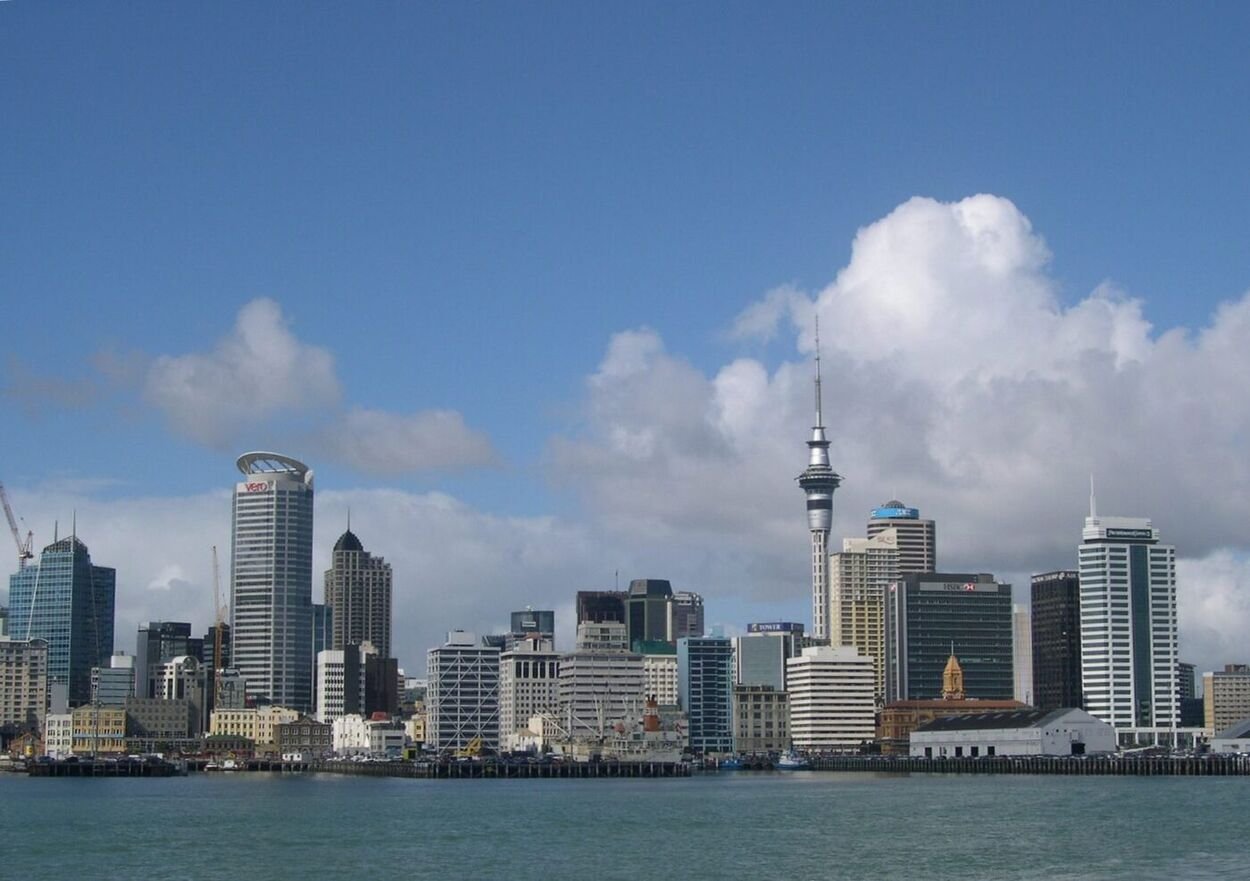
- Auckland — New Zealand’s largest city and the primary arrival point for sea shipments, with the port at Waitemata handling the majority of India-origin containers and the most established Indian community in the country
- Wellington — the capital, a destination for government and professional sector moves, with access through CentrePort and shorter inland legs to the Hutt Valley and Porirua
- Christchurch — the South Island’s gateway, reached via Lyttelton port; a growing destination for lifestyle and skilled-migration moves from India, particularly into healthcare and rebuild-era construction roles
Where to go from here
The India–New Zealand corridor looks very different depending on whether you are moving a family household, a business operation, a programme of employee relocations, commercial freight, or a pet and a vehicle. Each guide below is built around one of those situations — including the MPI dimension as it applies to that specific type of move. Choose yours, or request a quote and a coordinator will guide you to the right starting point.
What the weeks between booking and delivery actually contain
People plan this corridor around the sailing date and are then caught out by everything sitting on either side of it. The ocean leg is the longest single block, but it is roughly half the door-to-door clock. A survey has to happen. A sailing has to be booked into a schedule that is nothing like daily. The box has to be trucked to the gateway and cleared out of India. At the far end, an MPI-approved transitional facility needs a slot to unpack it before anything reaches a house. Planned properly, an India to New Zealand household lands eleven to fourteen weeks after the first conversation.
| Stage | Typical duration | What is happening |
|---|---|---|
| Survey and quote | 2–5 days | Volume measured at the home, contents screened for biosecurity risk, mode and gateway chosen |
| Booking to sailing | 2–4 weeks | Space confirmed on a service with a workable transhipment connection; longer on either side of December |
| Packing and inland haul | 3–6 days | Export packing, inventory, loading, road or rail movement to Nhava Sheva, Mundra, Chennai or Cochin |
| Indian export clearance | 3–7 days | Shipping bill lodged through ICEGATE against the AD code, examination if selected, gate-in and load |
| Ocean leg | 35–45 days | Feeder to the transhipment hub, the wait for a connecting deep-sea vessel, then the run south |
| Arrival, devan and clearance | 5–12 working days | Container drawn to a transitional facility, New Zealand Customs entry, MPI inspection, any treatment |
| Delivery and unpack | 1–2 days | Road leg to the address, placement, unpacking and removal of packing debris |
The stage that moves most is the ocean leg, and it moves for a reason that has nothing to do with the ship itself. A missed connection at the hub costs a week, because the next vessel on the New Zealand string is a week away. That is the whole argument for booking with room in the plan rather than to the day.
Two calendars govern this lane
New Zealand shuts down over Christmas in a way that repeatedly surprises Indian shippers. From roughly the third week of December to the last week of January, depots run short gangs, transitional facilities hold fewer inspection slots, and the crews who deliver and unpack are on leave. A container that berths at Auckland on 22 December will not be in a living room before the middle of January. That collides with what families actually want, because the New Zealand school year opens at the end of January: a household that wants beds made and books on shelves for the first day either has to be on the water by the middle of October or accept a February delivery.
The Indian end has its own pinch points. The south-west monsoon runs June to September and takes loading days out of Cochin and Nhava Sheva. The festival weeks around Dussehra and Diwali visibly thin trucking capacity across the north and west. And the pre-Christmas rush on Southeast Asian transhipment services tightens space on exactly the connections a New Zealand-bound box depends on. As a working rule: allow six to eight weeks between survey and sailing for most of the year, and ten to twelve if the container has to be on the water before December.
How a quote for this corridor is put together
Nothing here comes off a rate card. The figure is assembled from a handful of measurable things, and once you know what they are it becomes obvious why two families of the same size are quoted very differently.
- Volume, measured rather than guessed. The survey produces a cubic figure, and that figure decides whether the move is a shared load, a 20ft or a 40ft container. The step between those three is where most of the money sits.
- How often shared loads actually leave. Groupage consolidations for Auckland depart far less frequently than consolidations for the Gulf or Southeast Asia. A part-load can look cheaper and behave slower, because it waits for the box to fill. On a lane already running five to seven weeks at sea, that wait deserves to be priced honestly rather than glossed over.
- Origin city and the inland run. A Pune household feeding Nhava Sheva is a short haul. A Coimbatore household running to Chennai, or a Delhi household railing down to Mundra, is not.
- The biosecurity profile of what is inside. Cane and rattan, garden equipment, camping and sports gear, footwear and anything wooden raise the odds of a physical inspection and of treatment at the far end. Both are chargeable. Both are far easier to allow for before departure than to absorb afterwards.
- Access at the New Zealand address. Auckland’s older suburbs, Wellington’s hill streets and rural lifestyle blocks frequently cannot take a full container truck. A shuttle from the depot in a smaller vehicle is a real line item, and it belongs on the quote rather than on the final invoice.
- Storage at either end. Dates move. Storage in India before the sailing, or near Auckland, Wellington or Christchurch before a tenancy starts, is quoted by the week and worth asking about early.
- Cover against a declared value. All-risk marine cover is written against a valued inventory that you prepare. On a journey this long, that inventory is worth an evening of your time.
Questions people ask before committing to this corridor
Can food travel with the shipment?
Assume not. Dried spices, pulses, rice, pickles, tea and anything homemade are the most common single reason an India-origin container is stopped in New Zealand, and the quantity does not have to be large. A sealed commercial packet is treated no more generously than a jar filled at home. The workable plan is to finish, gift or discard food before packing day and buy again in Auckland, where Indian grocery supply is genuinely good.
Will the container really be opened?
Frequently, yes. India-origin consignments are screened closely and an inspection is a normal outcome, not a sign that something has gone wrong. What decides the cost and the delay is whether the inventory matches what is in the cartons. A specific, accurate declaration turns an inspection into an hour of somebody’s afternoon; a vague one turns it into a week.
Which New Zealand port will the shipment come into?
Most India-origin household containers arrive through Ports of Auckland or Tauranga and are trucked on from there. South Island deliveries usually route through Lyttelton, occasionally through Auckland with a coastal or road leg behind it. Wellington can be served through CentrePort or overland, and Napier appears on some services. The choice follows schedule quality, not the shortest line on a map.
What happens if something fails inspection?
The item is treated, re-exported or destroyed, and the cost falls on the owner. Treatment usually means fumigation or heat treatment at an approved facility and adds days rather than weeks. It is avoidable in almost every case, because the things that fail are the things nobody thought to clean or declare. That is exactly why the review happens in India, before the packing crew arrives.
The corridor guides for household moves, employee relocations and pets and vehicles go further into each situation, or start with a quote and a coordinator will take it from there.
Your move to New Zealand, your way
Every move is different. Pick the guide that matches your situation for advice and pricing built around it.
Commercial Cargo & Freight to New Zealand
Commercial cargo from India to New Zealand — Indian export compliance, ISPM 15 packing, MPI biosecurity declarations and NZCS customs…
Read the guideCorporate & Office Relocation to New Zealand
Relocating a business from India to New Zealand — Indian commercial export, MPI-compliant packing, and a project timeline that accounts…
Read the guideEmployee Relocation to New Zealand
Employee relocation from India to New Zealand for HR and mobility teams — MPI biosecurity built into every move, visa-aware…
Read the guideHousehold & Personal Moves to New Zealand
Moving your home from India to New Zealand — export-cleared at an Indian gateway, biosecurity-reviewed for MPI, and delivered after…
Read the guidePets & Vehicle Relocation to New Zealand
Relocating pets and vehicles from India to New Zealand — category-specific MPI quarantine planning for pets and the full import…
Read the guide