
Road Freight
Road freight across India and to land borders — coordinating factory-to-port movements, cross-state consignments and multi-mode last-mile delivery.
India’s National Highway network spans more than 140,000 kilometres, connecting manufacturing clusters, logistics parks, seaports and airports across a subcontinent. Road freight is often the first and last leg of any international shipment — and for domestic movements, it is frequently the only leg. Seemleius road freight coordinates overland transport within India and to land borders, matching vehicles to cargo and managing the documentation that keeps goods moving through checkpoints.
Where road freight fits
Road freight serves three distinct needs in the freight chain: factory-to-port haulage feeding export containers at JNPT, Mundra or Chennai; inland distribution from import terminals to warehouses and end customers; and direct cross-border movements to Nepal, Bangladesh, Bhutan and Sri Lanka (via the Rameswaram land bridge). We handle all three.
What the service covers
Full-truck and part-load
Full-truckload (FTL) for dedicated consignments; part-load (LTL / groupage) for smaller cargo sharing a vehicle.
Specialist vehicles
Flatbeds, lowbeds, open bodies and refrigerated trucks matched to the cargo — not whatever is available.
E-way bill & GST compliance
E-way bills generated and managed so inter-state movements clear without holdups at checkposts.
Cross-border documentation
Permits and documentation for land-border crossings prepared in advance to minimise border delays.
Routes and corridors we work on
- Delhi NCR — Mundra / JNPT (Golden Quadrilateral and NH48)
- Pune — Nhava Sheva (NH48 via Mumbai)
- Chennai — Bengaluru — Coimbatore manufacturing belt
- Kolkata — Siliguri — Nepal border (NH27 and NH10)
- Gujarat industrial cluster — Mundra and Kandla port
- Ludhiana — Wagah border (Indo-Pakistan, select commodities)
How a road freight movement runs
- Brief us. Pickup point, delivery point, cargo type, weight and dimensions, and the date it needs to move. We use this to size the vehicle and plan the route.
- Quote and schedule. A clear quote comes back with the vehicle type, route and realistic transit time. E-way bill requirements are mapped at this stage.
- Dispatch and document. The vehicle is dispatched to your premises, the cargo is loaded, and all transit documentation is prepared before departure.
- Track to delivery. Your coordinator monitors the movement and confirms delivery at the destination.
Road freight is part of our broader freight forwarding service. When a shipment needs road and sea, or road and air, the same coordinator handles the full chain. Request a road freight quote and we will plan the movement around your cargo.
The e-way bill, explained for first-time shippers
Nothing generates more questions from clients new to Indian road transport than the e-way bill, so here is the working version. Under GST, most commercial goods moving by road on consignments above a value threshold of fifty thousand rupees must travel with an electronically generated e-way bill. It is created on the government portal against the invoice, carries the vehicle number, and is checked — digitally and at mobile squads — while the goods are in transit.
Three practical points keep shippers out of trouble. First, the bill has a validity period scaled to distance — broadly a day of validity for every two hundred kilometres for normal cargo — so a vehicle held up beyond its window needs an extension before it rolls on, not an apology afterwards. Second, Part B of the bill carries the vehicle number, and when goods tranship to a different truck mid-journey the bill must be updated to match; a mismatch between the paper and the number plate is the single most common cause of goods being detained. Third, the consequences of moving without a valid bill are severe — detention of the vehicle and goods, and penalties that dwarf whatever the shortcut saved. We generate, monitor and update e-way bills as part of every movement we run, and for clients doing their own invoicing we tell you exactly what we need and when.
What transit really takes on Indian highways
Quoted transit times in Indian trucking have a folklore quality — everyone has heard of the Delhi–Mumbai run done in thirty hours, and no one plans a supply chain on it. These are the honest working ranges we plan against, assuming a properly documented load and no unusual weather:
| Corridor | Approximate distance | Realistic transit |
|---|---|---|
| Delhi NCR – Mumbai / JNPT | 1,400 km | 3–4 days |
| Pune – Nhava Sheva | 150 km | Same day |
| Ahmedabad – Mundra | 400 km | Next day |
| Chennai – Bengaluru | 350 km | Overnight |
| Delhi – Kolkata | 1,500 km | 3–4 days |
| Kolkata – Nepal border (Raxaul) | 800 km | 2 days plus border formalities |
Two cautions belong beside any such table. City entry restrictions add time invisibly — many metros bar heavy vehicles during daytime hours, so a truck that reaches the outskirts at nine in the morning may deliver that night. And the last five kilometres are frequently slower than the previous five hundred: a congested industrial estate, a market lane a full-size vehicle cannot enter, a receiving dock that closes at six. When we plan a movement, the delivery end is surveyed with the same seriousness as the line haul, and where the street demands it a smaller vehicle does the final leg.
Monsoon, festivals and the trucking calendar
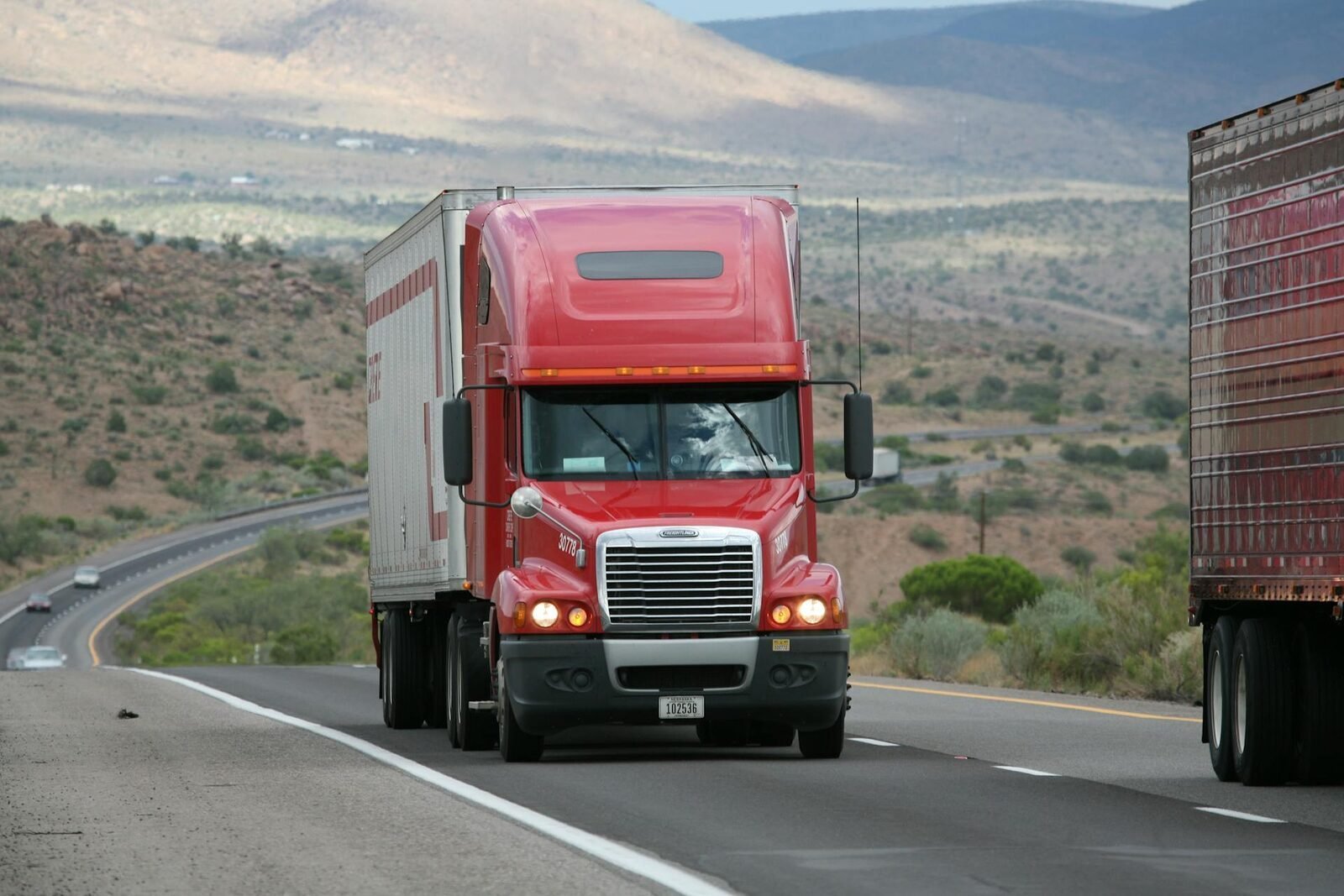
Road freight feels India’s calendar more directly than any other mode, because the asset that moves your cargo is a person as much as a vehicle.
From June to September, rain rewrites transit times on specific geographies rather than everywhere at once: the ghat sections between Pune and the Mumbai ports, the Konkan stretch, the approaches to Guwahati and the north-east, and low-lying city roads that flood for an afternoon at a time. Sensible practice in these months is a day of buffer on anything with a vessel cut-off at the end of it, waterproof lining inside open-body vehicles, and honesty about the fact that a landslide diversion cannot be scheduled around.
Festivals move capacity in a different way. Around Diwali, and regionally around Chhath, Onam, Pongal and harvest weeks, drivers go home — as they should — and the spot market for vehicles tightens sharply for a fortnight. Rates rise, and the trucks still running are the ones booked early. Agricultural procurement seasons soak up open-body vehicles in the northern states around the rabi and kharif purchases. None of this is a crisis for a planned shipment; all of it punishes the last-minute one. If your dispatch must land in a festival window, the honest advice is to confirm the vehicle a week or more ahead and accept that the season prices accordingly.
Packing for the road is its own discipline
Cargo that survives a sea crossing can still arrive bruised from six hundred kilometres of highway, because the stresses are different: continuous vibration, sharp braking, dust, and handling at transhipment points on part-load services. What holds up:
- Palletise wherever possible. A shrink-wrapped pallet handles forklifts and stacking; loose cartons handle neither. Part-load cargo especially, since it is loaded and unloaded more than once.
- Assume the load will shift unless restrained. Lashing points, dunnage and edge protection are cheap; a toppled stack discovered at the destination dock is not.
- Seal against dust and spray. Open-body vehicles under tarpaulin are standard for much of India’s freight — effective when done well, but electronics, fabrics and finished furniture belong in closed-body or containerised vehicles regardless of season.
- Label every piece with the consignment reference. On groupage services your cartons share deck space with strangers’ cargo, and legible marking is what brings all of them back together at the far end.
For fragile or high-value movements we specify the vehicle and the packing together, because they are one decision, not two — a sprung-suspension closed truck with a decently packed load beats premium packaging thrown into whatever turned up at the gate.

Which truck? A short field guide
Indian trucking has a vocabulary of its own, and matching the vehicle to the cargo is half the service. The workhorses you will hear quoted:
- 32-foot closed-body containers (single- and multi-axle) — the standard for palletised and cartoned freight on trunk routes; weatherproof, sealable, forklift-friendly at a dock.
- Open-body trucks in various lengths — the default for machinery, steel, bagged and crated cargo, loaded by crane or labour and covered by tarpaulin.
- Trailers — flatbeds for containers and long loads, semi-lowbeds and lowbeds where height or weight exceeds what a flatbed can legally carry.
- Reefer vehicles for temperature-controlled movements, specified by setpoint range rather than by size alone.
- Smaller commercial vehicles — the workarounds for city restrictions and narrow final-mile streets, often paired with a line-haul truck at a hub.
Axle configuration decides the legal payload, and overloading — still endemic in parts of the market — is a risk we simply do not take with client cargo: an overweight vehicle is uninsurable trouble at the first weighbridge. When a quote from anywhere looks dramatically cheap for the tonnage, the payload maths is the first place to look.
Crossing land borders: Nepal, Bangladesh and Bhutan
Road is the only practical mode into India’s Himalayan and eastern neighbours, and each border has its own choreography. Nepal-bound cargo funnels overwhelmingly through Raxaul–Birgunj, moving under transit documentation to Nepalese customs — where the integrated check post has smoothed what used to be a notorious queue, though festival weeks still congest it. Bangladesh trade concentrates at Petrapole–Benapole, the busiest land port in South Asia, where transhipment between Indian and Bangladeshi vehicles remains common practice and the paperwork must anticipate it — cargo packed for a single loading rarely enjoys its second one. Bhutan-bound freight rolls through Jaigaon–Phuentsholing with a transit character all its own.
The uniting principle: at a land border, documents clear before wheels do. A vehicle arriving with its export file complete crosses in hours; one arriving while paperwork is still being assembled joins a queue that has no sympathy. We prepare border files before dispatch, position them with the border agents ahead of the truck, and schedule arrivals away from the known crush days where the delivery date allows.
Full truck or part load — the economics
The choice reads like the sea freight FCL-versus-LCL question, but the trade-offs sit differently on the road. A full truckload gives you the vehicle, the direct routing and the schedule; it is priced for the round trip the operator must make, which is why a lane with strong return cargo — into a port city, for instance — often costs less per kilometre than a remote one-way delivery. Part load buys space on a vehicle or a hub-and-spoke network shared with other consignments; it saves real money on smaller cargo but adds handling, transit days and the small frictions of shared scheduling. The crossover point is lower than most shippers guess — once cargo approaches roughly half a vehicle, the certainty of a dedicated truck frequently justifies the difference, particularly when a vessel cut-off or a factory shutdown sits at the end of the journey. We quote both ways when a consignment sits near the line, with the trade-offs stated rather than buried.
Quick answers on road freight
Can you move household goods by road within India?
Yes — domestic household moves run through our packers-and-movers service, which brings packing crews and materials with it. This page’s service is commercial cargo; the two share vehicles and corridors but not processes, and we will point you to the right one in the first conversation.
Do you offer refrigerated transport?
We arrange reefer vehicles for temperature-controlled loads — pharmaceuticals, processed food, certain chemicals — with the setpoint recorded and the pre-cooling checked before loading. Capacity is thinner than for general cargo, so these movements reward early booking.
Is my cargo insured while on the truck?
A carrier’s statutory liability in India is modest and hedged with exceptions — it is not cargo insurance and should never be mistaken for it. Proper transit insurance covers the invoice value of the goods against the real risks of the road, costs a small fraction of that value, and is arranged per movement or as an annual policy for regular shippers. We quote it alongside the freight so declining it is a decision rather than an oversight.
Will I know where the vehicle is during transit?
Yes. Most of the fleet we place carries GPS, and where a vehicle does not, driver check-ins at agreed waypoints substitute. More useful than a dot on a map is what we do with it: your coordinator watches progress against plan and calls you when reality diverges — a breakdown, a diversion, a border queue — with the revised delivery estimate attached.
What details do you need for an accurate road quote?
Pickup and delivery addresses with pin codes, cargo description, gross weight and dimensions, packing condition, the date it must move, and whether either end has loading equipment or a dock. With those six facts a quote is meaningful; without dimensions especially, any road rate is a guess dressed up as a price.