
Storage & Warehousing
Secure storage for households and businesses in India — bridging the gap between moves, serving NRI families, and holding business inventory and archives.
The need for storage in India arises in more ways than people anticipate. A family relocating from Bengaluru to a new home in Mumbai while their new flat is still under fit-out. An NRI family heading abroad for two or three years, leaving their fully furnished apartment in Pune and needing somewhere trustworthy for the contents. A business that has vacated an old office and is waiting on the new lease in a different city. A growing company whose inventory has outpaced its warehouse space.
Seemleius storage and warehousing is built for all of these situations — secure, organised facilities that keep your belongings or business assets protected for days, months or longer, with the same accountability you would expect from a relocation.
Who uses our storage in India
Our Indian storage customers tend to fall into a handful of clear situations, each with its own requirements:
- Households moving between homes and needing a bridge between two dates
- NRI families leaving India who want their belongings in secure storage rather than abandoned or sold
- Businesses between leases or managing assets across multiple locations
- Companies storing commercial inventory, equipment or archives outside their main premises
- Individuals clearing a family home after an inheritance or a parent’s move to a smaller space
What every storage enquiry gets
Intake inventory
Every item is logged when it enters our facility — so you always know what is held and can request items back without uncertainty.
Monitored facilities
Access-controlled, security-monitored storage — your belongings or assets are not sitting in an unmanaged unit.
Flexible terms
Store for a week, six months or longer — terms that fit your actual situation rather than fixed minimums.
Collection and delivery
We collect from your address and deliver back when you are ready — or onward as part of a relocation.
How storage with Seemleius works
- Tell us your situation. What needs storing, roughly how much, and for how long — we use this to recommend the right space and term.
- Collection and intake. Our crew collects and packs where needed, logging each item as it enters the facility. You receive an inventory of what is in storage.
- Protected storage. Your belongings or assets are held in our monitored facility, with inventory updates available whenever you need them.
- Return when you are ready. Confirm your date and we schedule delivery to your address — whether that is a new home in the same city, a different city entirely, or an NRI return to India.
India-specific considerations
Storage in India comes with conditions that matter: humidity in coastal cities like Kochi, Mumbai and Chennai; extreme summer heat in Delhi and Rajasthan; the monsoon season, which affects how items are packed for storage as much as for transit. Our facilities and packing standards account for these conditions, and we advise on any items that need special treatment for the Indian climate.
Storage and relocation sit with the same team, so when the two are linked — move into storage, wait, move back out — there is one coordinator across the whole timeline. Ask us about storage and we will recommend the right option for your situation.
In-transit storage and long-term storage are different services
Most storage enquiries are really one of two requests, and it helps to name them early. In-transit storage is a holding pattern inside a move: the consignment is already packed for relocation, the crew that packed it books it into the warehouse, and it leaves again within days or weeks once the new address is ready. Long-term storage is a commitment measured in months or years — an NRI household while the family works abroad, the contents of a cleared family property, assets waiting for a decision. From the outside the two look identical. Inside the warehouse they are treated quite differently, and the treatment starts before collection day.
An in-transit consignment stays in its relocation packing. It is palletised as a sealed lot, positioned near the despatch bay, and its paperwork rides with the move file so despatch is a schedule change rather than a fresh booking. A long-term consignment is packed for time instead of movement: breathable wrap where a transit move would use tight film, furniture lifted onto pallets and kept off external walls, upholstery cased, desiccant placed and renewed on a rota. Tell us candidly how long the goods are likely to stay — even a rough range is enough — and the preparation matches the duration. The difference shows years later, when the cartons are opened.
Three specialist pages sit under this one, because the three main groups of customers want different things from the same building. Household goods storage covers families between homes and NRI households leaving a furnished flat behind. Commercial storage is for businesses between leases, overflow stock, and equipment held between deployments. Document and archive storage holds the records a company must keep but never wants to see, indexed so a single file can be found. Read the page that matches your situation for the detail; what follows here is what all three have in common.
How a storage quote is built
Storage in India is priced on three things, in this order: volume, term and handling. Volume is measured in cubic feet at the survey — a one-bedroom household occupies far less racking than people guess, while a four-bedroom home with solid-wood furniture occupies far more. We measure rather than estimate, because the volume figure carries through everything else on the quote.
Term is the duration commitment. A defined term prices tighter than an open-ended one, because the warehouse can plan the space; an open-ended arrangement stays flexible but is reviewed periodically. There is no penalty for coming back early — households that planned three years abroad and returned after eighteen months simply pay for the months used.
Handling is everything that touches the goods: collection from your address, packing where the items are not already packed, intake processing, retrievals during the term, and the final delivery out. Retrievals are the line people forget to ask about — if you expect to call items back regularly, say so when the quote is being prepared, because it changes how the consignment is positioned and how the handling line is structured.
The invoice itself is a proper GST tax invoice, with the tax shown as its own line at the prevailing rate for storage services. For business customers that matters for input credit; for households it matters because a clean paper trail is exactly what an insurer, an employer reimbursing relocation costs, or a landlord dispute will one day ask for.
One more line worth understanding: transport between cities. Storage is often the hinge of a two-city situation — collected in Pune, stored in Pune, delivered eventually to Gurugram. The interstate leg is quoted as the domestic move it is, with the storage term connecting the two ends. Structuring it as one arrangement from the start is cheaper and cleaner than booking storage now and shopping for a mover later, mostly because nothing needs to be re-surveyed, re-packed or re-inventoried in between.
Intake, inventory and insurance
The mechanics on collection day are simple and deliberately boring. The crew arrives with materials matched to the survey — cartons, wrap, corner protection, covers for upholstery. Anything not yet packed is packed and labelled; anything already packed is checked and reinforced where a carton will not survive stacking. Furniture is wrapped in place before it moves, not in the truck. Each item and carton is logged onto the inventory as it leaves the home, so the list is built at your door where you can see it, rather than reconstructed later at the warehouse from memory and guesswork.

At the facility, the consignment is received against that same list, checked, and put into its position — racked, palletised or floor-set depending on what it is and how long it is staying. You receive the finalised inventory with the storage reference, and from that point on the document, not anyone’s recollection, is the authority on what is held. When people describe trusting a storage company, this is usually the machinery they are actually trusting.
That intake inventory doubles as the insurance schedule. Each item or carton group carries a declared value, and that declaration — not a generic per-box figure — is what a claim settles against. Declare realistic replacement values: under-declaring shaves a little off the premium and costs a great deal at claim time, because settlement is capped at what was declared.
Two covers are involved when storage sits inside a move, and they are not the same policy. Transit cover protects the goods on the road; storage cover protects them on the racking. When Seemleius handles both legs, the covers are aligned so there is no uninsured gap between the truck and the warehouse — a gap that exists more often than people think when a transport company and a storage provider are booked separately and each assumes the other’s policy is running.
If a claim is ever needed, the inventory is what makes it quick. Because every item entered storage against a logged description, condition note and declared value, a claim is a comparison of documents rather than an argument about recollections. The households that struggle with storage claims elsewhere are almost always the ones whose provider counted boxes instead of listing contents — which is one more reason the itemised intake is not an optional nicety here.
Damp, insects and the rains
The real enemies of stored goods in India are not theft or fire — they are damp and insects. Coastal cities sit at very high relative humidity for much of June to September, and inland cities get their own version during the rains. Unmanaged storage in those conditions grows mould on upholstery, warps veneer, rusts appliance internals and invites silverfish into every carton of books and clothing.
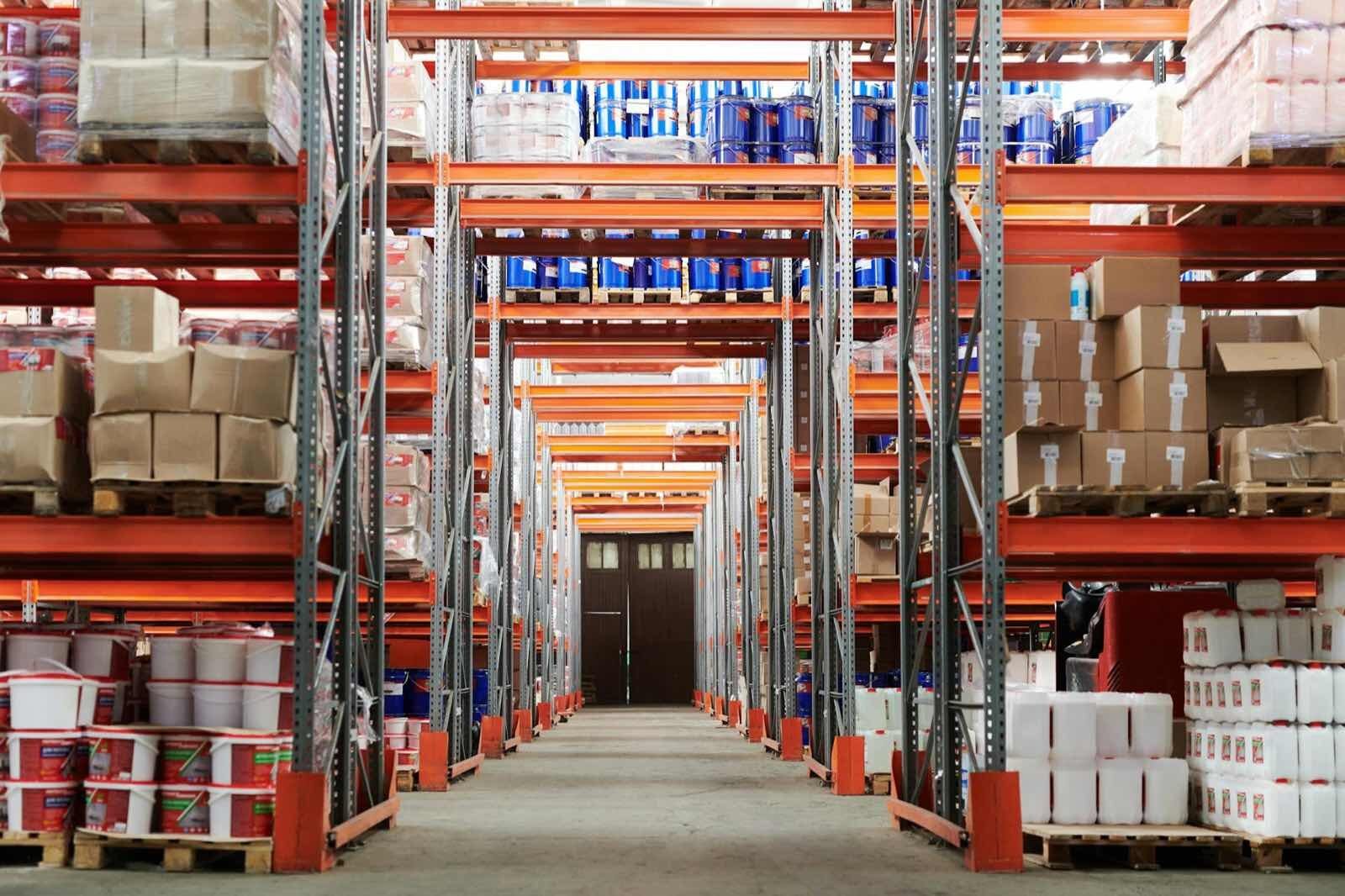
A managed facility runs a regime against this. Goods never touch the floor — everything sits on pallets or racking. Timber in the building is treated. A scheduled pest-control programme covers termites, silverfish and rodents, with records kept, not a spray can on a shelf. Cartons that travelled through rain on collection day are checked for moisture before they go into position, because a damp carton sealed into racking is a mould culture waiting to happen.
The monsoon also changes collection logistics. Crews tarp loads between the door and the vehicle, intake is done under cover rather than in open bays, and where a collection can reasonably wait out a forecast cloudburst, it does. None of this is exotic — it is simply what keeping goods intact from one monsoon to the next requires, done on a schedule instead of when someone remembers.
Questions we hear about storage in India
Can I get individual items back without ending the storage term?
Yes. Because the intake inventory is itemised, you can request a specific carton or piece of furniture and we retrieve and deliver it while the rest of the consignment stays in place. Frequent retrievals are easier if flagged early, since the consignment is then positioned for access rather than density.
Is the inventory itemised, or just a count of boxes?
Itemised. Furniture and appliances are logged as individual pieces with condition notes; cartons are numbered and logged with a contents description taken at packing. You receive the inventory at intake and it stays the reference document for retrievals, insurance and the final delivery.
Can storage connect to an international move later?
Often it does — a household goes into storage while the family settles abroad, and a year later part or all of it ships out to join them. Because storage and international relocation sit with the same team, that conversion is a quote for the shipping leg, not a fresh survey from scratch: the volumes, inventory and packing state are already on file. The reverse also works — a consignment arriving into India from abroad can come off the vessel and into storage while the family finds its footing, then deliver once the new home is ready.
Is there anything the facility will not take?
Perishables, plants, anything pressurised or flammable, and anything alive. Beyond that, the sensible rule is that small, dense valuables — jewellery, cash, title deeds, passports — stay with you or in a bank locker; no storage inventory is the right home for them, ours included. The household and commercial pages carry the fuller lists for their own kinds of consignment.
My dates are not fixed yet — can I still book?
Yes, and it is the usual state of affairs. Book the survey, and the volume figure and quote hold while the handover date settles; the collection slot moves with it. The only windows where notice really matters are the April–May moving season and December, when crews are at their busiest — allow two to three weeks there, and a week at most other times of year.
Explore Storage & Warehousing in detail
Commercial Storage
Commercial storage for Indian businesses — inventory, equipment, and assets held securely between offices, during office moves, or for ongoing…
Learn moreDocument & Archive Storage
Document and archive storage for Indian businesses — contracts, financial records and HR files held securely off-site, indexed for retrieval,…
Learn moreHousehold Goods Storage
Personal storage in India for households between moves, NRI families leaving for abroad, or anyone needing a secure home for…
Learn more