
Project & Heavy Cargo
Project and heavy cargo from India — oversized industrial loads, out-of-gauge shipments and multi-leg project freight managed as a coordinated operation.
India exports some of the world’s most demanding freight: power generation equipment from Vadodara, refinery modules from Gujarat, pressure vessels from Pune’s engineering belt, and transformer units from facilities in Bhopal and Nashik. These are not standard shipments. They require route surveys, specialised loading equipment, out-of-gauge containers or breakbulk vessels, and permits that span multiple state and port authorities. Seemleius project and heavy cargo manages that complexity as a single coordinated operation.
What makes project cargo different
Standard freight forwarding is built for cargo that fits inside a container and travels on a regular vessel schedule. Project cargo is everything that does not — oversized, overweight, indivisible or time-sequenced multi-part consignments that demand a move plan before a move begins. The risk of treating project cargo as standard freight is a load that stalls at the gate of JNPT or arrives damaged because the vessel stow was not engineered.
What the service covers
Cargo survey & pre-move engineering
Dimensions, weight and centre of gravity assessed; loading method and sea stow designed before booking.
Breakbulk & heavy-lift vessels
Heavy-lift and breakbulk vessel space arranged where cargo exceeds container gauge or weight limits.
Out-of-gauge (OOG) containers
Flat-rack and open-top container solutions for cargo that exceeds standard ISO dimensions.
Port & statutory permits
Port authority approvals, road conveyance permits and inter-state oversize-load permissions arranged in advance.
Industries and cargo types
- Power plant equipment — turbines, generators, transformers and boiler modules
- Oil & gas modules, pressure vessels and refinery columns
- Industrial machinery — presses, CNC systems, rolling mills, casting equipment
- Infrastructure and construction equipment — cranes, excavators, bridge sections
- Defence and aerospace components requiring specialised handling
How a project cargo move runs
- Technical brief. Dimensions, weight, lifting points, origin facility, destination port and required delivery schedule. The more detail we receive, the more precise the plan.
- Method statement and routing. A written plan covers the loading method, vessel type, route and any permits required. You approve the plan before anything is booked.
- Arrange equipment and vessel space. Specialised loading equipment is mobilised at the factory or plant; vessel space is confirmed on a suitable service.
- Execute and report. The cargo is loaded, lashed and documented to the approved method. Your coordinator monitors each stage and reports at agreed milestones.
Project and heavy cargo overlaps with our machinery moving work — when the job involves moving heavy equipment at the factory end as well as shipping it, both services run under one plan. Every project cargo assignment is scoped individually. Tell us about your consignment and we will build the plan.
What drives the cost of a heavy move
Project cargo is priced from the plan, not from a tariff, and clients get better outcomes when they can see which levers move the number. The main ones, in rough order of influence:
- Dimensions before weight. A forty-tonne piece that fits a flat rack is an ordinary problem. A twelve-tonne piece that is five and a half metres wide is a road survey, escort vehicles and a night convoy. Width and height cost more than mass on Indian roads.
- Lift requirements at each end. Whether the factory has its own gantry, whether a mobile crane must be mobilised, and whether the receiving site can take the piece off the trailer. Crane mobilisation over long distances is a cost line people rarely anticipate.
- Vessel type. Out-of-gauge containers ride scheduled services at a surcharge; breakbulk and heavy-lift vessels sail less frequently and price each parcel individually. The gap between the two can be substantial, which is why the packing and stow study comes before the quote.
- Route obstacles. Every low bridge, weak culvert, toll gantry and overhead line between the plant and the port either constrains the route or adds engineering. The survey finds them on paper; the alternative is finding them with the cargo.
- Insurance and risk engineering. Underwriters price heavy cargo on the method statement. A well-documented plan with named equipment and calculated lashings genuinely reduces the premium.
The road leg is the hard part
Clients assume the sea passage is the challenge. In our experience the demanding kilometres are the first two hundred — from the manufacturing site to the port gate. Oversized dimensional cargo moves under state transport authority permissions, with each state along the route applying its own rules on axle loads, travel hours and escort requirements. Movement is often restricted to night windows on congested corridors. Bridge capacities dictate detours that can triple the distance between two points that look adjacent on a map.
The corridors we plan most often run from the engineering belts to the water: Pune and Chakan to Nhava Sheva; Vadodara, Ahmedabad and Rajkot to Mundra and Kandla; Chennai’s Sriperumbudur cluster to Chennai and Kattupalli ports; Coimbatore heavy fabrication down to Cochin. On familiar routes the obstacles are mapped and the timings known. On a first-time route, the physical survey drives everything — we send people to measure clearances rather than trusting records that may predate the latest flyover.
Flat rack, open top or breakbulk
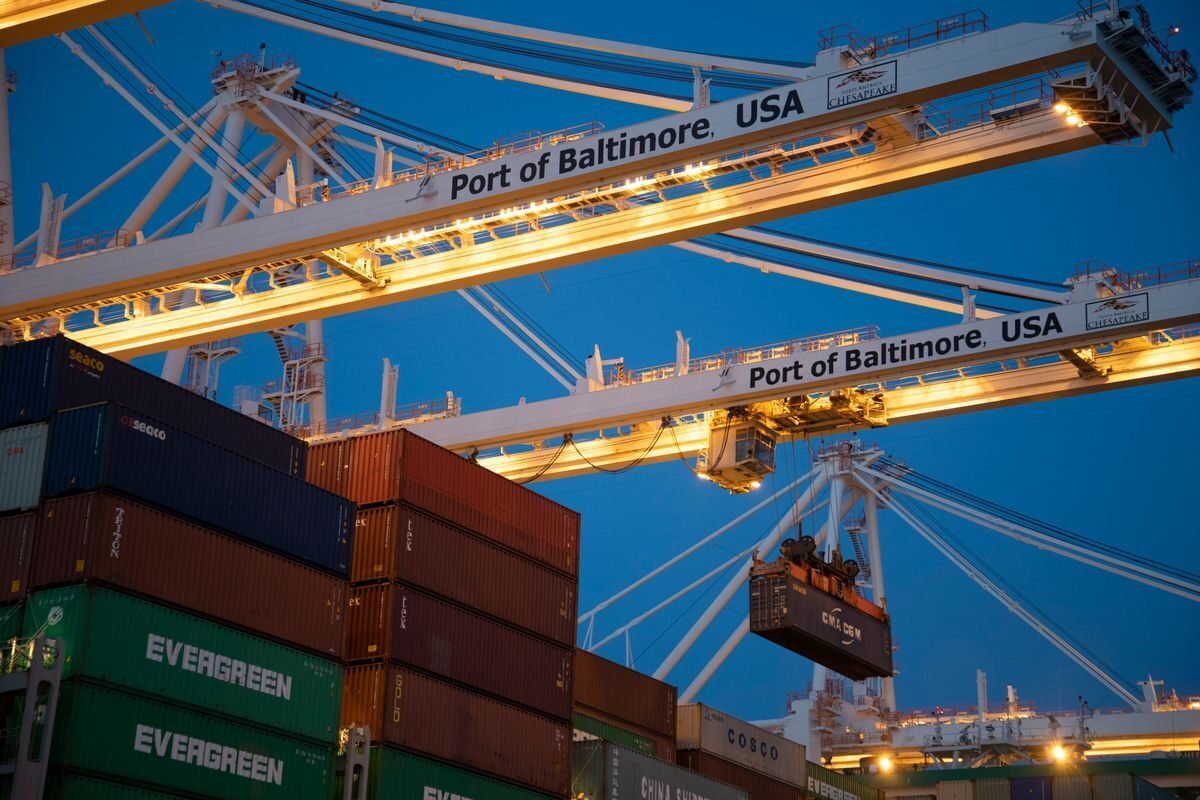
The stowage decision follows a simple ladder. Cargo that exceeds a standard container in one dimension but not absurdly — a machine slightly too tall, a coil too heavy for a general-purpose floor — goes to an open-top or flat-rack container and sails on normal schedules with an out-of-gauge surcharge. Pieces that overhang a flat rack on width need the slots beside them left empty, and the line charges for the lost space; at some point the arithmetic tips and the parcel belongs on a breakbulk vessel, lifted aboard by ship’s gear or shore crane and lashed to the tank top. Indivisible pieces in the hundreds of tonnes go to dedicated heavy-lift ships with their own cranes.
The decision is arithmetic plus schedule. OOG on a container service is cheaper and more frequent but capped by what the port’s handling equipment can lift; breakbulk sails perhaps monthly on a given trade but takes almost anything. We run both options with real numbers where the cargo sits near the boundary, because guessing wrong in either direction wastes money — one direction overpays for capability the piece does not need, the other books a slot the piece cannot use.
A timeline that holds
Heavy cargo punishes optimism, so we plan backwards from the date the piece must be at the destination site and let the plan dictate the start. A representative sequence for a single large unit shipping out of west India:
- Six to ten weeks out — technical drawings received, route survey commissioned, stow and lashing concept drafted, vessel options identified.
- Four to six weeks out — movement permissions applied for along the corridor, vessel space negotiated, cranage booked at both lift points.
- One to two weeks out — trailer positioned, escort arrangements confirmed, port authority notified, weather watched.
- Move week — night convoy to the port, direct-to-vessel or short ground rest, load, lash, sail.
The float in that plan is deliberate. A convoy that misses its night window waits a day; a vessel that closes cargo early strands a piece for the next sailing, which on a breakbulk trade may be weeks away. Building slack costs a little planning time up front and saves the project the truly expensive failure — a commissioning team standing idle at the destination while the critical unit rides at anchor.
Weather windows matter more than dates
Between June and September the south-west monsoon changes the physics of the job. Saturated ground under outrigger pads is the classic hazard — a crane that was stable in April needs matting and fresh calculations in July. Open highway movement continues but slows, tarpaulins and seaworthy packing stop being formalities, and open-yard storage at ports becomes something to engineer around rather than accept. Cyclone seasons on both coasts — roughly pre- and post-monsoon in the Arabian Sea and the Bay of Bengal — occasionally shut a port for days at short notice, which matters greatly when your vessel calls once.
None of this argues against monsoon shipments; industrial schedules cannot park for a quarter of the year. It argues for the plan acknowledging the season honestly — heavier protection, earlier positioning, and a weather margin in the convoy schedule — rather than pricing the job as if it were February.
Load day at the port
For a piece that cannot sit in a stack, arrival timing at the terminal is choreography. Ports dislike oversized cargo dwelling on their quays, so the ideal movement is direct-to-vessel: the trailer arrives inside an agreed window, the piece is lifted from the trailer bed straight to the ship, and the road convoy’s schedule is built backwards from the crane slot. Where a ground rest is unavoidable — the vessel delayed, the convoy early — the resting position, the supports and who bears the ground-handling cost are all agreed in advance, in writing.
The lift itself is documented as thoroughly as it is executed. Slinging arrangements follow the drawing, not improvisation; the lashing plan is implemented before the vessel’s officers sign off the stow; and on high-value units the cargo underwriter may appoint a marine surveyor to witness loading, whose attendance is scheduled like every other resource. Photographs at each stage — departure condition, arrival at port, slung, stowed, lashed — protect everyone if a claim question ever arises months later. It is unglamorous record-keeping, and it has settled more disputes in our clients’ favour than any argument ever has.
Paperwork for cargo that does not fit a box
Out-of-gauge and breakbulk shipments carry the standard export file — invoice, packing list, shipping bill on ICEGATE — plus a technical layer that ordinary freight never sees. The booking rests on certified dimension and weight data, usually from the fabricator’s drawings, and a lift plan showing slinging points and centre of gravity. Chartered or part-chartered vessels bring their own contractual documents, with laytime and load-rate terms that deserve careful reading before signature. Used machinery adds a valuation question at customs — the declared value must be defensible against the machine’s age and condition, supported by the sale contract or a survey where the figure might invite scrutiny.
Two smaller items regularly ambush first-time project shippers. Timber used in bracing and cribbing falls under the same ISPM-15 treatment rules as any export packing, and a magnificent forty-tonne lift can be quarantined at destination over an untreated wedge. And where a unit contains oils, coolants or batteries, destination regulations may require draining or certification before shipment — a question we put to the receiving country’s requirements early, while the machine is still connected and the answer is still cheap.
When the destination is the hard part
Planning attention naturally concentrates on the Indian end, where the cargo and the factory are. Experienced project shippers give equal weight to the arrival geography. Does the discharge port have a crane matching the piece, or must the vessel carry its own gear? Is there a heavy-haul corridor from that port to the site, and who has surveyed it? Which local authority approvals govern an oversized road movement in the destination country, and what lead time do they carry? A piece that loads beautifully at Mundra and then waits three weeks at a destination anchorage because the receiving end was assumed rather than planned has failed just as surely as one that never sailed.
Our destination planning runs through partner heavy-haul specialists in the receiving country, engaged at the method-statement stage — not after arrival. Their route knowledge feeds back into decisions made in India: sometimes the destination’s constraints choose the discharge port, which chooses the vessel service, which chooses the Indian load port. Reading the chain backwards like this is the single habit that most distinguishes a project forwarder from a general one.
Not every project client is a conglomerate
A steady share of this work comes from small and mid-sized manufacturers shipping one machine, not a plant: a used CNC centre sold to a buyer in the Gulf, a food-processing line relocating with its owner, a genset or transformer bought at auction and heading to a site abroad, a fabricator’s first export of a vessel it spent a year building. The engineering discipline scales down without disappearing — a nine-tonne machining centre still needs its centre of gravity marked, its spindle braced for sea motion, and a trailer that matches its footprint.
For an owner shipping a single high-value piece, the process is deliberately plain: send us the datasheet or the nameplate details and photographs, and a coordinator comes back with the method, the realistic schedule and one price for the whole movement. You deal with a person, not a tender desk. The same is true when the piece is second-hand and the documentation is thin — older machinery can absolutely be shipped compliantly, but the valuation and description need care at clearance, and that care starts before the machine is unbolted from its floor.
Questions people ask about this service
Anything not covered here? A specialist is happy to talk it through.
Contact usHow do I get a quote for this service?
Use the step-by-step quote form — it takes about a minute — or call us directly. Every quote is free, itemised and with no obligation.
Is my shipment insured?
Transit insurance is available on every service. Your coordinator will explain the cover options when quoting so you can choose what suits the shipment.
How far ahead should I book?
Two to four weeks is comfortable for most jobs, but we regularly handle urgent work. The sooner you reach out, the more flexibility you have on dates.
Do you handle the paperwork and customs?
Yes — where a service involves customs or documentation, we prepare and submit it on your behalf and keep you updated at each stage.
Will I have one point of contact?
Always. A dedicated coordinator owns your job from first quote to completion — no call centre, no being passed around.