
Moving to Qatar
India to Qatar is a high-volume sea and air corridor. Seemleius manages the full move from your Indian city — export-cleared, sea-freighted to Hamad Port and delivered in Doha.
- 20+ years moving households & cargo
- 184 countries destination corridors covered
- In-house customs clearance filed by our own team
- One coordinator from quote to delivery
Qatar has absorbed one of the largest Indian expatriate communities in the Gulf, built steadily over decades of labour and professional migration and accelerated sharply by the infrastructure programmes surrounding the 2022 FIFA World Cup. Indians now make up the single largest expat group in the country — roughly 700,000 residents out of a total population of around 2.9 million — with strong Malayali, Tamil, Hyderabadi and Gujarati communities anchored across Doha. Engineers, medical professionals, hospitality staff, finance workers and families have all made the journey from India to Doha — and continue to do so. Seemleius has run this corridor long enough to know its rhythms: the freight seasons, Hamad Port’s clearance requirements, and what Indian families and businesses need at both ends of the journey.
This page explains how the India–Qatar corridor works and what to expect. Pick the guide that fits your situation, or request a quote and a coordinator will take it from there.
The corridor in full: sea and air from India
India and Qatar are separated by the Arabian Sea and the Persian Gulf. There is no land crossing, no road freight option. Every shipment — household goods, corporate equipment, commercial cargo — travels by sea to Hamad Port or by air into Hamad International Airport. Sea transit from Nhava Sheva, Mundra, Chennai or Cochin to Hamad Port typically runs 10–14 days on direct services, with longer windows for transhipment routings. Air freight on the BOM, DEL, BLR, MAA or COK to DOH leg is a 3.5–4 hour flight on Qatar Airways, IndiGo and Air India direct services. That distance, and the Indian export process that begins every move, is where the expertise in this corridor lives.
Hamad Port: the Qatar gateway
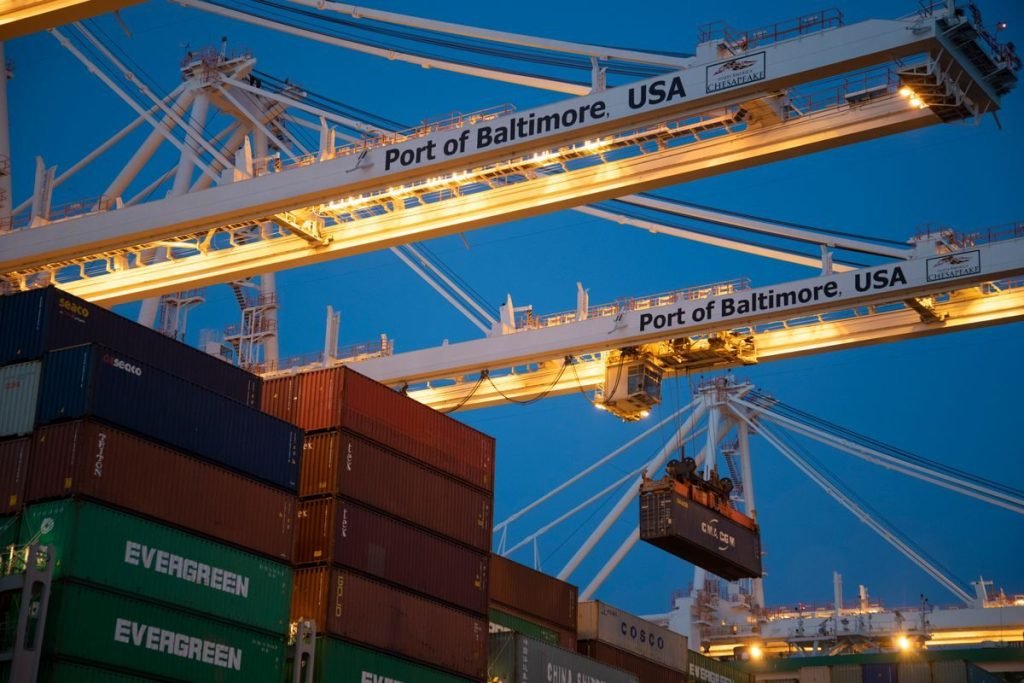
Hamad Port in Doha is one of the Gulf’s newest and most capable container terminals — commissioned in the run-up to the 2022 World Cup, purpose-built, efficient and well connected to regular services from Indian ports. Sea freight from Nhava Sheva (Mumbai), Mundra, Chennai or Cochin reaches Hamad Port on established schedules. Qatar customs apply a standard 5% GCC tariff on most dutiable imports, processed through the Al Nadeeb Single Window. When documentation is prepared correctly at the India end — ICEGATE shipping bill, AD code, FEMA-compliant valuation, GST LUT where applicable — clearance at Hamad Port is straightforward. When it is not, consignments sit in storage and accrue costs. We prepare everything before the freight moves.
Sea freight to Hamad Port
The primary mode for household shipments and commercial cargo — FCL for larger moves, LCL consolidation for smaller volumes, on regular India–Qatar services with 10–14 day transits from Nhava Sheva.
Air freight via BOM / DEL / BLR / MAA / COK
For time-critical moves or essential items that need to arrive in Doha before the sea shipment. Strong direct connections from Indian metros to Hamad International on Qatar Airways, IndiGo and Air India.
Indian export clearance
Shipping bill filed on ICEGATE, AD code registered, FEMA-compliant valuations and GST LUT applied where relevant, Indian customs clearance obtained before the shipment leaves. The export side is our responsibility, not yours.
GCC customs at Hamad Port
Qatar import procedures managed through Al Nadeeb at Hamad Port, 5% GCC tariff applied where due, documentation prepared at the India end to support a clean clearance and prompt release of your goods.
Qatar is essentially one city — but the destination details matter
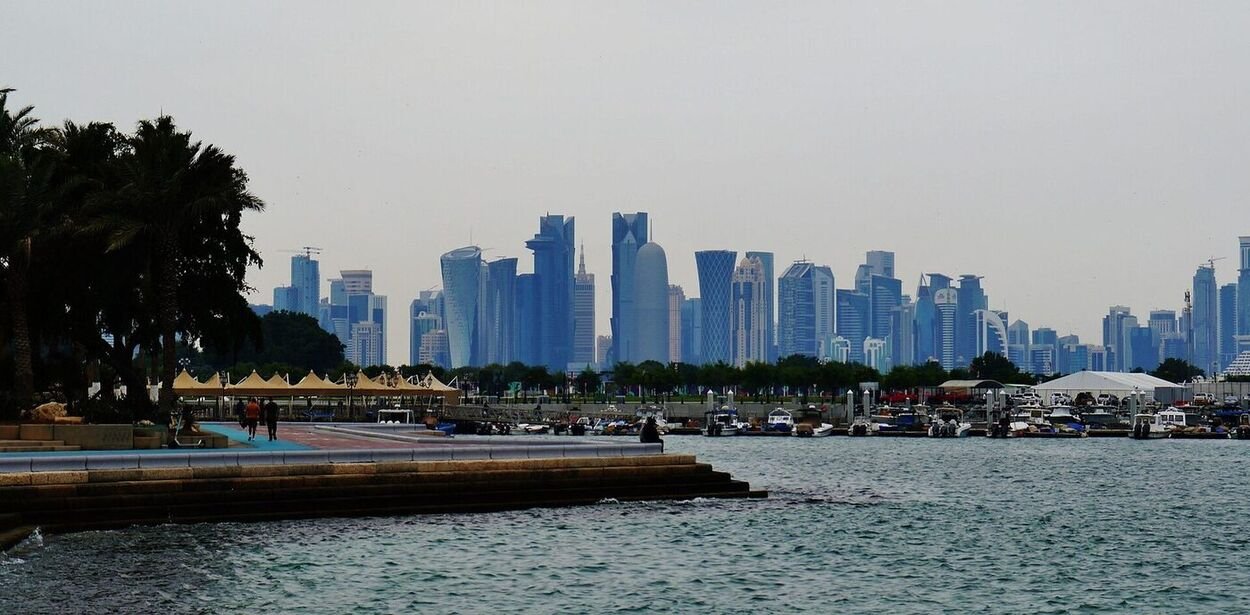
Unlike Saudi Arabia or Oman, Qatar is compact. The vast majority of moves land in Doha and its immediate suburbs: West Bay, The Pearl, Lusail, Al Wakra and Al Sadd, with newer arrivals increasingly drawn to the Lusail districts built out for the World Cup. Industrial zones near Mesaieed and Al Khor are also destinations for energy-sector moves. Whatever the final address, the freight route runs through Hamad Port; what changes is the final delivery and the access logistics at the destination, which we plan from the start.
The World Cup infrastructure legacy
The Qatar that Indian families and businesses arrive into today is materially different from the Qatar of a decade ago. Hamad Port itself, the Doha Metro, the road network linking Lusail to Al Wakra, and the residential and commercial districts that surround the stadiums — all of it is recent, all of it is the legacy of the 2022 World Cup investment programme. For the freight side, this matters: Hamad Port is one of the most modern terminals on the corridor, clearance and onward delivery within Doha is efficient, and the housing stock available to incoming Indian families is largely new. We plan around current Doha, not the Doha of five years ago.
How a move with Seemleius runs from India
- Survey in India. We assess your home or office in India, recommend the freight mode and return a fully costed quote with sea and air options explained.
- Prepare the Indian export. Shipping bill on ICEGATE, AD code, FEMA-compliant declarations, GST LUT where applicable, and all supporting documentation prepared before a single carton is packed.
- Pack and dispatch from India. Export-standard packing, dispatch from the relevant Indian port or airport, with a full inventory logged before departure.
- Clear and deliver in Doha. We manage Qatar customs clearance at Hamad Port through Al Nadeeb and coordinate delivery to your Doha address, with unpacking included.
Choose the guide that fits your move, or request a quote and we will coordinate it from India.
Who the goods can legally be consigned to in Qatar
This is the constraint that catches people out, and it is worth understanding before anything is booked. Qatar does not allow an inbound consignment to sit against an unidentified receiver. Commercial cargo must be consigned to an entity holding a valid Qatari commercial registration, with an establishment card and an authorised signatory whose details match the import declaration lodged with the General Authority of Customs. Household goods and personal effects must be consigned to a named individual who holds residency in Qatar, with the identity documents to prove it. There is no third option — no clearing against a hotel address, no consigning to a friend of a friend, no sorting it out on arrival.
The practical consequence is a sequencing rule that shapes the whole plan. Freight should leave India once the receiving side in Doha is genuinely able to receive it. For a family that usually means the employee has landed and completed the formalities on the Qatari side; for a company it means the Qatar entity is registered and its paperwork is current. Sailing ahead of that produces a container at Hamad Port with storage charges running and nobody eligible to clear it. Your coordinator asks about the receiving side in the first conversation for exactly this reason, and will hold a booking rather than create that problem.
Duty, the GCC tariff, and the tax Qatar does not charge
Qatar applies the GCC Common Customs Tariff, which sets the standard rate at 5% of the CIF value — cost, insurance and freight — on most dutiable goods. A short list of categories sits above that rate, and a range of essentials sit at zero. What matters more for budgeting is the second half of the picture: Qatar has no value-added tax in force. A GCC-wide VAT framework agreement exists and several member states have brought it into effect, but Qatar has not. So the landed cost on this lane is duty plus port and handling charges plus delivery — not duty with a consumption tax layered on top, which is what an importer used to shipping into Europe, or into some other Gulf markets, will be bracing for.
Used household goods and personal effects are handled differently from cargo intended for sale. Personal-effects clearance through the General Authority of Customs is a well-worn procedure, and what determines the outcome is almost always the inventory rather than the tariff line. A valued, itemised packing list prepared in India, matching what is actually inside the cartons, with nothing described as miscellaneous, is the single most useful thing anyone can contribute to a smooth release. Qatari customs officers read inventories closely, and a vague one invites a physical examination.
What Qatar does not admit
Qatar’s prohibited and restricted lists are stricter than many arrivals expect, and enforcement at Hamad Port is thorough. These are matters of Qatari law, published by the General Authority of Customs, and they apply to every consignment regardless of who carries it:
- Alcohol in any form is prohibited in an imported consignment. Licensed retail exists inside Qatar under a tightly controlled regime; that has no bearing whatsoever on what may cross the border in a container.
- Pork and pork-derived products are prohibited, and this reaches further than the obvious. Gelatine-based items, some pet foods and a number of packaged goods carry porcine derivatives in the ingredient list.
- Printed matter, films, recordings and artwork are subject to review, and material judged offensive to Islamic values or to public morals is not admitted. Material intended for distribution is treated far more strictly than a handful of personal books.
- Narcotics, weapons, ammunition, replica firearms, gambling equipment, drones and radio or telecommunications equipment requiring type approval are prohibited or controlled.
- Electronic cigarettes and vaping devices are restricted. Prescription medicines travelling with a family should stay in original packaging with the prescription available.
The conclusion that follows is unglamorous: declare everything, describe it honestly on the inventory prepared in India, and physically remove anything on that list before the packers arrive. A seizure at Hamad Port rarely stops at the offending item. It puts the whole consignment under detailed examination, and that is measured in weeks rather than hours.
A realistic calendar, not just a transit time
The sailing is the shortest part of an India–Qatar move, which is why quoting the sea leg alone misleads people badly. From the day a quote is accepted, the shape looks like this:
| Stage | Typical duration |
|---|---|
| Survey in India and costed quote returned | 1–3 days |
| Export documentation: shipping bill on ICEGATE, AD code checks, inventory valuation | 3–7 days |
| Packing at the India address | 1–3 days by volume |
| Road leg to Nhava Sheva, Mundra, Chennai or Cochin, plus port cut-off | 2–5 days |
| Consolidation window, LCL only | up to a week |
| Sea leg to Hamad Port | around a week to a fortnight |
| Clearance through Al-Nadeeb on clean paperwork | 2–5 working days |
| Delivery, unpacking and debris removal in Doha | 1–2 days |
Added together, a full-container household move from Mumbai or Mundra usually occupies four to six weeks door to door. An LCL consignment out of Cochin or Chennai runs longer, because it waits for a consolidation to fill. Air freight compresses the same chain into roughly a week to ten days. None of these are promises — a documentation query, a berth delay or Eid falling across a clearance window will all move them — but they are the honest planning shape, and planning against them beats planning against the sailing time alone.
Why air competes here in a way it does not elsewhere
On a corridor to Europe or North America, air freight is a luxury reserved for things you cannot live without for two months. On the India–Qatar lane that framing is wrong, and pretending otherwise does clients no favours. The distance is short, direct-service frequency out of BOM, DEL, BLR, MAA and COK into DOH is high, and the flight itself is under four hours. Set against that, an LCL sea consignment carries a consolidation wait at the Indian port, a full set of destination port and handling charges, and a longer chain of touches — and those fixed charges do not shrink in proportion to a small volume. Below roughly the contents of a one-bedroom flat, the gap between the two modes narrows to the point where the faster one is often the sensible one. Above that, sea wins decisively and it is not close. A quote from us shows both, with the numbers rather than an opinion attached.
Questions that come up on the Qatar corridor
Does anything still arrive through Doha Port?
Container traffic moved to Hamad Port, which took over that role from the old Doha Port. Doha Port continues in other uses, cruise among them. For a household or commercial consignment arriving from India by sea, Hamad Port is the gateway and the clearance point, and any quote that says otherwise is out of date.
Can the shipment leave India before the Doha end is ready?
It can be surveyed, packed, inventoried and export-cleared, and it can then wait in storage in India — which is frequently the better answer. What it should not do is arrive at Hamad Port with no eligible consignee named on the declaration, because storage at the destination costs more than storage at origin and the clock runs faster.
Which currency will the Qatar-side charges be in?
Qatari riyals. The riyal has been pegged to the US dollar at a fixed rate since 2001, so rupee exposure on the Doha-side charges tracks the INR–USD rate rather than moving on its own. Quotes keep the India-side and Qatar-side elements separate so that exposure is visible instead of buried in a single figure.
Is there a season worth avoiding?
Two, loosely. The Indian monsoon, broadly June to September, affects road legs and port working on the west coast, and is the reason packing standards on this corridor assume moisture rather than hoping for the best. The Gulf summer, May through September, brings temperatures that matter for anything heat-sensitive travelling inside a steel box, and brings airline restrictions on live animals out of Indian airports. Neither is a reason not to move. Both are reasons to book earlier than feels necessary.
Your move to Qatar, your way
Every move is different. Pick the guide that matches your situation for advice and pricing built around it.
Commercial Cargo & Freight to Qatar
Commercial freight from India to Qatar by sea to Hamad Port and by air — Indian export clearance, GCC customs…
Read the guideCorporate & Office Movers and Packers to Qatar
Relocating an office from India to Qatar — Indian export clearance, sea freight to Hamad Port and operational delivery in…
Read the guideEmployee Relocation to Qatar
Employee relocation from India to Qatar, managed for HR and mobility teams — India-origin survey and export, consistent documentation, and…
Read the guideHousehold & Personal Moves to Qatar
Moving your home from India to Qatar by sea to Hamad Port — Indian export clearance, sea freight, GCC customs…
Read the guidePet & Vehicle Movers and Packers to Qatar
Relocating pets and vehicles from India to Qatar — India export requirements, Qatar import compliance and Hamad Port coordination as…
Read the guide