
Commercial Cargo & Freight to Qatar
Commercial freight from India to Qatar by sea to Hamad Port and by air — Indian export clearance, GCC customs and door-to-door delivery in Doha.
India’s commercial exports to Qatar span a wide range: construction materials, food and beverage products, pharmaceuticals, machinery, textiles, engineering components and finished consumer goods. For each of these categories, the India–Qatar corridor involves a defined set of controls at both ends — Indian export clearance through ICEGATE, sea freight to Hamad Port, Qatar customs via the Al Nadeeb Single Window and final delivery in Doha. Seemleius commercial cargo and freight manages the chain from start to finish, from your Indian warehouse to the delivery address in Qatar.
Indian export clearance: the starting point
Every commercial shipment from India to Qatar begins with a shipping bill filed on ICEGATE. The goods are classified under the correct HS codes, valued accurately under FEMA rules and declared to Indian customs before the freight can move. The exporter needs an AD code registered against the port of export, and zero-rated GST treatment is applied through a Letter of Undertaking (LUT) filed on the GST portal — without the LUT, IGST is paid upfront and refunded later, which is unnecessary working capital tied up. For some categories of goods — pharmaceuticals, food products, dual-use items — additional export licences or certificates are required. Getting this right at the India end is not optional — it determines whether the shipment clears smoothly at Hamad Port or sits in storage generating demurrage costs. We prepare the Indian export documentation accurately, which means the Qatar clearance is predictable.
Drawback, RoDTEP and the incentives layer
For Indian exporters, the corridor is not just about getting the cargo to Doha — it is also about claiming the export incentives the goods are entitled to. Duty drawback on customs duties paid on inputs, and RoDTEP (Remission of Duties and Taxes on Exported Products) on embedded taxes, both flow back through the shipping bill if it is filed correctly with the right scheme codes. A shipping bill filed without the drawback or RoDTEP claim is a refund that quietly disappears. We file with the relevant scheme codes from the start, so the incentives flow as they should.
Sea freight to Hamad Port: the main route
Regular container services connect Indian ports directly to Hamad Port in Doha — one of the Gulf’s newest and most efficient terminals, commissioned around the 2022 World Cup build-out. Nhava Sheva (JNPT) and Mundra serve western India well; Chennai and Cochin serve the south and are frequently used for the food and pharmaceutical exports that characterise this corridor. Sea transit runs 10–14 days on direct services. FCL (full-container load) is right for larger volumes; LCL (less-than-container load) consolidation suits smaller or irregular shipments. We book the mode that matches the cargo and the timeline.
Air freight from India for priority cargo
When the commercial timeline is tight — urgent spare parts, perishable goods, high-value consignments, or replacement stock for a Doha retail or hospitality operation — air freight from Mumbai, Delhi, Bengaluru, Chennai or Cochin reaches Hamad International in 3.5–4 hours on direct Qatar Airways, IndiGo or Air India services. The cost premium is real, and we are straightforward about when it is justified and when sea freight, properly planned, can meet the same deadline.
ATA carnet and temporary exports
For trade-show stands, demonstration equipment, broadcast kit and engineering test gear that needs to enter Qatar and return to India without duty being paid, the ATA carnet route is the right instrument. India is part of the ATA system, Qatar accepts ATA carnets for temporary admission, and we manage carnet preparation in coordination with FICCI as the issuing chamber. The discipline matters: the carnet has to balance on return, item for item.
Bonded warehousing in Qatar
For Indian exporters running a continuous supply into Qatar — spares, FMCG distribution, project equipment phased over multiple deliveries — clearing into a bonded warehouse at Hamad Port and drawing the goods down against demand defers duty and improves cash flow. We coordinate consignment to bonded facilities where the trade flow justifies it.
Correct HS classification from India
Goods classified accurately at the India end before the shipping bill is filed on ICEGATE. The right classification avoids Qatar customs queries and the 5% GCC tariff disputes that delay release of the cargo.
Hamad Port clearance via Al Nadeeb
Qatar import procedures at Hamad Port managed through the Al Nadeeb Single Window, with all supporting documents prepared in India to meet Qatar Customs requirements on arrival.
Final delivery across Doha
Onward delivery from Hamad Port to your Doha warehouse, retail premises, project site or distribution point, with delivery confirmation to your coordinator.
Recurring freight programmes
For businesses shipping regularly from India to Qatar, we establish freight programmes where the documentation templates, AD code, GST LUT and routing preferences are agreed once, reducing the overhead on each subsequent shipment.
How a commercial shipment from India to Qatar runs
- Brief us on the cargo. Goods description, HS codes if available, weight, dimensions, declared value, India origin city and Doha delivery address and deadline.
- Receive a routed quote. A clear quote with freight mode, transit time from Indian port to Doha delivery, Qatar duty estimate at the 5% GCC tariff, and drawback/RoDTEP applicability flagged for your finance team.
- Export from India. Shipping bill filed on ICEGATE with scheme codes, AD code in place, GST LUT applied, cargo collected from your India premises and dispatched on the booked service.
- Clear and deliver in Qatar. Qatar customs at Hamad Port managed via Al Nadeeb; onward delivery to your Doha address confirmed.
A single shipment or a recurring freight programme from India into Qatar — the corridor expertise is the same. Request a freight quote and we will route it from your India origin correctly.
The consignee test comes before the freight quote
An Indian exporter can have flawless ICEGATE paperwork and still be unable to land goods in Doha. Qatar requires the importer of record to be an entity holding a live commercial registration issued by the Ministry of Commerce and Industry, supported by an establishment card, an authorised signatory on file and, in practice, a customs client account with the General Authority of Customs. The activity listed on that registration also matters: a Qatari company whose registered activities do not cover the goods being imported will find the declaration queried, because Qatar ties import rights to declared trading activity rather than treating commercial registration as a general licence.
For an exporter shipping to an established Qatari distributor or a group subsidiary, this is a five-minute check. For an exporter shipping to a new buyer, or into a Qatari entity that has only just been formed, it is the first thing to verify — before the container is booked, not after it has berthed. We ask for the consignee’s registration details up front and confirm the activity fit at the quoting stage, because a mismatch discovered at Hamad Port turns into demurrage while it is resolved.
The document set Qatar expects to see
Beyond the transport document, a commercial consignment into Qatar is assessed against a fairly predictable file. The specifics vary by commodity, but the core is consistent:
- Commercial invoice showing the buyer, the seller, an accurate description, unit and total values, currency and Incoterm. Round numbers and one-line descriptions invite valuation queries.
- Packing list keyed to the invoice, with marks, numbers, gross and net weights per package.
- Certificate of origin issued in India by an authorised chamber. Qatari practice on invoice and origin attestation varies with the commodity and the importer, and it is checked per shipment rather than assumed.
- Bill of lading or air waybill consigned exactly as the importer’s registration reads — abbreviations and trading names that do not match the registration cause more delays on this lane than any tariff dispute.
- Category-specific certificates. Food consignments are examined by the health authorities on arrival and meat and poultry require halal certification issued by a recognised body in India. Pharmaceuticals, cosmetics, chemicals and electrical goods each carry their own conformity and registration expectations, and several must be registered with the relevant Qatari authority before the first shipment rather than at the border.
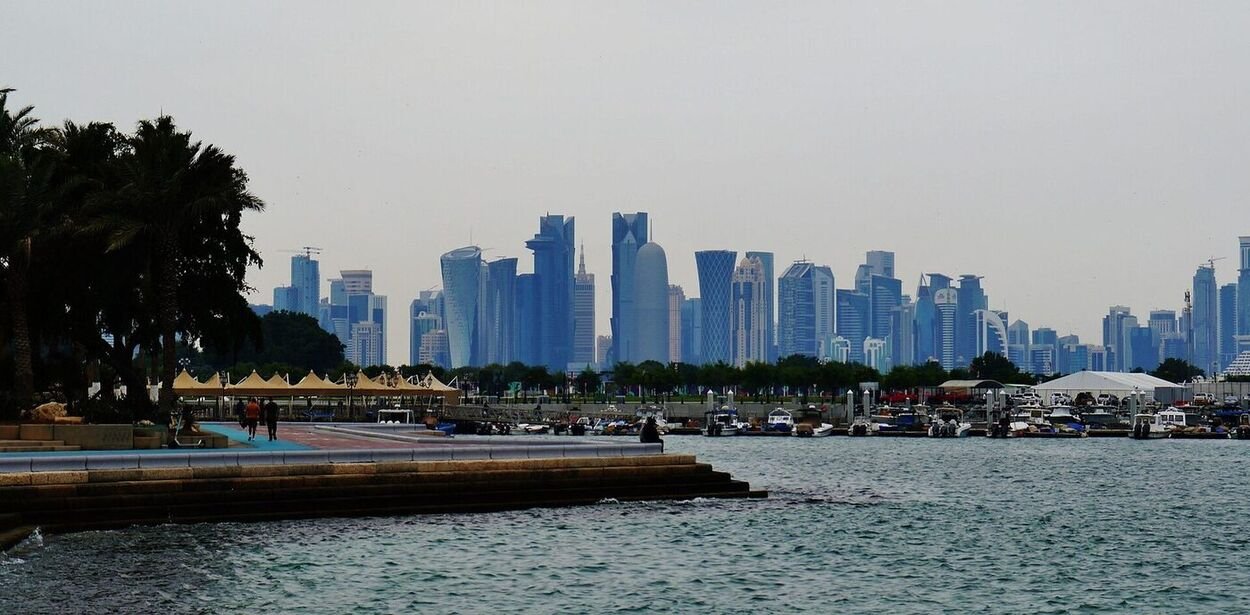
What the 5% actually sits on, and what Qatar does not add
The GCC Common Customs Tariff applies at a standard 5% and, on this corridor, it is assessed on the CIF value — goods value plus the insurance and the freight to bring them to Qatar. That is worth restating for finance teams used to duty on an FOB base, because it means the freight cost itself carries duty. A cheaper sailing therefore reduces the duty bill slightly as well as the freight bill, and a decision to move a marginal consignment by air raises both.
The relief on the other side is that Qatar has not implemented value-added tax. There is no import VAT to fund at the border and no domestic VAT recovery cycle to manage afterwards, which materially simplifies landed-cost modelling compared with shipping into markets that have. It also removes a working-capital drag that Indian exporters shipping into VAT jurisdictions have to plan around. A handful of goods carry excise-style treatment in Qatar — tobacco, energy drinks and similar categories — and those are handled as exceptions rather than as the rule.
Commercial categories that need a decision before the booking
Some Indian export categories run into Qatari import controls that have nothing to do with tariff and everything to do with what the goods are. Alcohol is prohibited outright as an import. Pork and pork derivatives are prohibited, which reaches into ingredient lists and additives rather than just the obvious products. Printed matter, recorded media and artwork are reviewed for content. Radio, telecommunications and drone equipment needs type approval before it can be released. Cosmetics, food supplements and medical devices are registered rather than simply declared. None of this stops trade — Indian exporters ship all of these categories except the prohibited ones into Qatar routinely — but each of them changes the lead time, and finding out at Hamad Port is the expensive way to learn it.
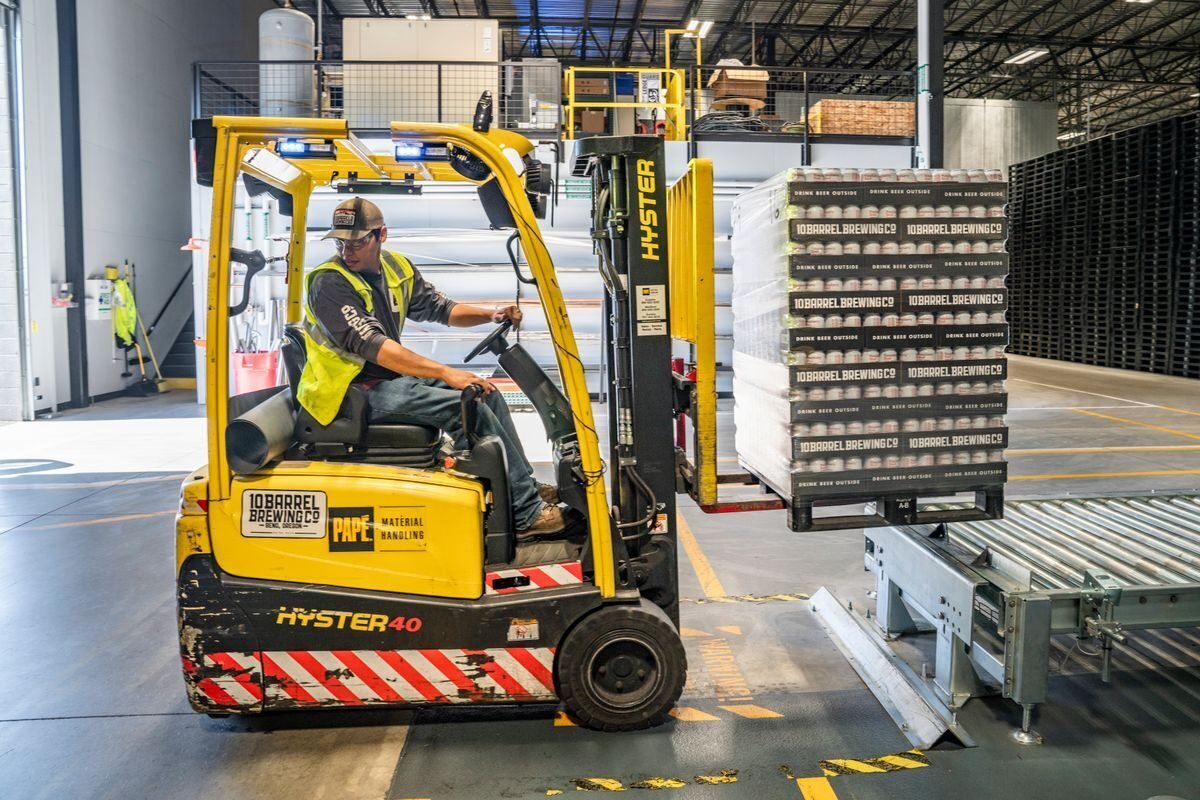
How a freight quote on this lane is built
A commercial quote from India to Qatar is assembled from parts, and we show them separately so a finance team can see what is variable and what is not. The India side carries collection from your premises, export packing or palletisation where required, the shipping bill and customs formalities, terminal handling at Nhava Sheva, Mundra, Chennai or Cochin, and the origin documentation. The ocean or air leg carries the freight rate itself, plus the surcharges that move with fuel and with season. The Qatar side carries terminal handling at Hamad Port, the customs declaration through Al-Nadeeb, any inspection or testing the commodity attracts, duty at the applicable rate, and the delivery run to your consignee’s address in Doha, Al Wakra, Mesaieed or the free-zone campuses.
Three things move a quote more than anything else on this corridor. Volume against weight, because a dense consignment prices on weight and a bulky one on measurement, and the crossover point decides whether air is even worth modelling. Timing, because peak season out of Indian ports and the run-up to Ramadan both tighten space. And the accuracy of the commodity description, because an unclear description is priced with a contingency that a clear one does not need. Give us a real description and real dimensions, and the quote you receive will be tighter and will survive contact with the actual shipment.
Questions Indian exporters ask about the Qatar lane
Is it worth sending a first consignment by air?
Frequently, yes, and not for the reason people assume. A first shipment by air is small, arrives quickly and exposes any registration, labelling or description problem while the volume at risk is trivial. The lesson is learned on a few cartons instead of on a full container. Once the file is proven, the same documentation template drops onto the sea consignments that follow.
Can one consignment cover several Qatari buyers?
Not as a single declaration. Each importer of record clears against their own registration, so a mixed load is split into separate declarations at Hamad Port with the cost and the coordination that implies. Where an Indian exporter is supplying several Qatari customers regularly, the cleaner structure is usually to clear into one Qatari entity or a bonded facility and distribute domestically from there.
What happens to the drawback claim if the cargo is returned?
Returned goods unwind the incentive position, and it is easier to plan for than to repair. Where a Qatari buyer rejects a consignment or a registration issue makes release impossible, the goods can be re-exported to India, but the drawback and RoDTEP amounts claimed against the original shipping bill come back into question. We flag re-import exposure at the quoting stage on categories where rejection risk is real, so the finance team is not surprised twice.
How far ahead should a Ramadan or Eid delivery be booked?
Further than feels necessary. Working hours in Qatar shorten through Ramadan, government offices included, and the Eid holidays close clearance windows entirely for several days at a time. Demand into the region also rises ahead of both. Consignments that need to be on a Doha shelf before Ramadan begins should be leaving an Indian port several weeks earlier than the transit time alone would suggest.