
Commercial Cargo & Freight to the United Kingdom
Commercial cargo and freight from India to the United Kingdom — Indian export documentation prepared, sea and air freight coordinated, UK import clearance handled from start to finish.
India is one of the UK’s significant trade partners, and the freight corridor between them handles an enormous variety of commercial goods — textiles and apparel, pharmaceuticals, engineering components, technology hardware, processed foods and beverages, jewellery, and project freight of every shape. Commercial shippers on this corridor face a two-country documentation challenge: the Indian export process through ICEGATE at one end, and UK Customs Declaration Service (CDS) clearance at the other, with the UK Global Tariff applying post-Brexit and the long-negotiated India-UK Free Trade Agreement still working its way to conclusion. A clean shipment requires both ends to be handled correctly from the outset. Seemleius commercial cargo from India to the UK is run under one coordinator who owns the full chain.
Exporting commercial goods from India
Commercial exports from India require an Importer Exporter Code (IEC) issued by DGFT, correct classification under India’s Customs Tariff (the eight-digit ITC-HS code), a commercial invoice and packing list meeting customs standards, and a Shipping Bill filed on ICEGATE under the forwarder’s AD code with the bank that will handle the export realisation. GST on exports runs through a Letter of Undertaking (LUT) for zero-rated supply without payment of IGST, or by paying IGST and claiming a refund — we structure the documentation to match the shipper’s registered position. Where the goods qualify for duty drawback or for benefits under the RoDTEP (Remission of Duties and Taxes on Exported Products) scheme, the Shipping Bill is filed in a way that captures those entitlements. Wrong classification at the India end forfeits drawback and RoDTEP — that is the most common avoidable cost we see.
Into the United Kingdom
The UK applies its Global Tariff to commercial imports under the post-Brexit framework. Classification under the UK Tariff determines the applicable duty rate; origin matters for any preferential-rate eligibility under the UK’s GSP framework (which provides reduced duty access for goods of Indian origin on many tariff lines) and under whatever final form the India-UK FTA takes when concluded. The CDS import declaration is filed against the importer’s GB EORI number; we prepare the UK import entry accurately so your goods pay the duty they should — no more, and no underpayment that triggers a post-clearance HMRC query. Where the goods will be held in bonded conditions at Felixstowe or London Gateway pending onward distribution or duty deferral, we set that up alongside the entry.
Sea freight (FCL & LCL)
Full-container and consolidated loads from Nhava Sheva, Mundra, Chennai or Cochin to Felixstowe, Southampton or London Gateway — transit typically 22 to 28 days.
Air freight
Time-sensitive or high-value commercial cargo from BOM, DEL, BLR or MAA direct to Heathrow — about nine to ten hours in the air.
ICEGATE export documentation
IEC, AD code, ITC-HS classification, Shipping Bill, RoDTEP and drawback capture, and GST LUT or refund handling at the India end.
UK CDS import clearance
UK Global Tariff classification, GB EORI verification, GSP preference where applicable, and CDS entry filed before arrival at the UK port.
Common India–UK commercial cargo we move
- Textile, garment and home-furnishing shipments from Tiruppur, Surat, Ludhiana and the wider Indian manufacturing base
- Pharmaceutical and life-sciences goods from Hyderabad, Ahmedabad and Mumbai — including temperature-controlled shipments
- Engineering components and precision goods from Pune, Coimbatore and Chennai
- Technology hardware, consumer electronics and IT equipment
- Processed foods, spices and Indian-origin beverages for the UK ethnic-food and mainstream retail channels
- Jewellery, gemstones and high-value goods on secured air freight
- Samples, exhibition goods on ATA Carnet for UK trade shows, and project-specific freight
ATA Carnet, bonded warehousing and exhibition freight
For trade shows, exhibitions and temporary professional equipment movements, an ATA Carnet issued in India (through FICCI) lets the goods enter the UK and return without paying duty or import VAT on what is genuinely a temporary admission. We file the Carnet at both ends and handle the UK side under CDS so the exhibition timeline holds. For commercial cargo arriving ahead of a release date, or for cargo on which duty will be paid downstream rather than at import, we set up bonded storage at Felixstowe or London Gateway and a corresponding UK customs warehouse position.
India-UK FTA: where we are
Negotiations between India and the UK on a Free Trade Agreement have run through multiple rounds and remain a live topic. Until the agreement is concluded and the implementing UK statutory instruments are in force, the existing UK Global Tariff and the UK’s Generalised Scheme of Preferences (which already offers reduced duties on many lines for Indian-origin goods) apply. We keep the duty assessment on every shipment current against the framework that is actually in force on the date of import — the FTA changes the numbers when it lands, but it does not change the documentation chain.
How a commercial shipment runs
- Brief us on the cargo. Commodity, eight-digit ITC-HS classification (or we work it out), Indian origin status, value, weight, dimensions, departure city and required UK delivery date.
- Route and document. We select the freight mode and Indian gateway port, prepare ICEGATE export documentation with RoDTEP and drawback capture, and assess UK Global Tariff exposure with any GSP preference.
- Ship and monitor. Cargo is collected at your Indian warehouse, dispatched through Nhava Sheva, Mundra, Chennai or Cochin (or air-freighted from BOM / DEL / BLR / MAA), and tracked through each freight handover.
- Clear and deliver. UK CDS clearance is managed; goods are released or moved into bonded storage as required; final delivery is made to your UK warehouse or commercial address.
Accurate documentation at the Indian export stage prevents the delays that commercial shippers dread at the UK end. Request a freight quote and we will set up your India–UK shipment correctly from the start.
What actually drives the freight bill on this lane
Commercial rates between India and the UK move constantly, so a static price list would mislead you. The structure of the cost, though, is stable, and understanding it puts you in control of most of it. Mode is the first lever — ocean for anything that can wait a month, air for what cannot. Equipment is the second: a standard twenty-foot or forty-foot box is the cheapest space afloat, while anything needing a flat rack, an open top or temperature control pays a premium for scarcer kit. Utilisation is the third and the most neglected — a forty-foot container that sails half empty still costs what a forty-foot container costs, which is why we look hard at whether your monthly volume suits FCL, LCL by the cubic metre, or a consolidation rhythm that fills a box on a schedule.
Beyond the base rate sit the moving parts: bunker-linked fuel surcharges, peak-season surcharges when westbound demand spikes, terminal handling at both ends, and — often underestimated — the UK inland leg. Haulage from Felixstowe to a Midlands warehouse is a different bill from a short shunt out of London Gateway to an Essex distribution centre, so the UK port we route through is chosen against your delivery point, not by habit. Finally there is the fiscal layer: duty under the applicable UK tariff line, import VAT, and the cost of getting money and paperwork wrong — post-clearance queries, demurrage while a query resolves, missed preference claims. Most of that layer is avoidable, which is precisely why it belongs in the quote conversation rather than the post-mortem.
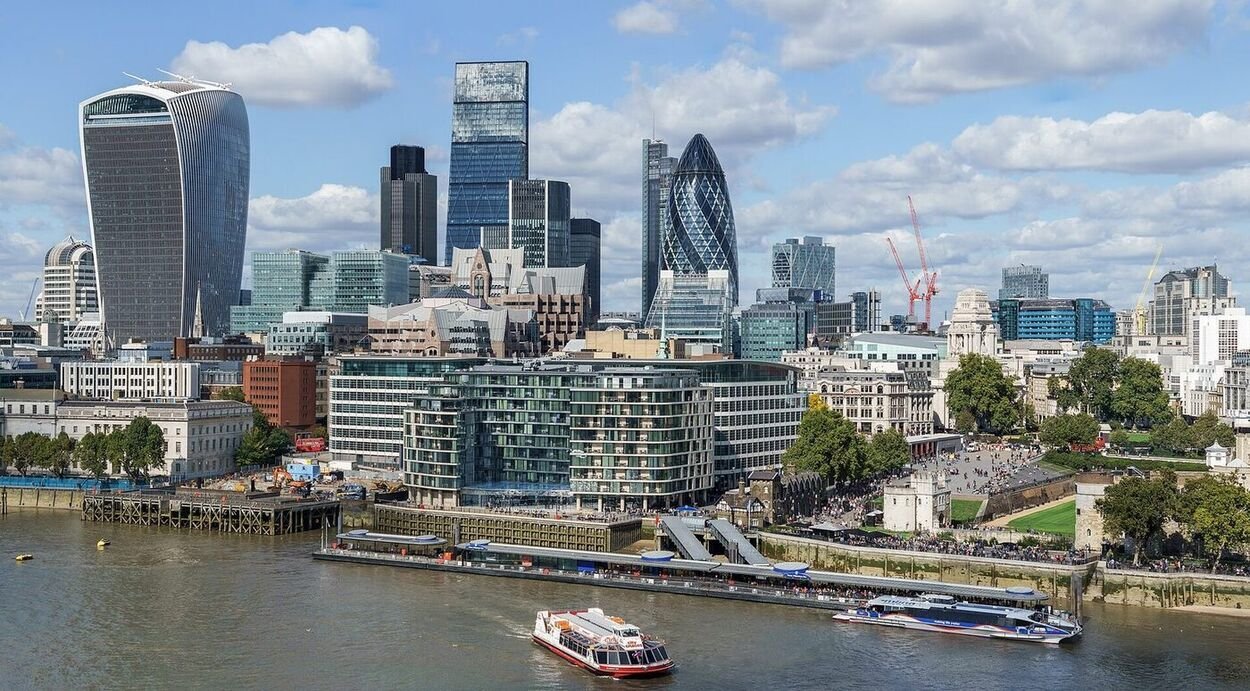
Getting the paper right at both ends
Every commercial consignment on this corridor stands on a documentary chain, and the chain is only as strong as its dullest link. At the Indian end, the commercial invoice must state the Incoterms honestly — the difference between FOB and CIF values flows straight into the UK customs value — and the packing list must reconcile to the physical cargo carton by carton. Where a preferential duty claim is available for Indian-origin goods, the certificate of origin has to be issued correctly before departure; the UK’s preference framework for developing-economy imports replaced the old GSP arrangement in 2023, and claims are checked against origin evidence, not goodwill. Export realisation paperwork — the e-BRC trail against the Shipping Bill — matters months later when your bank reconciles the remittance, so we file with that horizon in mind.
Product category adds its own layer. Foodstuffs and spices meet UK port-health controls and may need health certification and pre-notification before arrival; anything classed as dangerous goods travels on a declaration with the correct UN number and packing group; electrical and electronic goods placed on the GB market carry conformity-marking obligations that the importer answers for. None of these are exotic requirements — but each one discovered at the port rather than at booking turns into days of dwell time. Our booking checklist walks the commodity through every applicable control before the container is stuffed.
Choose your Incoterms with the destination in mind, too. Selling DAP keeps the UK duty and VAT on your buyer’s account and their EORI on the entry; selling DDP makes you the importer in a foreign jurisdiction, with everything that implies for registrations and fiscal representation. Neither is wrong — but exporters who drift into DDP because a buyer asked nicely often discover the administrative weight only after the first entry is filed. We price the shipment under the terms you actually trade on, and say so plainly when a term change would serve you better.
Import VAT, deferment and cash flow
UK-bound shippers consistently overlook the cash-flow tools HMRC provides. Postponed VAT accounting lets a VAT-registered importer account for import VAT on the VAT return instead of paying it at the border — for a regular importer this is the difference between money working in the business and money parked with customs. A duty deferment account plays the equivalent role for duty, consolidating a month of liabilities into one direct debit. Neither tool is automatic; both need setting up before the first shipment relies on them. We flag which apply to your flow when the quote is built, because a freight rate that ignores the fiscal plumbing is only half a price.
Timing shipments around the corridor’s peaks
The India–UK lane breathes with the retail year. Westbound space tightens from August through October as Christmas stock moves, and spot rates follow; if your goods feed UK retail programmes, your buyers’ deadlines and the carriers’ peak season collide by design, so booking discipline in that window is worth real money. The monsoon months complicate the Indian inland leg — factory collections in Gujarat and Maharashtra need weather slack from June to September — and the blank sailings that carriers announce around Lunar New Year thin out schedules for weeks either side. A regular exporter does not need to fear any of this; a rhythm of bookings made two to three weeks ahead, with peak-window cargo booked earlier still, rides through it.
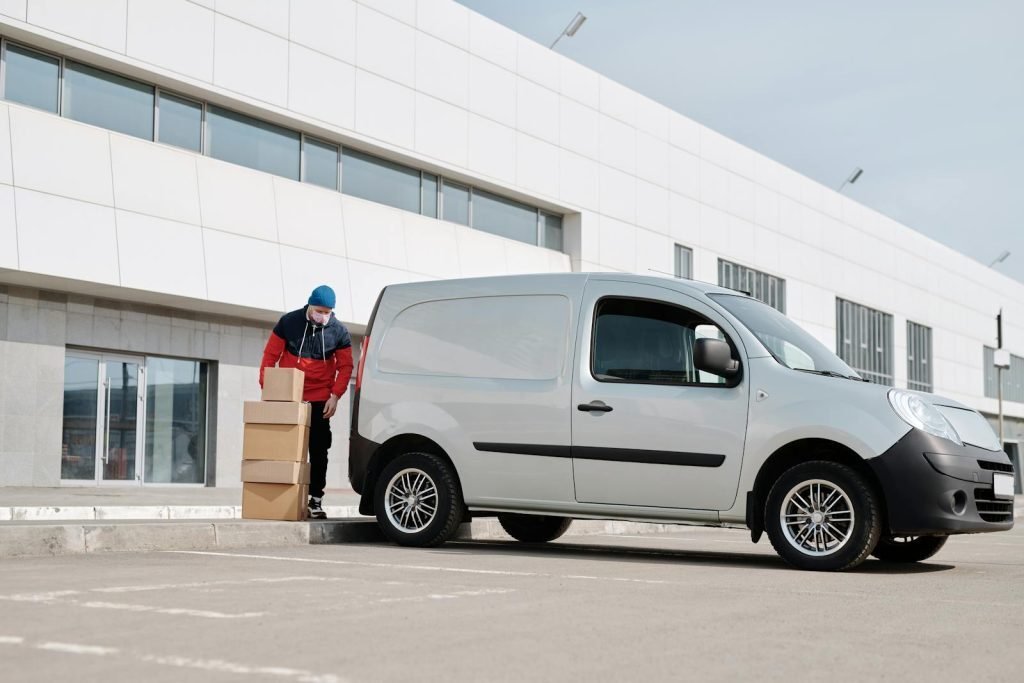
Answers for regular shippers
Do I need a UK company before I can import?
You need an importer of record with a GB EORI number — which can be your own UK entity, your UK buyer under the agreed Incoterms, or a representation arrangement set up for the purpose. Many Indian exporters sell on terms where the UK customer imports; others, building a UK market presence, import in their own name. We help you establish which structure your commercial terms actually imply, because the entry must be filed in the right name from the first shipment.
Should a monthly exporter use FCL or LCL?
Run the cube honestly. Below roughly half a container a month, LCL usually wins despite its per-cubic-metre handling costs; near or above that threshold, a dedicated box gives you schedule control and fewer touches on the cargo. Some clients alternate — LCL in slack months, FCL for peak orders. The wrong answer is defaulting to one mode forever because it was right in year one.
Who moves the goods after UK clearance?
We do — clearance without delivery is half a service. UK retail distribution centres work on booked slots and penalise missed ones, so the final-mile plan is agreed before the vessel arrives: haulage from the port, tail-lift or dock-level delivery as the site requires, and the slot confirmed with your consignee. For cargo not needed immediately, bonded or free-circulation storage near the port bridges the gap.
Can you handle a one-off shipment, or only contracts?
Both. A single exhibition consignment, a first trial order for a UK buyer, a machinery spare that must be in Birmingham next week — one-off movements get the same documentation rigour as contract freight. Plenty of our standing corridor arrangements began as a single pallet that cleared without incident.
When does air freight make commercial sense?
When the value of time beats the freight differential: launch stock for a UK listing date, replacement parts holding up a production line, pharmaceutical or high-value goods where inventory cost and security argue against a month at sea. Nine to ten hours from BOM or DEL into Heathrow buys back weeks — the discipline is reserving it for cargo where those weeks are actually worth the money.