
Families moving from India to Norway frequently ask two questions that sit outside the household shipment: what happens to the dog, and is it worth bringing the car. The answers are yes to both, with specific conditions attached. Both require planning that starts at the India end, and both become considerably harder when left until the final weeks before the move. The pet timeline alone — with the rabies antibody titre wait that applies to animals coming from a country outside the EU’s listed third-country group — can stretch to six months or more, while the vehicle path needs the transfer-of-residence relief, a Norwegian technical approval and inspection through the Statens vegvesen (the Norwegian Public Roads Administration), and registration before the vehicle can lawfully run on Norwegian roads. Seemleius coordinates pets and vehicles from India to Norway as a managed part of your relocation.
Relocating your pet from India to Norway
Norway applies the EU’s pet movement framework through the EEA Agreement, and as a destination it also maintains its own established import controls. For animals travelling from India — a country outside the EU’s listed third-country group for rabies purposes — the entry requirements are detailed and the sequence is fixed. The animal must first be implanted with an ISO 11784/11785-compliant microchip; the rabies vaccination must follow the microchip, because any vaccination given before the chip is not valid for entry; a blood sample for a rabies antibody titre test must be taken at least 30 days after the vaccination and tested at an approved laboratory, demonstrating an antibody level of at least 0.5 IU/ml; and a waiting period of three months must elapse from the date the blood sample was drawn before the animal can enter. Tapeworm treatment within a defined window before travel applies to dogs.
Once those steps are complete, an animal health certificate must be issued by an official Indian veterinary authority within the validity window before the travel date, and the arrival must be notified to the Norwegian authorities. Pets from outside the EEA must enter Norway through an approved point of entry — in practice Oslo (OSL) for most Indian-origin animals — and the import is overseen by the Norwegian Food Safety Authority (Mattilsynet). None of these steps can be reordered or compressed.
India adds its own export requirements. The Animal Quarantine and Certification Service (AQCS) issues the Indian export health certificate; a No Objection Certificate from the Wildlife Crime Control Bureau is required for certain species and for any CITES-listed animal. The pet must be examined by an authorised veterinary officer and its microchip details verified before the Indian certificate is issued. These India-side steps run in parallel with the entry preparation for Norway and must both be complete before the animal travels.
- India export health certificate via AQCS, and Wildlife Crime Control Bureau No Objection Certificate coordination where applicable
- Entry sequence for Norway — ISO microchip, rabies vaccination, antibody titre test at an approved laboratory, the three-month wait, tapeworm treatment for dogs within the required window, and the official animal health certificate
- Arrival notification and entry through Oslo as an approved point of entry, with the import overseen by Mattilsynet, the Norwegian Food Safety Authority
- Pet-appropriate air travel from BOM or DEL into Oslo, routed via a European hub on carriers with established animal-handling capability
- Liaison with accredited Indian handlers who understand both the AQCS export side and Norwegian animal-welfare standards
Shipping a vehicle from India to Norway
Moving a car or motorcycle from India to Norway involves Indian export documentation — the RC book, a No Objection Certificate from the RTO, the AD code and an ICEGATE shipping bill for the vehicle — sea freight from Nhava Sheva or Mundra to a Norwegian port, and a Norwegian approval and registration process. Because the vehicle is being imported from outside the EEA, it must go through a technical approval with the Statens vegvesen before it can be registered: the inspection assesses whether the Indian-specification vehicle meets Norwegian and applicable European technical and environmental standards, covering lighting, emissions, brakes, glazing, mirrors and structural items. Modifications are often required before approval is granted, and the inspection result determines whether the vehicle can be registered at all.
On the customs side, transfer-of-residence relief is the principal route to reduce the import charges — customs duty, Norway’s one-off vehicle import tax and import VAT — that otherwise apply to a vehicle imported from outside the EEA. The relief is available where the conditions on prior ownership and use of the vehicle at the India address are met and the vehicle remains in your ownership for the qualifying period after import. Because Norway’s vehicle taxes are among the most significant of any consideration in bringing a car, it is worth assessing eligibility realistically before committing — sometimes the numbers favour the move, and sometimes they do not. Once technical approval is passed, the vehicle is registered with the Statens vegvesen, Norwegian motor-vehicle tax and any toll-road arrangement are set up, and the vehicle is ready for the road.
- India-side documentation: RC book, RTO No Objection Certificate, AD code, ICEGATE shipping bill and export customs clearance for the vehicle
- Sea freight from Nhava Sheva or Mundra into a Norwegian port — container or Roll-on Roll-off depending on the vehicle and your preference, usually via a North European transhipment hub
- Transfer-of-residence relief application to Tolletaten, where eligibility is supported by the required prior ownership and use of the vehicle in India
- Statens vegvesen technical approval and inspection scheduling, with modification advice where the vehicle’s Indian specification does not directly map to Norwegian requirements
- Norwegian registration, motor-vehicle tax set-up and the practical arrangements for toll roads and ferries
- Delivery to your Norwegian address, to a storage facility, or to an inspection point
How the planning works
- Tell us what is moving. Pet details (species, breed, size, microchip and vaccination status) and / or vehicle details (make, model, year, current registration and specification), plus your anticipated departure from India.
- Map both sides. We lay out the India export requirements and the Norway entry requirements for each, with all fixed waiting periods, titre-test lead times, transfer-of-residence eligibility windows and inspection scheduling identified.
- Coordinate the journeys. Pet travel into Oslo and vehicle freight via a Norwegian port are booked and timed to align with your household shipment and your Norway arrival date.
- Keep you informed. Your coordinator provides updates on both the pet and the vehicle through transit, arrival notification, Tolletaten clearance and Statens vegvesen scheduling — so you know exactly where they are at every stage.
India’s pet export requirements and Norway’s entry requirements together create a timeline that is often longer than families expect — six months or more in most cases because of the three-month titre wait — while the vehicle path is shorter on the calendar but heavier on documentation and tax assessment. Start both conversations early, and read our overview of moving from India to Norway for the wider context. Get in touch as soon as you have a Norway move in view and we will map the full timeline from the India end.
Why an Indian-market car rarely makes the numbers work
The honest advice on this corridor is that most families should sell the car in India. Four things stack against bringing it, and they compound. The first is that India drives on the left and Norway drives on the right, so an Indian car is right-hand drive in a country built around the opposite. Norwegian rules do permit a right-hand-drive vehicle to be registered and headlamp aim can be corrected, but ticket machines, parking barriers and overtaking on a two-lane road through a fjord valley all assume a driver sitting on the left.
The second is approval. A car built for the Indian market has no European Certificate of Conformity, so it cannot be registered on paperwork alone and must go through an individual technical approval with the Statens vegvesen, examining lighting, emissions, braking, glazing, mirrors, tyres and structure. Modifications are frequently required, they are done in Norway at Norwegian labour rates, and the outcome is not guaranteed before the money is spent. The third is tax. Norway’s one-off registration tax, the engangsavgift, falls on a vehicle when it is first registered in the country and is calculated from the vehicle’s weight together with its CO2 and NOx emissions, reduced according to the vehicle’s age. Import VAT at 25 per cent applies on top of the customs value. Transfer-of-residence relief can lift some of that burden, but it carries conditions about how long the vehicle was owned and used abroad before the move and a period after import during which it may not be sold, and those conditions should be checked with Tolletaten against your own circumstances rather than assumed.
The fourth is life afterwards. Indian marques have no dealer or parts network in Norway, road salt is used generously through the winter, studded or approved winter tyres are required during the cold months, and the resale value of an individually approved Indian-specification car in the Norwegian market is close to nothing. Add the sea freight and the domestic delivery, and the total usually exceeds what a comparable used car costs to buy locally. There are exceptions — a genuinely rare or sentimental vehicle, a motorcycle with real personal history — and for those the process is entirely workable. It just should not be entered into on the assumption that it saves money.

Norway’s electric-vehicle picture, factually
Norway has moved further towards electric cars than any other country, and battery-electric vehicles now account for the overwhelming majority of new passenger cars sold there. For years a battery-electric car was exempt from the value-added tax that applies to every other vehicle and from the one-off registration tax entirely, with reduced annual road tax and capped rates on toll roads and ferries alongside. Several of those advantages have since been trimmed as the technology stopped needing the support: the VAT exemption now applies only up to a purchase-price threshold set in the annual budget, and electric cars have been brought into the weight component of the registration tax. The charging network is dense even by European standards, including along the mountain routes and the western fjord corridors.
For someone arriving from India the relevant conclusion is straightforward. An Indian electric vehicle faces exactly the same individual-approval hurdle as any other Indian-specification car, so the incentives are not a reason to ship one. They are a strong reason to look at buying or leasing electric once you are settled, particularly in Oslo or Bergen where charging at home or at work is normal and the running costs against a petrol car are not close.
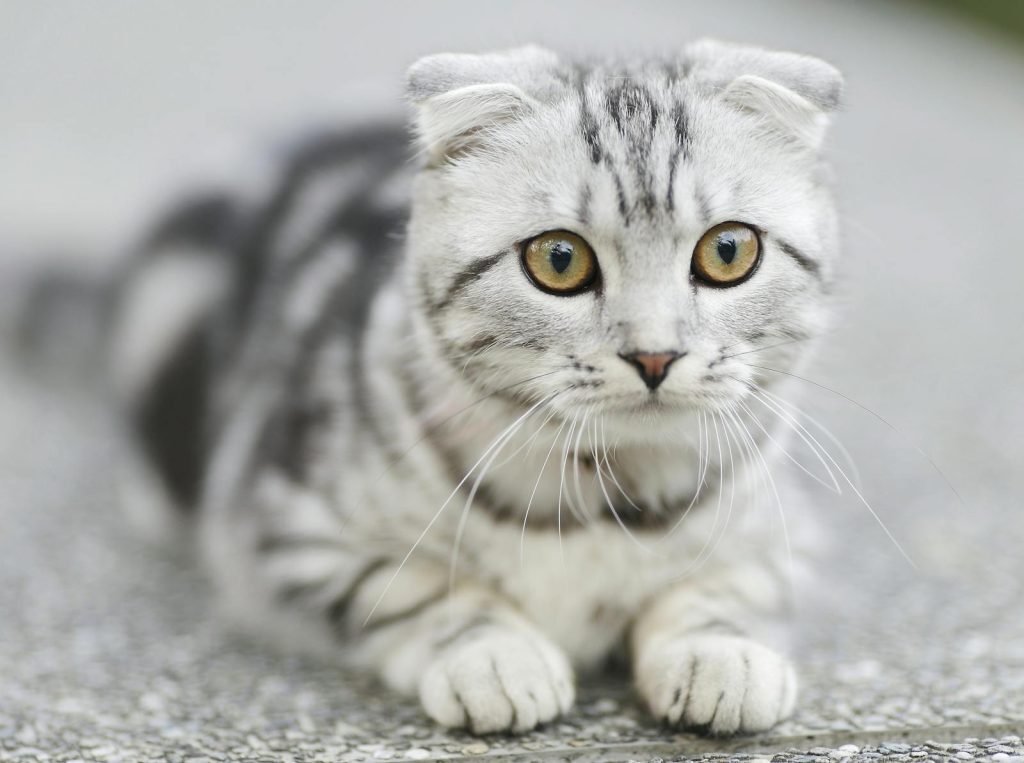
Flying an animal from India into a Norwegian winter
Once the fixed sequence of microchip, vaccination, titre test and waiting period is behind you, the remaining work is the flight itself, and season governs it at both ends. Indian departures in May and June run into carrier heat embargoes on live animals at Delhi and Mumbai, when ground temperatures on the apron exceed what an airline will accept. Northern European arrivals in December and January run into the opposite limit: most carriers apply a minimum temperature threshold and will decline a booking if the forecast at any transit or destination point falls below it. The workable windows on this corridor are therefore spring and autumn, and a booking made three to four months ahead has room to move if a flight is pulled.
The crate is IATA Live Animals Regulations work and it is not a place to economise. The animal must be able to stand, turn and lie down naturally; the door fastening, ventilation on the required number of sides, water access and spacer bars all have to comply, or the animal is refused at check-in. Buy it weeks in advance and let the animal sleep in it at home, so travel day is not the first acquaintance. Snub-nosed breeds — pugs, bulldogs, Persian cats — face outright refusal from many carriers in the hold. On the transhipment through a European hub, an animal moving as manifested cargo is checked and watered by the ground handler between sectors, so the routing should be chosen for the length of that layover rather than for the headline fare.
On arrival at Oslo the animal enters through a designated travellers’ point of entry, where the documentation is presented and the consignment is cleared. Have the original health certificate, the microchip record, the vaccination card and the laboratory titre result together in one folder, in that order. Copies are not a substitute for originals.
A working countdown for a pet moving from India to Norway
| Time before travel | What has to be done |
|---|---|
| Seven to eight months | ISO 11784/11785 microchip implanted, then the rabies vaccination — in that order, since a vaccination given before the chip does not count |
| Six to seven months | Blood sample drawn no earlier than thirty days after the vaccination and sent to an approved laboratory for the rabies antibody titre test |
| Result plus three months | The mandatory waiting period runs from the date the sample was taken; entry is not possible before it ends |
| Three to four months | Flight booked around the seasonal temperature embargoes; crate bought and introduced at home |
| Four to six weeks | AQCS export health certificate process begun in India, and a Wildlife Crime Control Bureau No Objection Certificate where the species requires one |
| Final ten days | Veterinary examination, the official animal health certificate issued within its validity window, and tapeworm treatment for dogs inside the required period |
| Travel week | Arrival notified, documents assembled as originals, food withheld appropriately before the flight and water available until check-in |
Questions that come up about pets and vehicles
Can the pet travel on the same flight as the family?
Sometimes, and it is worth asking for, but a routing through a European hub often means the animal moves as manifested cargo on a different service. That is not a worse outcome — cargo handling for live animals at the major hubs is well practised — but it does mean somebody has to be at Oslo to receive the animal, and that person should be identified before the booking is made.
Is quarantine required in Norway?
Not where the entry sequence has been completed correctly and the documentation is in order; the waiting period after the blood sample is served before travel rather than after arrival. Gaps in the sequence are what create problems at the border, which is why the calendar above starts more than half a year out.
Can the car be driven while approval is pending?
No. A vehicle imported from outside the EEA cannot be used on Norwegian roads until it has passed technical approval and been registered with the Statens vegvesen, so plan for it to sit — at your address, or in storage — for the weeks that process takes, and arrange other transport for the arrival period.