
A household move from India to Italy is usually tied to a date that will not flex: an employer’s reporting date, a university term start, or a tenancy that begins whether or not the container has arrived. The move has to be planned around that fixed point, working backwards from the Italian delivery to the India packing date. Sea transit from Nhava Sheva to Genoa typically runs in the range of 20 to 28 days; customs processing and onward road delivery add further time. Getting the planning right at the India end is what keeps the Italian arrival on schedule — and what protects the transfer-of-residence relief, which exempts used personal effects from import duty and 22% IVA when the move is correctly documented as a genuine transfer of your main home to Italy.
Seemleius household and personal relocation from India to Italy coordinates both ends: the ICEGATE shipping bill, export clearance and packing in India, and the import declaration, transfer-of-residence relief application and final delivery in Italy. One coordinator holds the thread from the first survey in Mumbai or Bengaluru to the last piece of furniture placed in a flat in Milan’s Navigli, a Rome apartment in Prati, a Turin home in San Salvario, a Florence address in Oltrarno or a Bologna flat near the centro storico.
The India export side
Personal effects and household goods exported from India require a shipping bill filed electronically on ICEGATE — the Indian Customs export declaration system. The goods must be inventoried, valued and described accurately; the shipping bill must agree with what is in the container; and the AD code of the originating port must be registered against the exporter or shipper of record. We prepare all of this as a standard part of the move, not as an afterthought. Families who have moved before and been handed a sheaf of export forms to complete themselves will recognise the difference.
For families with financial assets and investments in India, FEMA — the Foreign Exchange Management Act — is a relevant background consideration when emigrating, particularly around resident-to-non-resident account reclassification, NRO and NRE account structures, and any pending GST refund or LUT position for those leaving a business behind. FEMA compliance itself is a matter for your chartered accountant, but we can point you toward the right questions to raise before the move is finalised, and we will flag where the shipping-bill data interacts with downstream tax positions so nothing is filed in haste.
What travels in a household shipment from India
- Furniture — sofas, beds, wardrobes, dining sets; dismantled for export and reassembled at the Italian address, with a note that older Italian buildings often have narrow stairwells and small lifts that affect what can be carried up
- Kitchen equipment — appliances, cookware and utensils; the contents of an Indian kitchen packed carefully for sea transit, with the reminder that Italy runs on a 230V supply and that plug adaptors will be needed for Indian-pin appliances
- Religious and cultural items — puja items, artwork and textiles, handled with awareness of what they represent
- Books, personal libraries and study materials — important for the students and academics who travel this corridor
- Electronics — laptops, cameras and entertainment systems, packed against humidity and handling across the sea route
- Clothing and personal effects for the whole family
Freight options from India to Italy
Sea freight from Nhava Sheva
The primary gateway for Mumbai, Pune, Ahmedabad and western India moves — consolidated groupage for smaller households, full container for larger volumes, into Genoa, La Spezia or Trieste in roughly 20 to 28 days.
Sea freight from Chennai or Cochin
The natural gateway for Bengaluru, Hyderabad, Chennai and South India moves, with good connectivity to the Italian ports and onward road delivery across the country.
Air freight from BOM, DEL or MAA
Direct and one-stop services into Milan Malpensa or Rome Fiumicino for urgent or time-critical shipments when the sea timeline will not fit around a confirmed start date.
Italian delivery anywhere
Onward road delivery from the port of entry to any address in Italy — Milan, Rome, Turin, Florence, Bologna, Naples or beyond — with awareness of each city’s ZTL restricted-traffic zone rules.
The codice fiscale, residenza and the first weeks in Italy
Italy runs on its own sequence of paperwork, and the first weeks after arrival set the tone. The codice fiscale — the Italian tax code — is the foundational identifier, needed for a lease, a bank account, a utility connection and a mobile contract; it can often be obtained from an Italian consulate before departure, or from the Agenzia delle Entrate after arrival. Registering the household address with the comune’s anagrafe office establishes formal residenza, which in turn unlocks enrolment in the Servizio Sanitario Nazionale and the tessera sanitaria health card for the family. Seemleius is a relocation partner, not an immigration adviser — the outline above is general background, and each family confirms its own position with the relevant Italian office or a qualified adviser. What we put in writing is the shipping side: the sailing, the expected clearance window and the delivery slot.
Schools, neighbourhoods and finding your way in
For Indian families with school-age children, the Italian schools system is a substantial early decision: scuola primaria followed by scuola secondaria di primo grado and then scuola secondaria di secondo grado, with the licei (academic), istituti tecnici and istituti professionali as the upper-secondary tracks. Many Indian families choose one of the international schools — among them the International School of Milan, the Marymount and St Stephen’s schools in Rome, the International School of Turin and the International School of Florence — particularly where a return to India remains a possibility or English-medium continuity matters. Indian community life is well established around Milan and the Lombardy towns, around Rome, and across the agricultural Po Valley, with Indian grocery shops, places of worship and community associations supporting families who arrive.
A note on Italy’s customs expectations
Italian customs is documentation-driven. A household shipment clears the Agenzia delle Dogane without difficulty when the inventory is accurate, the valuations are defensible, the import declaration matches the shipping bill, and the transfer-of-residence relief application is supported by evidence that the family is genuinely relocating its main home to Italy — typically the residence documentation issued to the family, the housing contract and proof of prior residence abroad. We ensure this by preparing the Indian shipping bill and the Italian import declaration from the same verified inventory, so there is no gap between what India records as leaving and what Italy sees arriving, and the relief application stands up to scrutiny.
How the move runs
- Survey in India. We visit your home in Mumbai, Bengaluru, Delhi NCR, Hyderabad, Pune, Chennai or another city, assess the volume and contents, and return a detailed quote with realistic Italy arrival timing.
- Prepare export documentation. Shipping bill filed on ICEGATE, AD code confirmed, packing list and Indian export paperwork prepared and filed before the shipment moves.
- Pack and ship. Our crew packs to export standard and the shipment departs from Nhava Sheva, Mundra, Chennai or Cochin on the confirmed route.
- Clear in Italy and deliver. Import clearance and transfer-of-residence relief managed with the Agenzia delle Dogane; road delivery arranged to your home, including unpacking and furniture placement, and a briefing on the residenza sequence ahead.
From a two-bedroom flat in Bengaluru to a five-bedroom family home in Pune, the process is the same and the care is identical. Our India-to-Italy corridor guide covers the wider route; request your quote and we will build the plan around your India departure date and your Italy arrival date.
Getting a container to an Italian front door
The sea leg is the predictable part. The last hundred metres in Italy is where a household move is won or lost, and it is worth understanding before you choose a flat.
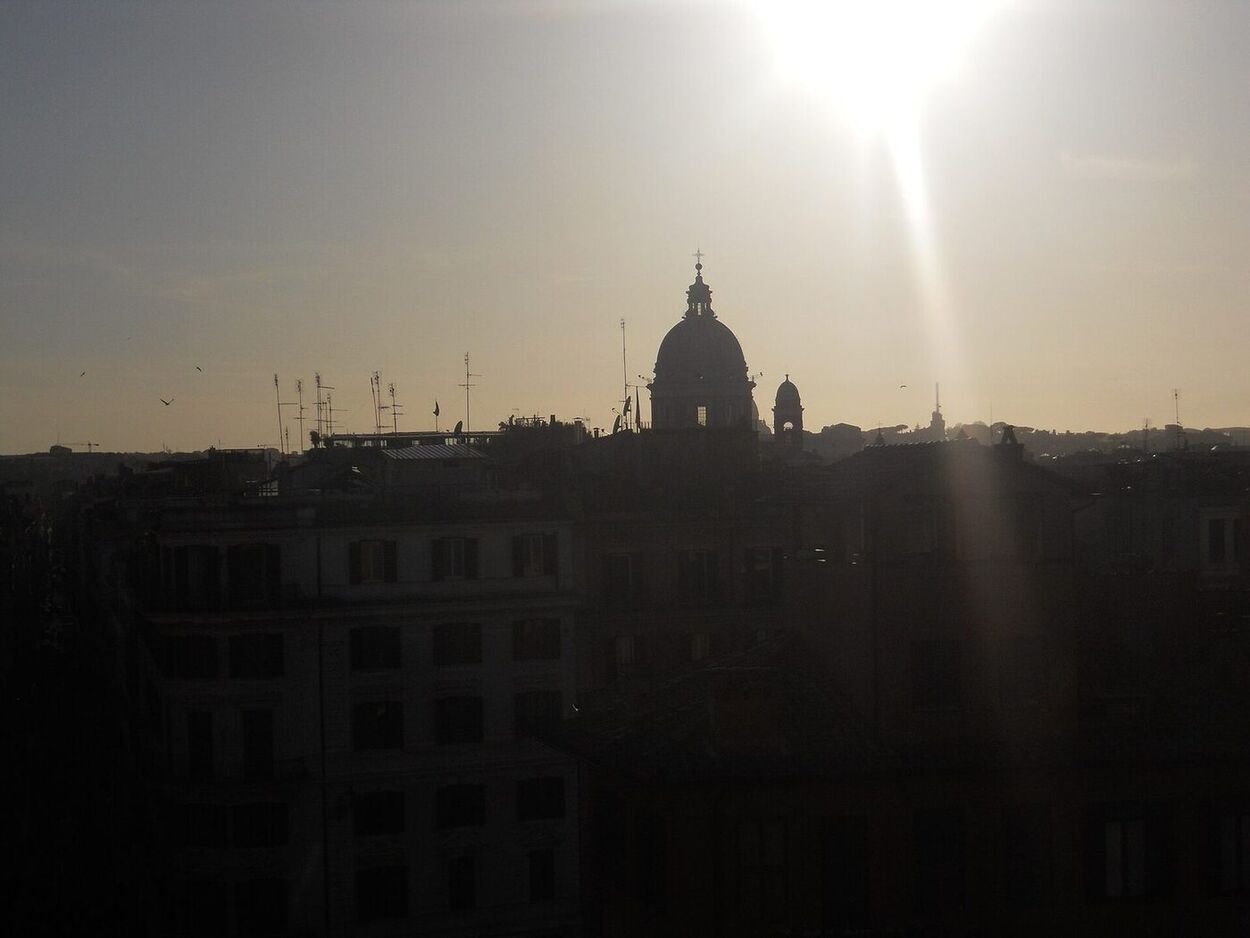
Most Italian city centres are governed by a zona a traffico limitato, policed by camera gates that read number plates. A removal vehicle needs authorisation registered against its plate for a stated day and often a stated hour band, applied for at the comune in advance. Florence and Bologna are strict, Rome’s centro storico more so, and Milan layers a congestion charge inside the inner ring on top of a low-emission zone covering the whole municipality. In practice a full-size vehicle is rarely the one that reaches the door: the container is stripped at a yard outside the zone and the load shuttled in on something small enough for the street, the gate and the slot.
Then there is the building itself. Streets in a medieval or renaissance core were laid out for handcarts, and a doorway may open straight onto a two-metre lane. Older blocks have stairwells that turn sharply onto a small landing and lifts sized for people rather than furniture — a three-person cabin will not take a double mattress or a wardrobe carcass. Where the stairs will not do it, Italy’s standard answer is the autoscala, a truck-mounted ladder hoist that runs items up to a window or balcony. It is quick, it is completely ordinary here, and it needs three things: a window or balcony that opens wide enough, a length of street the truck can occupy, and a street-occupancy authorisation from the local police obtained several working days beforehand.
Two small details catch people out. Italian floors are numbered above the piano terra, so a flat advertised as third-floor is four flights up. And access to many buildings runs through a portone into an internal courtyard, where the height of that carriage arch, not the width of the street outside, is the binding constraint. Send photographs of the entrance, the stairwell and the lift as soon as you have an address, and we will tell you which of these apply before you are paying for a crew to find out.
What sits inside the quote
A household quote on this corridor comes from four things: how much there is, how hard it is to get out and in, how it travels, and what has to happen at the Italian end.
- Volume. Surveyed in cubic metres, never estimated from a bedroom count. Shared-container groupage is priced by the cubic metre and a full container by the box, and the point where a twenty-foot container becomes the cheaper option usually falls somewhere in the mid-teens of cubic metres.
- Access at both ends. Stair carries, distance from legal parking, shuttle vehicles, hoist hire, and the authorisations that go with them.
- Packing and crating. Export cartons for the general load, and heat-treated timber cases carrying the IPPC mark for marble, glass, mirrors, artwork and instruments — wood packaging entering the EU has to comply with ISPM 15, and untreated timber is a straightforward way to have a container held.
- Freight and its surcharges, shown separately, so it is clear what is base rate and what is bunker, peak season or routing.
- Both customs ends, and marine insurance priced against a declared, itemised value.
- Storage, if the container lands before the keys do. Holding goods in India before the sailing is cheaper than holding them in Italy after clearance, so the sooner that need is identified the less it costs.
Things that should not go in the container
Some of what an Indian household would naturally pack cannot lawfully enter the EU, and discovering that at Genoa is expensive.
- Meat and dairy. Personal consignments of meat and milk products from outside the EU are restricted. That catches ghee, paneer, homemade sweets made with khoya or milk solids, and dried meat, however carefully they are packed.
- Plants, seeds and soil. Plant-health rules bar most living plant material and anything carrying soil. Potted plants do not travel.
- Rosewood and sandalwood. Indian rosewood and the wider Dalbergia genus are CITES-listed, so furniture, carvings and instruments made from them need documentation to cross a border. Ivory, tortoiseshell and shahtoosh are prohibited outright.
- Antiques. Anything over a hundred years old falls under India’s Antiquities and Art Treasures Act 1972, and export requires a certificate from the Archaeological Survey of India confirming the piece is not a protected antiquity.
- Gas cylinders, aerosols, paints, solvents and fireworks. Ordinary dangerous-goods exclusions, and the reason a surveyor asks about the kitchen and the garage.
Spices, pulses, rice, tea, dry masalas and sealed commercially packaged foods are generally fine. Mention anything you are unsure about while the surveyor is standing there — the answer costs nothing at that stage.
Three questions families ask
Will Indian appliances work in Italy?
Italy runs on 230 volts at 50 hertz, which matches India, so voltage is not the issue — the plugs are. Italian sockets take the three-pin Type L and the round Type F, so Indian plugs need adaptors or replacement. Beyond that, weigh it item by item. A fridge or washing machine already several years old rarely justifies the cubic metres it occupies, while a good mixer grinder, wet grinder or pressure cooker almost always does, because the Indian equivalents are awkward to buy locally.
How long between the ship arriving and the goods reaching the house?
Assume one to two weeks from berthing to delivery on a straightforward clearance, and longer if the entry is queried or an examination is ordered. That window is why families are asked to keep somewhere to sleep and something to cook with outside the container.
Can part of the shipment go by air?
Yes, and a small air consignment travelling alongside the sea shipment is often the most sensible thing a family can arrange — a few hundred kilogrammes of clothes, school books, medication and kitchen essentials, in the air from BOM, DEL, BLR or MAA to Malpensa or Fiumicino within days, with everything else following by sea. It costs far less than air-freighting a household and it makes the first month liveable.
Bring us the fixed date and the address, or the shortlist of addresses, and the plan gets built from there. Request your quote when you are ready.