
- 20+ years moving households & cargo
- 184 countries destination corridors covered
- In-house customs clearance filed by our own team
- One coordinator from quote to delivery
Costa Rica has become an increasingly considered destination for Indians, drawn by its political stability and a growing services and technology sector clustered around the Central Valley. The corridor from India to Costa Rica is not a high-volume route, but it is a steady one — built around professionals joining multinational shared-service centres, families relocating for a quieter pace of life, and entrepreneurs and retirees drawn by the climate and the pace of life.
Because there is no direct shipping or air connection of any scale between India and Costa Rica, this corridor is defined by careful routing. Sea freight is transhipped through Caribbean or Pacific hubs, and air freight connects through a European or North American gateway. Getting the India end right — clean export documentation, the correct port and a realistic transit window — is what keeps a long, multi-leg move predictable rather than stressful.
Freight routes and customs
On the India side, every shipment begins with export clearance: the shipping bill filed on ICEGATE, AD code registration with the originating port and a packing list and invoice prepared to a standard that will survive scrutiny at both ends. Household and commercial sea freight typically loads at Nhava Sheva (JNPT) or Mundra, with Chennai and Cochin serving South Indian origins. Containers route via a transhipment hub — commonly in the Caribbean or on the US Gulf coast — before reaching Costa Rica, so realistic port-to-port transit runs in the region of 40 to 55 days depending on connections.
Costa Rica’s principal seaport is Puerto Moín — the container terminal serving the Caribbean coast near Limón — with Puerto Caldera handling Pacific traffic. Air freight departs Mumbai (BOM), Delhi (DEL), Bengaluru (BLR) or Chennai (MAA) and connects through Europe or North America into Juan Santamaría International Airport (SJO) near San José. Import clearance is handled by the Dirección General de Aduanas. Costa Rica allows a concession on used household goods for incoming residents, and we confirm the documentary requirements — including residence documentation — before your shipment sails.
Indian export clearance
Shipping bill filed on ICEGATE, AD code registration and FEMA-aware documentation managed at Nhava Sheva, Mundra, Chennai or Cochin, so the shipment leaves India correctly.
Transhipment routing
No direct India–Costa Rica service exists, so we book through established Caribbean or Gulf-coast hubs and give you a realistic 40 to 55 day window rather than an optimistic guess.
Costa Rican clearance
Dirección General de Aduanas import declarations at Puerto Moín or Caldera, with the used-household-goods concession confirmed against your residence documentation before dispatch.
One coordinator, both ends
The same person manages your India survey, export paperwork, sea or air dispatch and delivery in Costa Rica — no handover gaps across a multi-leg route.
Who moves on this corridor
This single page serves the whole corridor. Households and families form the core — professionals joining shared-service operations around San José, and families relocating for lifestyle reasons. Business and office moves arise as Indian firms place staff into Costa Rica’s nearshore services sector. Commercial freight — equipment, stock and project cargo — travels the same routes with the same documentation discipline.
Where we deliver
We deliver across Costa Rica: San José and the Central Valley; Heredia and Alajuela with their corporate and free-zone clusters; Cartago; the Caribbean city of Limón; Liberia and the Guanacaste region; and Puntarenas on the Pacific coast. If your destination is a smaller town, ask us — we arrange final delivery nationwide.
How your move works
- India-side survey. We assess volume and contents at your home or office in India, in person or by video, and return a clear quote with sea and air options and realistic San José arrival windows.
- Export documentation. Indian export paperwork is prepared early: shipping bill on ICEGATE, AD code confirmed, packing list, invoice and any FEMA-related declarations relevant to your move.
- Pack and dispatch. Our crew packs to export standard, and the shipment is booked on the confirmed transhipment route to Puerto Moín or by air into SJO.
- Clear and deliver in Costa Rica. We manage Aduanas import clearance, apply the household-goods concession where eligible, and coordinate onward delivery to your address.
To start a move from India to Costa Rica, request a quote and your coordinator will walk you through the right plan for your timeline and budget.
Moín or Caldera: choosing the coast
Costa Rica is narrow enough that both of its container ports are within a day’s drive of the Central Valley, so the choice between them is made by the shipping network rather than by the destination. Moín, the container terminal beside Limón on the Caribbean side, is the bigger and newer of the two and handles most of the country’s box traffic; Caldera, on the Pacific near Puntarenas, is smaller and serves the trans-Pacific services from Asia and the west coast of the Americas.
From India, neither is reached directly. A box loading at Nhava Sheva or Mundra bound for Moín usually goes west — a Gulf or Colombo transhipment, the Suez Canal, a Mediterranean hub, then a transatlantic service into the Caribbean where it changes vessel again at Cartagena, Kingston or the Panamanian ports at Colón before the short hop to Limón. A box for Caldera goes east through Singapore, across the Pacific to a Mexican or Panamanian Pacific hub, then down the coast. Two transhipments are normal on either routing; three are not unusual. That is why the sea window on this corridor is quoted in weeks rather than days, and why we track each connection rather than simply the sailing from India.
In practice we choose the coast month by month, according to which hub connection is running most reliably, and we tell you which one and why. Both ports are roughly a hundred to a hundred and sixty kilometres from San José. From Moín the road is Route 32 through the Braulio Carrillo range, a spectacular and occasionally closed highway that landslides shut in heavy rain; from Caldera it is Route 27, faster and flatter. When the Caribbean side is wet we factor a day’s slack into the inland leg.
One more variable that people from India rarely think about: the Panama Canal. Much of the Caribbean-side traffic to Costa Rica has crossed or is connected through it, and in dry years the canal authority has restricted daily transits and vessel draught to conserve water. When that happens, schedules across the whole region stretch. We cannot control it, but we watch it, and we will tell you if it is affecting the sailings we are booking.
Up into the Central Valley
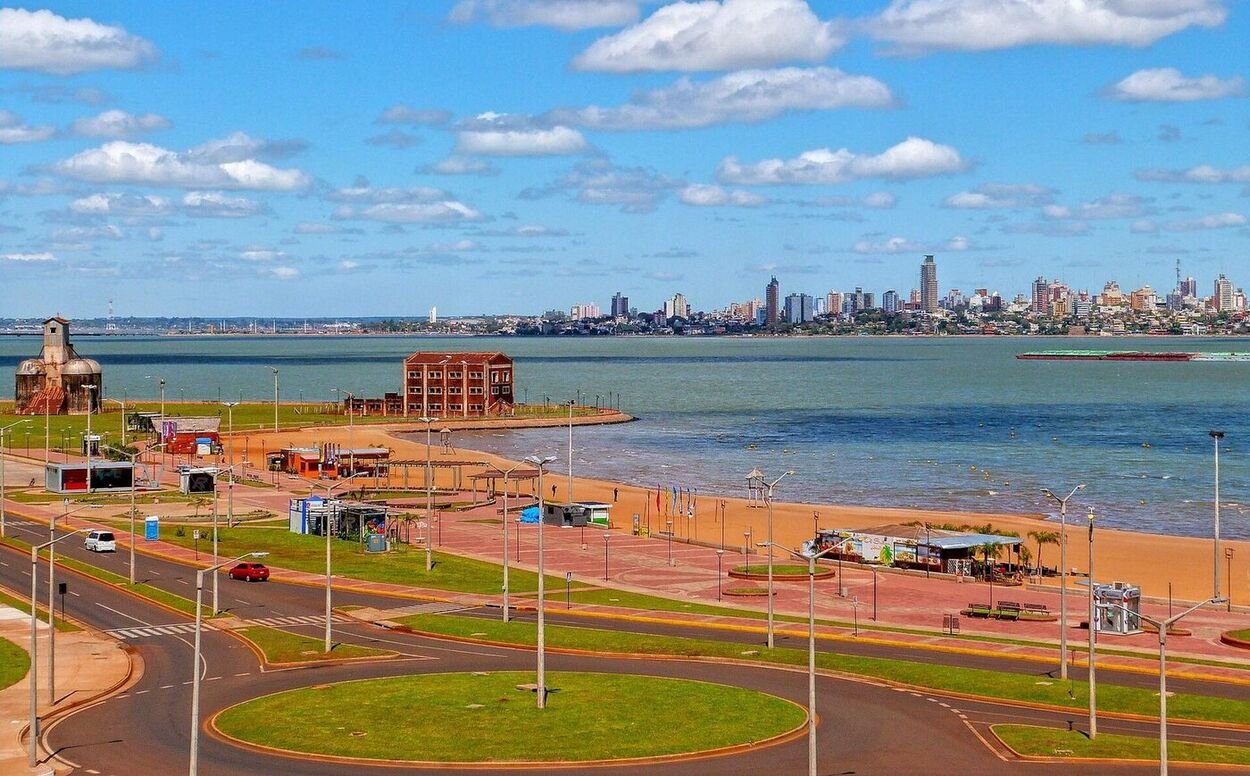
Almost every Indian household we move to Costa Rica ends up in the Central Valley: San José itself, or the suburbs and satellite towns that ring it — Escazú and Santa Ana to the west, Heredia and its free-zone parks to the north, Alajuela near the airport, Cartago to the east. The valley sits at around 1,100 metres, high enough for a mild climate and low enough that altitude does nothing odd to your belongings. What shapes delivery is terrain and rain.
The residential areas that draw newcomers are hilly. Escazú and Santa Ana in particular climb steep ridges, and a great many homes are in gated condominiums with a guardhouse, a delivery register and a limit on the size of vehicle that can come through the gate. A container truck rarely goes to the door. The standard pattern is to devan at a depot near the port or on the edge of the city and deliver on a smaller truck, sometimes two. Our Costa Rican partner confirms the gate rules and the vehicle limit with the condominium administration before the container is discharged.
Costa Rican addresses are famously descriptive rather than numeric — two hundred metres north of the old church, fifty metres west of the pulpería — and although postal codes and street numbering exist, the descriptive form is what people actually use. We ask for a GPS pin at the survey stage and again before delivery, because a truck looking for the old church in a town that has since built a new one loses an afternoon.
The green season, from roughly May to November, brings hard afternoon rain to the valley almost daily. Deliveries are scheduled for the morning and loads are tarped and film-wrapped before the truck leaves the depot. Outside the valley — Liberia and the Guanacaste coast, Limón, the Pacific beach towns — delivery is a long road day and is planned as one.
Costs, customs and the shape of the quote
Because the route has so many legs, a Costa Rica quote is built from more pieces than most, and we lay them out separately so you can see them. The Indian origin work comes first: survey, export packing and materials, haulage to Nhava Sheva, Mundra, Chennai or Cochin, the shipping bill on ICEGATE and AD code handling, and export clearance. Then ocean freight to the chosen coast, with each transhipment carrying its own handling charge at the hub. Then the destination: terminal handling at Moín or Caldera, the customs agent, the Dirección General de Aduanas entry, any inspection or storage days, inland haulage to the Central Valley with the transfer to a smaller vehicle, and delivery, unpacking, assembly and debris removal. Insurance is shown on its own line.
On the customs side, Costa Rican import entries are filed through a licensed customs agent, whose fee sits inside our quote. The agent needs a Spanish inventory with values, the bill of lading, and the consignee’s identification. Costa Rica’s concession on used household goods for incoming residents reduces duty substantially where the conditions are met — used goods, household quantities, arrival within the period the Aduanas allows, and the residence documentation it specifies. We are a relocation partner, not an immigration adviser; we tell you what the customs agent will ask to see and time the sailing so the shipment lands after those papers exist rather than before. Outside the concession, duty and IVA are assessed on value: new goods in packaging, commercial quantities, and higher-value electronics are the usual lines.
What moves the total is volume, then the number of transhipments the month’s routing needs, then whether the shipment is a sole-use container or groupage. Groupage from India to Costa Rica exists in theory and rarely in practice; there simply is not enough regular volume from India to fill a shared box on a schedule, and the Indian community in Costa Rica is small enough that we say so rather than hint at it. For a compact household we will show you an air option through a European or North American hub into Juan Santamaría beside the sea quote, and often the honest answer is a mix of the two.
Timing, briefly: the Indian monsoon from June to September affects packing days at origin; Costa Rica’s green season affects the inland leg; and the weeks around Christmas and Easter are congested at the Caribbean hubs. A booking-to-delivery span of two and a half to three months is a sensible planning figure for a sea move, with the range coming from the transhipment connections.
Costa Rica: the questions people ask
Is it really forty to fifty-five days at sea?
Port-to-port, yes, and sometimes longer when a connection is missed. Add packing, export clearance, Costa Rican customs and inland delivery and you are looking at the two-and-a-half to three months above. If your start date is closer than that, we will tell you what should fly.
Can I bring a car?
Costa Rica taxes imported vehicles heavily, and a used car from India is right-hand-drive in a country that drives on the right. For almost everyone the answer is to buy locally; if you have a specific reason to ship one, it goes into the survey conversation and we price it only once the customs treatment is confirmed.
What about Indian groceries and spices?
Factory-sealed, labelled dry goods in the quantities a family would use are generally admitted subject to inspection; anything fresh, home-prepared, unlabelled or plant-based will be refused. San José has a small number of Asian and Indian grocery suppliers, so a modest stock to start with is enough.
Do you handle the return to India?
Yes. Many postings to Costa Rica’s shared-service sector are for a fixed term, and we run the move home under the same coordinator, with Indian customs treating returning residents’ used goods under its own transfer-of-residence rules.