
- 20+ years moving households & cargo
- 184 countries destination corridors covered
- In-house customs clearance filed by our own team
- One coordinator from quote to delivery
China is one of India’s largest trading partners and the world’s second-largest economy, and the India–China corridor carries a steady flow of professionals, students, traders and corporate transferees. Indians move to China for roles in manufacturing and sourcing, technology, education and trade — many already familiar with Chinese supplier cities through years of business travel. The corridor is well served by some of the busiest shipping connections in the world.
A move from India to China is, logistically, one of the more straightforward long-haul routes we operate — China’s ports are vast, modern and frequently scheduled from India. The work lies in precise documentation: clean export clearance in India and accurate import declarations into a detailed and exacting customs regime. Seemleius coordinates both ends so the paperwork and the physical move stay in step.
The India–China corridor
Export clearance in India begins with the shipping bill filed on ICEGATE, AD code registration with the loading port and export-standard packing. Sea freight departs from Nhava Sheva (JNPT), Mundra, Chennai or Cochin and is routed to major Chinese container ports — Shanghai, Shenzhen, Ningbo-Zhoushan, Guangzhou or Qingdao — on frequently scheduled services, with port-to-port transit typically 16 to 28 days depending on any transhipment at Singapore. Customs clearance is handled by the General Administration of Customs (GACC), which administers import duty, VAT and the conditions for relief on used personal effects; consignees must be registered with customs, and we prepare the required documentation including the detailed inventory.
Air freight from Mumbai (BOM), Delhi (DEL), Bengaluru (BLR) or Chennai (MAA) reaches China through Shanghai Pudong (PVG), Beijing Capital (PEK), Guangzhou Baiyun (CAN) or Shenzhen Bao’an (SZX), on direct and one-stop services. Air suits urgent or compact consignments; we explain the cost premium over sea so you can decide with full information.
Indian export clearance
Shipping bill filed on ICEGATE, AD code registration, FEMA-aware documentation and customs clearance at Nhava Sheva, Mundra, Chennai or Cochin — so the shipment leaves India correctly.
Major-port sea routing
Frequent services to Shanghai, Shenzhen, Ningbo-Zhoushan, Guangzhou and Qingdao, with onward delivery to your city across China.
China customs
Clearance with the General Administration of Customs (GACC), consignee registration, duty and VAT confirmed in advance, and relief claimed where eligible.
One coordinator, both ends
The same person manages your India packing survey, ICEGATE export documentation, sea or air dispatch and China delivery — no handover gaps.
Who moves on this corridor
The India–China route serves several kinds of movers. Households include corporate transferees, manufacturing and sourcing professionals, technology and finance specialists, students, and families joining relatives. Business and office moves arise as Indian firms in trading, IT, pharmaceuticals and engineering set up sourcing offices or representative offices. Commercial freight covers equipment, samples, exhibition cargo and machinery. This single corridor page serves all three; your coordinator tailors documentation and routing to your consignment.
Where we deliver in China
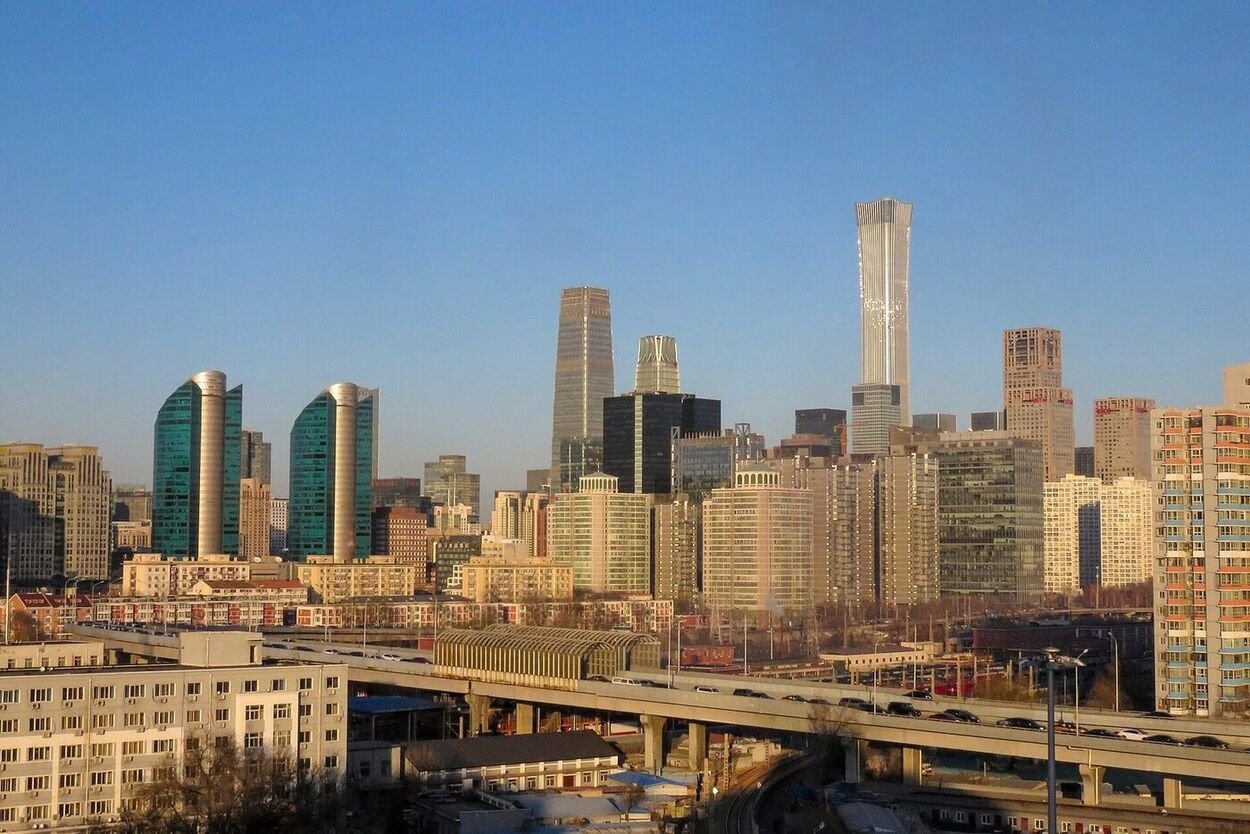
We deliver to Shanghai, the financial and commercial hub; Beijing, the capital; the Pearl River Delta cities of Guangzhou, Shenzhen and Dongguan; Hangzhou, Ningbo, Suzhou and Nanjing in the Yangtze Delta; and other centres including Chengdu, Chongqing, Qingdao, Tianjin and Xiamen. We also deliver to Hong Kong as a distinct customs territory. For other destinations we arrange onward delivery as part of your quote.
How your move works
- India-side survey. We assess volume and contents at your home or office in India — in person or by video — and return a clear quote with sea and air options and realistic China arrival windows.
- Export documentation. Indian export paperwork is prepared: shipping bill filed through ICEGATE, AD code confirmed, detailed inventory, packing list, invoice and any FEMA-related declarations.
- Pack and dispatch. Our crew packs to export standard from your India origin, and the shipment is booked and dispatched to a Chinese port or by air to a major Chinese airport.
- Clear and deliver in China. We manage GACC import clearance and consignee registration, advise on relief, and coordinate onward delivery to your address.
To start a move from India to China, request a quote and your coordinator will walk you through the documentation, routing and timeline.
Direct sailings, and why we still route by city
Of all the corridors we run out of India, China is one of the few with genuinely direct container services. Vessels loading at Nhava Sheva and Mundra sail on India–Far East loops that call Shanghai, Ningbo, Shenzhen (Yantian or Shekou) and Qingdao without transhipment; from Chennai the routing is more often via Singapore or Port Klang, which adds a few days but rarely more. That frequency is the reason this corridor is so much easier to plan than a move to South America or Africa: if you miss one sailing, the next is days away, not weeks.
The port of discharge still needs choosing, though, because China is large and the wrong port adds a long domestic leg. The table is how we think about it.
| Destination city | Usual port of entry | Note |
|---|---|---|
| Shanghai, Suzhou, Hangzhou | Shanghai (Yangshan or Waigaoqiao) | The busiest container port in the world; clearance is routine and delivery to the Yangtze Delta cities is a same-day drive. |
| Beijing, Tianjin | Tianjin (Xingang) | Beijing has no seaport; Tianjin is its gateway, roughly two hours away by road. |
| Guangzhou, Dongguan, Foshan | Guangzhou (Nansha) or Shenzhen | Pearl River Delta destinations can use either; Nansha is closer to Guangzhou itself. |
| Shenzhen | Shenzhen (Yantian or Shekou) | Shekou sits beside the expatriate districts; Yantian is the larger terminal. |
| Ningbo | Ningbo-Zhoushan | Served directly from India on several loops. |
| Qingdao, Jinan | Qingdao | Direct calls from India are less frequent; some routings go via Shanghai. |
| Chengdu, Chongqing, Wuhan | Shanghai, then inland | Inland cities are reached by rail or river barge from Shanghai, adding a week or more; air freight is often the better answer. |
| Hong Kong | Hong Kong | A separate customs territory with its own, lighter, regime; not covered by GACC procedures. |
Port-to-port on the direct loops is roughly two and a half to four weeks. Add packing in India, export clearance, GACC clearance and delivery, and a realistic booking-to-delivery span for a sea move is six to eight weeks.
GACC clearance, from the inside
China’s customs are thorough. That is not a complaint — it is the single most useful thing to understand about this corridor, because a shipment prepared for a thorough examination clears quickly, and one prepared casually does not. The General Administration of Customs expects an itemised inventory in Chinese, with a value and quantity against every line, and it expects the contents of the container to match it. Inspection, whether by X-ray or by opening the box, is common rather than exceptional. We prepare the inventory in India, in both languages, at the point of packing, so that the carton labels, the packing list and the customs declaration all say the same thing.
Relief from duty on used household effects is available, but GACC grants it only to consignees who hold the long-stay residence documentation issued in China that customs specifies, and it expects the goods to arrive within the period allowed around the consignee’s own arrival. The consignee also has to be registered with customs at the port of entry before the shipment is declared; our Chinese partner handles that registration once the papers exist. We are a relocation partner, not an immigration adviser — your employer’s HR or mobility team deals with the documentation side, and what we contribute is a clear list of what customs will ask to see and a shipping schedule timed so it exists when the vessel docks.
Some categories are treated separately even within a relieved household shipment. GACC has historically assessed duty on certain higher-value goods — televisions, computers, cameras, some appliances — regardless of whether they are used, and the list and rates change. We ask you to itemise these with make, model, serial number and approximate value so the declaration is right first time. New goods in sealed packaging are dutiable; commercial quantities of anything are dutiable and may be refused as personal effects. Books, printed material and recorded media are declared item by item and may be examined. Foodstuffs are the awkward category for an Indian household: sealed, commercially packaged dry goods in modest quantities generally pass, but meat, dairy, fresh produce, seeds and anything unlabelled will be removed, so we talk it through at the survey rather than packing it hopefully.

Timing around the Chinese calendar
Two things move the schedule on this corridor that have nothing to do with the sea. The first is Chinese New Year, which falls in late January or February and slows trucking, customs brokerage and much of the port workforce for a week or two, with sluggish restarts either side. A container arriving at Shanghai in the fortnight before the holiday can sit until after it. The second is the National Day holiday in the first week of October, shorter but similar. If your start date falls near either, we will suggest a sailing that lands the box clear of the holiday rather than in the middle of it.
From the Indian side, the monsoon from June to September slows packing days in Mumbai and along the Konkan coast and occasionally disrupts operations at Nhava Sheva. It rarely changes the overall plan, but it does argue for packing in the mornings and for wrapping soft furnishings against damp before they go into the container.
Compounds, lifts and the last hundred metres
Most Indian families arriving in China settle in a handful of districts, and delivering into them has its own routine. In Shanghai it is Jinqiao and Kangqiao on the Pudong side, Gubei and Hongqiao in the west, and Minhang near the international schools. In Beijing it is Shunyi, out near the airport, and the eastern districts of Chaoyang. In Guangzhou and Shenzhen the expatriate housing clusters around Zhujiang New Town, Panyu and Shekou. Nearly all of it is managed housing — a compound or a serviced tower — and the management office sets the terms.
That means a delivery window agreed in advance, the truck registered at the gate with its plate number, sometimes a limit on vehicle size that forces a transfer to a smaller van, a lift booking with protective padding, and a rule about where the empty cartons go. Our Chinese partner deals with the management office in Mandarin before the container is even discharged, so that on the day the crew simply arrives, unpacks, assembles the furniture and removes the debris. If your apartment is not ready when the box lands, short-term storage in a bonded or domestic warehouse near the port is straightforward, and we would rather hold it there than deliver into a flat that is still being painted.
This corridor runs both ways. A good number of the families we deliver into Shanghai or Beijing come back to India after a posting, and we handle the return move under the same coordinator — Indian customs treats returning residents’ used goods under its own transfer-of-residence rules, and knowing the shipment from the outbound leg makes the inbound one simpler.
Common questions about moving to China
Can my shipment arrive before I do?
It can be shipped before you travel, but it cannot be cleared under household-goods relief until the consignee is registered with customs, which requires the residence documentation to exist. Most families time the sailing so the container lands a week or two after they arrive. We are a relocation partner, not an immigration adviser, so we plan around the date your employer gives you rather than advising on how that date is reached.
Is Hong Kong treated the same as mainland China?
No. Hong Kong is a separate customs territory with a light-touch regime for personal effects and no GACC registration. Goods moving onward from Hong Kong into Shenzhen or Guangzhou cross a customs border and are treated as an import into the mainland; if your destination is the mainland, ship there directly.
How does air freight to China compare?
Direct and one-stop flights from Mumbai, Delhi, Bengaluru and Chennai reach Shanghai, Beijing, Guangzhou and Shenzhen within days, and a few hundred kilos of essentials by air is a sensible companion to a sea container. Air consignments face the same GACC inventory and inspection rules, applied at the airport.
What happens if customs finds something not on the inventory?
At best a delay and a fine; at worst the item, or the shipment, is held. This is why we pack and inventory in the same operation and why the Chinese-language list is checked against the cartons before the container is sealed. A shipment that matches its paperwork is the fastest thing through a Chinese port.