
- 20+ years moving households & cargo
- 184 countries destination corridors covered
- In-house customs clearance filed by our own team
- One coordinator from quote to delivery
The India–Armenia corridor has grown markedly in recent years. Armenia’s technology sector, its expanding higher-education ties — Indian students are a significant presence at Yerevan’s medical and engineering universities — and easier residency routes have turned this South Caucasus country into a regular destination from India. For students, families, IT professionals and entrepreneurs, the move from India to Armenia is a landlocked relocation that ends with an overland delivery into the Caucasus.
The journey begins on the India side: export customs clearance through ICEGATE, preparation of the shipping bill under the Customs Act, AD code registration with the originating port, and export-grade packing for a sea voyage followed by a road or rail leg into a landlocked country. Armenia has no coastline, so India–Armenia shipments arrive by sea at a Black Sea port in Georgia and complete the journey overland — making accurate India-end documentation, prepared for a transit clearance, essential.
Freight routes & customs
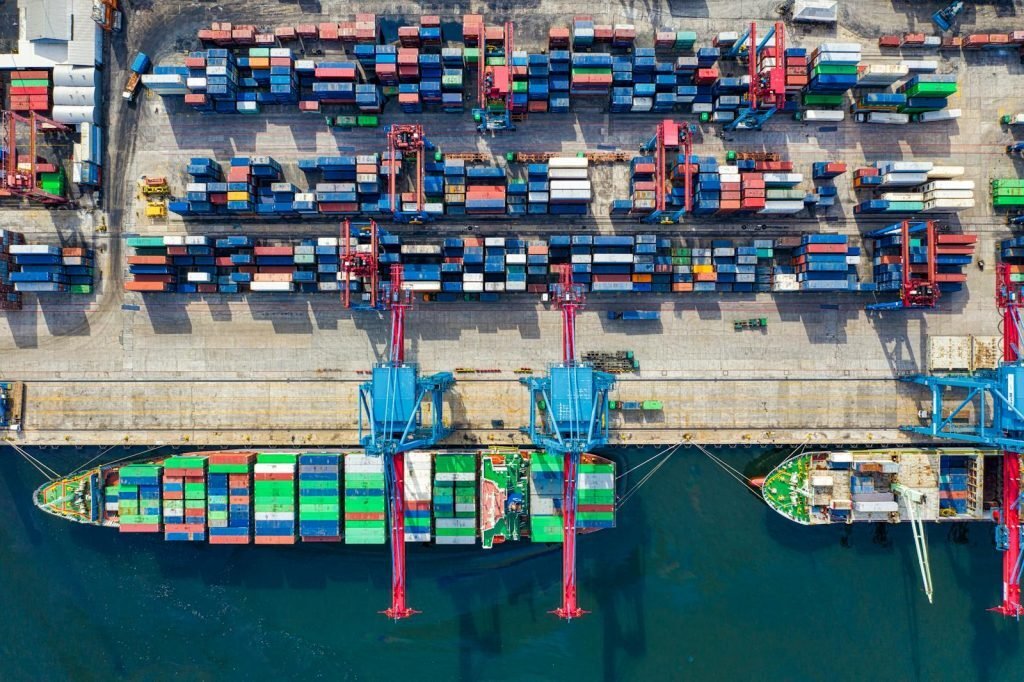
Sea freight carries household and commercial volumes. Containers leave Nhava Sheva (JNPT), Mundra, Chennai or Cochin and route — typically via a transhipment hub — to the Georgian Black Sea ports of Poti or Batumi, the practical gateways for Armenia, with onward road or rail delivery crossing into the country toward Yerevan. Realistic transit, including transhipment and the overland leg, runs roughly 35 to 50 days depending on routing.
Air freight from Mumbai (BOM), Delhi (DEL), Bengaluru (BLR) or Chennai (MAA) routes via a Gulf or European hub into Zvartnots International Airport (EVN) in Yerevan; some seasons offer near-direct connections via the Gulf. Armenian import formalities are handled by the State Revenue Committee (the customs and tax authority). New residents and returning nationals can claim relief on used household goods under transfer-of-residence provisions; we confirm the current evidence requirements — residence documentation, prior-residence proof and a valued inventory — before the shipment sails.
Indian export clearance
Shipping bill filed on ICEGATE, AD code registration and Indian customs clearance managed at Nhava Sheva, Mundra, Chennai or Cochin — documentation prepared for a Georgia-transit-then-Armenia route.
Black Sea gateway
India–Armenia cargo arrives at Poti or Batumi in Georgia, then moves overland into Armenia. We coordinate the border transit so the shipment is not held up.
Armenian customs
Import declarations to the State Revenue Committee, with transfer-of-residence relief on used effects prepared and evidenced for new residents and returning nationals.
One coordinator, both ends
The same person manages your India survey, ICEGATE documentation, dispatch and the final delivery in Armenia — no gaps across the Georgian transit leg.
Who moves on this corridor
This single corridor serves the whole range of moves. Households and families relocate to join relatives or for a new life in the Caucasus. Students are a major part of this route — Indian enrolment at Yerevan’s medical and technical universities brings a steady flow of moves. Businesses and offices ship equipment and records as IT and service firms set up in Yerevan, and commercial freight — trade stock and project goods — moves alongside. We scale the same disciplined process from a few cartons to a full container.
Where we deliver in Armenia
We deliver to all of Armenia’s major cities and their surrounding areas: Yerevan, the capital; Gyumri in the northwest; Vanadzor in the north; Vagharshapat (Ejmiatsin), the spiritual centre; Hrazdan and Abovyan near the capital; and Kapan in the mountainous south. If your destination is a smaller town or a village, ask us — onward delivery reaches the whole country.
How your move works
- India-side survey. We assess volume and contents at your home or office in India, in person or by video, and return a clear quote with sea and air options and a realistic Yerevan arrival window.
- Export documentation. Indian export paperwork is prepared — shipping bill filed through ICEGATE, AD code confirmed, packing list and invoice — alongside the transit and Armenian customs files.
- Pack and dispatch. Our crew packs to export standard from your India origin, and the shipment is booked to a Georgian Black Sea port or air-freighted via a Gulf hub.
- Clear and deliver in Armenia. We manage clearance with the State Revenue Committee, apply transfer-of-residence relief where eligible, and coordinate onward road delivery to your address.
Tell us where you are moving from in India and where you are heading in Armenia, and request a quote — your coordinator will guide you through the right starting point.
Two roads into a landlocked country
Armenia’s geography writes the routing rules before any freight forwarder gets a say. The borders with Türkiye and Azerbaijan have been closed to through freight for most of the past three decades, and whatever the normalisation talks eventually produce, the route the trade actually uses today runs through Georgia: discharge at Poti or Batumi on the Black Sea, customs transit across Georgian territory, the border crossing at Bagratashen–Sadakhlo, and the mountain road south to Yerevan. That corridor carries nearly all household traffic from India. The second option is southern, through Iran, with cargo landed at Bandar Abbas and trucked north to the Agarak crossing on the Araks river; it exists, it is used for certain commercial flows, and third-country operators run it routinely, but for personal effects the Georgian route is simpler, better served and the one we plan around.
What this means for your shipment is that the ocean bill of lading is only half the map. The Georgian leg is a genuine border-to-border transit operation — bonded, documented, and dependent on a road that climbs through the Lesser Caucasus. It is well-trodden and reliable in season; it is also why an Armenia quote from anyone should always name the overland arrangements explicitly, and ours does.
Customs where the EAEU meets your inventory
Armenia belongs to the Eurasian Economic Union, and imports clear under EAEU customs rules applied by the State Revenue Committee. For people relocating, the union’s provisions for used personal and household effects are the operative relief, and qualifying for them is a matter of evidence assembled before departure — residence documentation on the Armenian side, a valued inventory that reads as a household rather than a stock list, and proof that the goods are owned and used rather than new. We confirm the current evidence checklist at booking, because union-level rules are applied with local precision and the checklist is not static.
The transit through Georgia has its own thin but essential documentary layer, prepared alongside the Indian export file — shipping bill through ICEGATE, AD code at the load port, packing list mirroring the inventory. Documents in Armenian or Russian move faster on the Armenian side; we arrange translation of the inventory as part of the file rather than leaving it to chance at the border. None of this is exotic. It is simply three jurisdictions in one journey, each of which must find the same story in the paperwork.
A timeline with an overland tail
From an Indian metro to a Yerevan address, the honest arc looks like this. The survey and quote occupy the first week. Documentation and consolidation follow — two to four weeks depending on how your consignment travels, of which more below. The ocean leg from Nhava Sheva, Mundra or Chennai to the Georgian coast, transhipment included, runs four to six weeks. Then the tail: discharge formalities at Poti, the bonded road leg and border crossing, and Armenian clearance in Yerevan — typically one to two weeks together, stretching when winter weather intervenes on the passes or a document needs reinforcing. Call it two and a half to three and a half months door to door, and let anything faster be a pleasant surprise rather than a plan.
Winter deserves its own sentence. The road from the Georgian border climbs through genuine mountain country, and between December and March snowfall can pause trucking for days at a time. Shipments are not lost to winter — they are delayed by it — and if your arrival is midwinter we build the buffer in rather than pretending the Caucasus is flat.
Small corridor, honest expectations
The India–Armenia route has grown quickly — Yerevan’s universities, its technology sector and a reputation for straightforward residency processes have all pulled Indian students and professionals toward the South Caucasus. We are a relocation partner, not an immigration adviser. Growth notwithstanding, this remains a small corridor by freight standards, and small corridors have textures worth knowing in advance.
Part-container shipments are the norm here, and they travel in consolidated boxes bound for the Black Sea or the wider Caucasus that fill on their own schedule — expect the consolidation wait at origin to add two to four weeks against a mainstream corridor, and treat a dedicated container as the buy-out option when dates are fixed. Students, who make up much of the route’s traffic, often need no container at all: a well-chosen air consignment into Zvartnots — bedding, cookware, books, a term’s clothing — frequently serves better than a share of a sea shipment that lands mid-semester. We price both honestly and will say plainly when the air option is the sensible one.
Where the money goes
The quote for Armenia has a shape you will not see on a coastal corridor. Ocean freight to Poti or Batumi is one block, and it already includes a transhipment — most India-origin cargo for the Black Sea changes vessel at an eastern Mediterranean hub before a feeder makes the run through the Bosphorus. The overland block is the unusual one: the truck from the Georgian coast to Yerevan is priced per vehicle, not per cubic metre, so a small consignment in its own container pays much the same road cost as a full one, which is the strongest argument for consolidating part-loads even at the price of a longer wait. Then come Georgian transit formalities, Armenian clearance and any duties where relief does not apply, and the delivery in Yerevan. Marine cover is quoted door to door, and since 2022 underwriters have treated the Black Sea as a higher-risk area, which can show up as a modest additional premium for the final sea leg; Georgian ports themselves operate normally, and the premium is a line on the quote rather than a reason to avoid the route.
Yerevan delivery and settling in
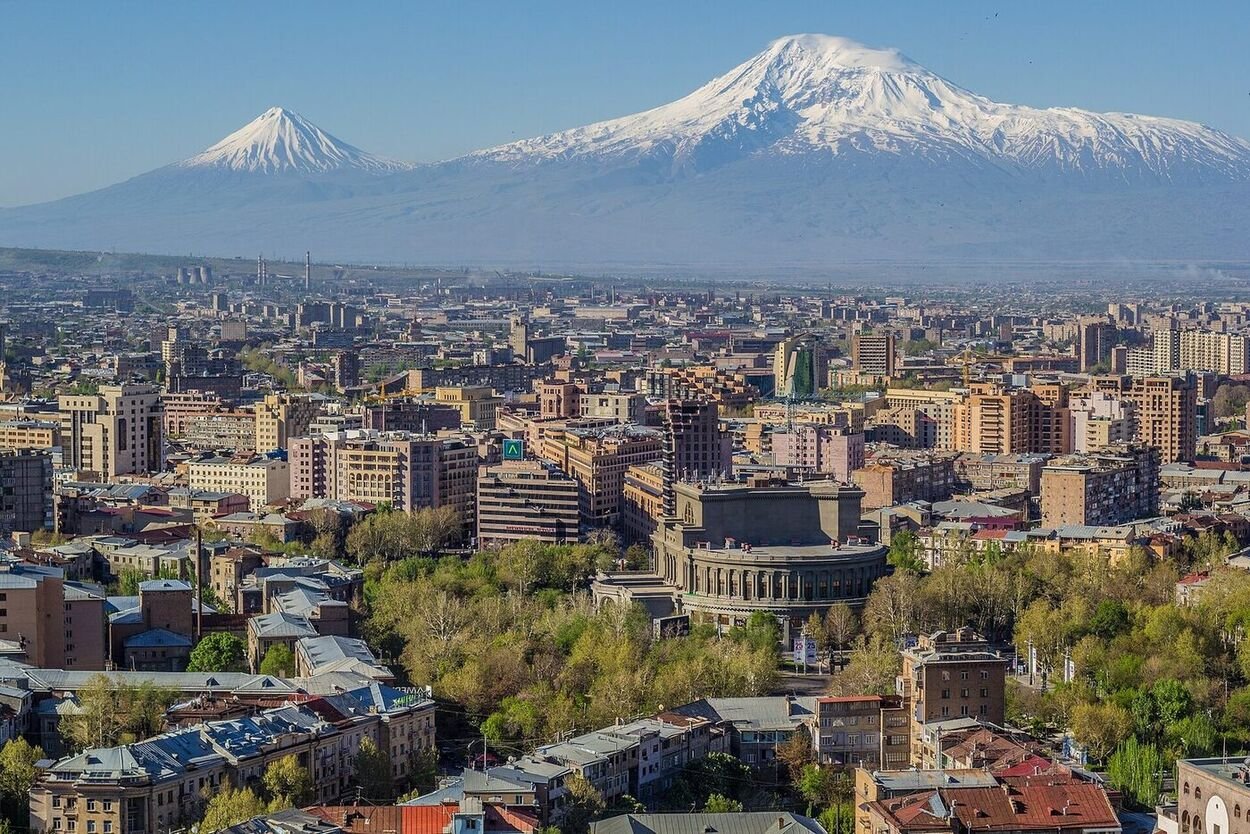
Most deliveries end in Yerevan, and the city’s housing stock shapes the last day of the move. The central Kentron district mixes elegant older buildings with modern towers; further out, Soviet-era blocks are common, and their lifts — where they exist — were not designed with a three-door wardrobe in mind. Our local crew scouts the access in advance, carries by stairs where needed, reassembles what was dismantled in India and clears the packing debris the same day. Deliveries to Gyumri, Vanadzor or the regions ride onward by road and are scheduled as their own short journey rather than an afterthought to the capital run.
Practicalities land in your favour more often than not. Armenian mains are 230 volts, so Indian appliances need nothing more than a plug adaptor. Winters are properly cold and summers properly hot, so ship the woollens and the fans both. And the dram economy is increasingly card-friendly in Yerevan while still appreciating cash in the regions — a settling-in detail your coordinator will happily talk through alongside the delivery plan, because on a corridor this personal, that kind of advice comes with the delivery.
Questions we are asked about Armenia
Is rail an option from the Georgian coast?
There is a working railway from Poti through Tbilisi to Yerevan, and it carries freight. For a single household container the road is almost always quicker and simpler, because a truck leaves when the container is released rather than when a wagon set is assembled; rail earns its place for commercial volumes and heavy project cargo where the price per tonne matters more than the calendar. We quote it when the shipment justifies it.
Which Indian port should my shipment leave from?
The one nearest your home, in most cases — Nhava Sheva for Mumbai and Pune, Mundra for the north, Chennai for the south, Cochin for Kerala. What matters more is the Mediterranean connection, because every Black Sea feeder is fed from a hub, and we pick the sailing with the tightest, most reliable connection rather than the earliest departure from India.
Can I bring my car?
Rarely worth it. Indian cars are right-hand drive and Armenia drives on the right; imported vehicles are assessed under EAEU customs rules that are not generous, and a car adds a separate declaration to a shipment that is otherwise simple. If you have a specific reason, ask — but plan on buying in Yerevan.
Do I have to be in Armenia when the goods clear?
For the relief on used household effects, the consignee generally needs to be present and hold the residence documentation the claim depends on, so the workable order is to arrive first and let the shipment follow. Students moving for a September start typically fly in August and receive an air consignment within the first fortnight; families on a sea shipment time dispatch from India so the container reaches Poti a week or two after they reach Yerevan.