
Commercial Storage
Commercial storage for Indian businesses — inventory, equipment, and assets held securely between offices, during office moves, or for ongoing warehousing needs.
Indian businesses face storage challenges that are specific to how growth and real estate work here. A company expands faster than its current premises can absorb and needs overflow warehousing while the next lease is arranged. An e-commerce operation accumulates seasonal stock that the main office cannot hold. A firm relocating from one business park to another in the same city has a gap of weeks between handing back one set of keys and receiving the other. Seemleius commercial storage is built for that kind of operational reality.
It works as a standalone service or as part of a wider relocation project, with a single coordinator managing both so the transition between moving and storing is seamless.
The kinds of commercial storage we handle
- Office furniture and equipment during a lease gap or office relocation
- Business inventory and stock that has outpaced available warehouse space
- IT equipment, servers and sensitive commercial assets between deployments
- Samples, display material and marketing assets for field teams
- Equipment for businesses with seasonal demand cycles
What commercial storage includes
Access-controlled facility
Monitored warehousing with controlled access — commercial assets are not held in an open or unmanaged space.
Itemised inventory
Every asset is logged on intake, so you know exactly what is held and can call for specific items without a search.
Scalable space
Store a small equipment consignment or a full office floor’s worth — space is allocated to your actual volume.
Retrieval and delivery
Request items back whenever needed and we schedule collection and delivery to your address or site.
How commercial storage runs
- Scope the requirement. What is being stored, the approximate volume, and the likely duration — we use this to recommend the right space and structure the intake process correctly.
- Collection and intake. Our team collects from your premises, packs where required, and logs every asset as it enters the facility.
- Ongoing storage. Your assets are held in our monitored facility under a live inventory. You can request updates or specific items at any point.
- Retrieval and return. When you are ready — whether that is partial retrieval or a full delivery to a new premises — we schedule and execute it.
Commercial storage for businesses across India
We hold assets for businesses in Mumbai, Bengaluru, Delhi / NCR, Hyderabad, Pune, Chennai, Ahmedabad and Kochi, and for companies with multiple Indian locations that need a central holding point for equipment or inventory between sites.
Our inventory process means you are never guessing what is held, and our single-team handling means the people who collected your assets are the ones who return them. For businesses already moving with us, commercial storage folds into the existing plan with no separate contract. Ask us about commercial storage and we will set up the right arrangement.
What commercial storage is priced on
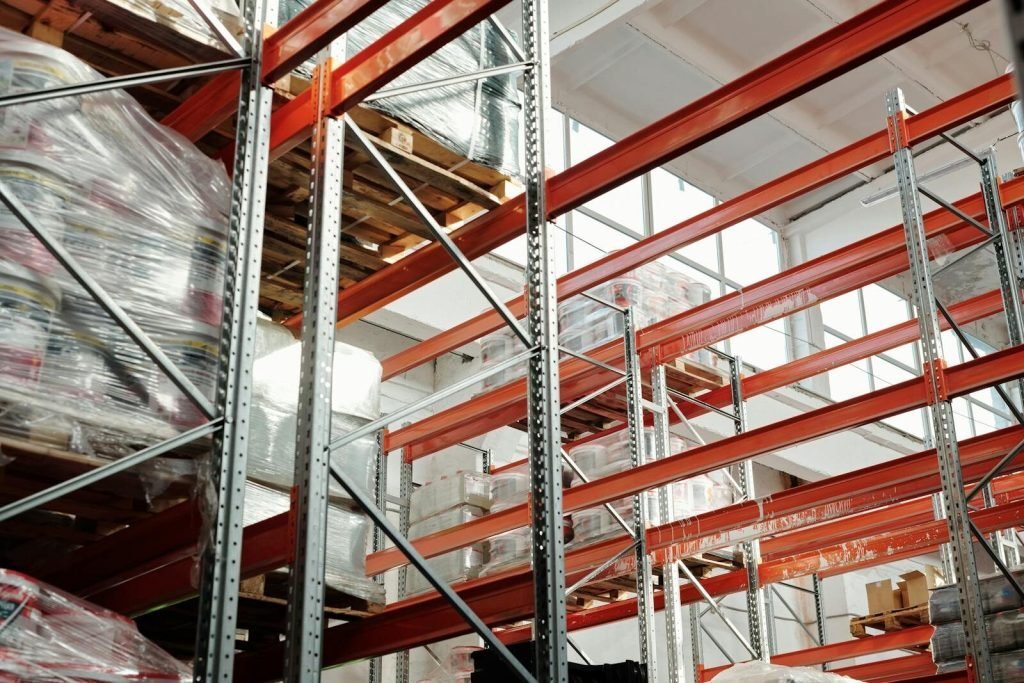
Commercial storage pricing has more moving parts than household storage, because businesses use the space differently. The base is still volume — measured at survey, in cubic feet — but the quote is shaped by how the space is used: racked storage for palletised stock and cartons, floor storage for furniture and machinery that cannot be racked, and crated storage for servers, screens and anything that needs a rigid shell around it. A consignment that mixes all three is normal for an office decant, and the quote separates them so you can see what each portion of the requirement actually costs.
The second driver is churn. A dormant archive that sits untouched for a year is cheap to hold; stock that turns over weekly needs aisle positions, quicker retrieval handling and more intake events, and is priced as the working arrangement it is. Be straightforward about expected retrieval frequency at the scoping call — it produces a quote that still holds three months in.
On the paperwork side, storage is invoiced with GST as a separate line, which most registered businesses can take as input tax credit in the normal way — worth confirming with your accountant, but in practice it means the effective cost of professional storage is lower than the invoice total for a GST-registered company. Insurance sits on top, written against the declared value of the stored assets; for businesses we align the declaration with your fixed-asset register so the numbers match what your auditor already holds.
What we accept, and what we do not
Not everything a business owns belongs in general commercial storage, and it is better to know at the scoping stage than at the dock. The table below is the practical version of the policy:
| Category | Position |
|---|---|
| Office furniture, fit-out and fixtures | Accepted — floor or racked, with condition notes on intake |
| IT equipment, servers, screens | Accepted — crated, with anti-static wrapping where appropriate |
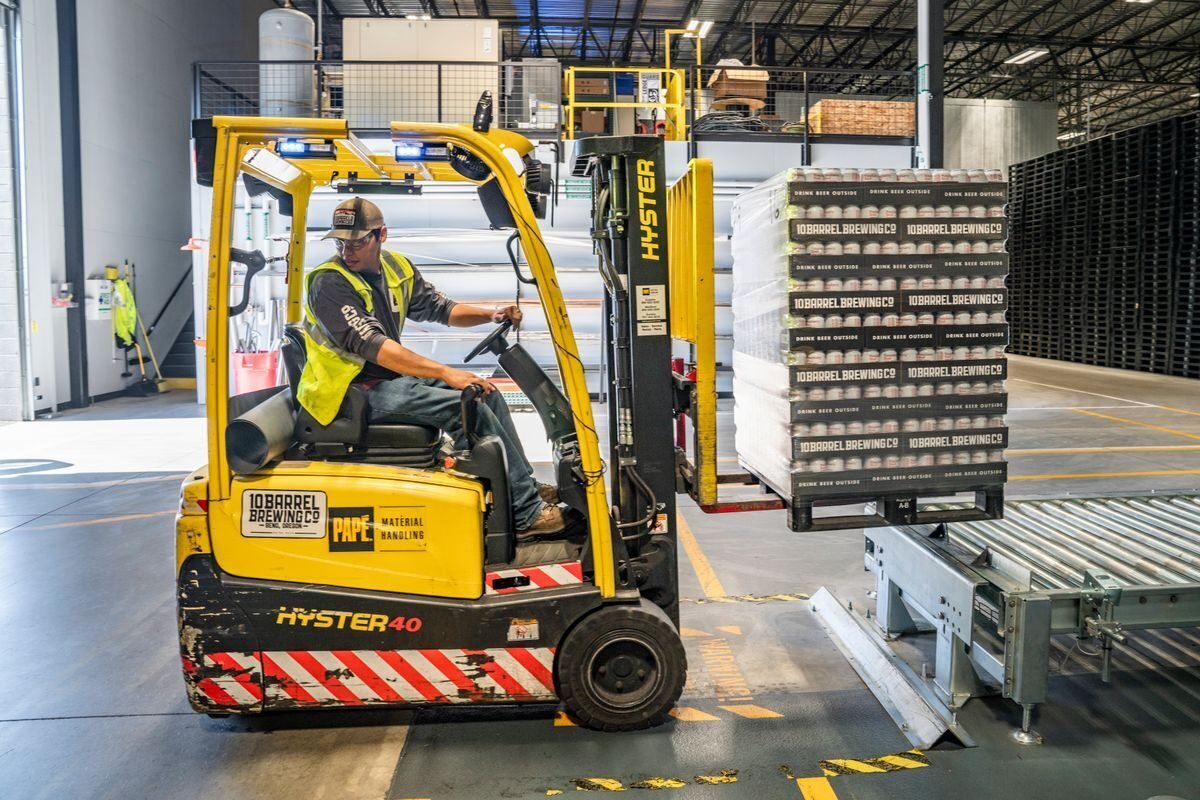
| Stock and inventory, dry goods | Accepted — palletised and racked under live inventory |
| Documents and records | Accepted — usually better served by our dedicated archive service |
| Perishable or temperature-critical stock | Not accepted — we hold ambient storage, not cold chain |
| Hazardous goods, chemicals, cylinders | Not accepted in general storage |
| Cash, negotiable instruments, high-value jewellery | Not accepted — these belong in banking custody, not a warehouse |
Lithium batteries deserve their own sentence: small quantities inside equipment are fine, but bulk battery stock is a fire-safety question and needs to be declared at scoping so it can be assessed properly rather than discovered on intake day.
Decanting an office into storage — a realistic sequence
The most common commercial storage project is the office decant: the old lease is ending, the new premises are not ready, and everything in between has to live somewhere accountable. Run properly, it looks like this.
Two to three weeks out, the survey happens at your current premises and produces the volume figure, the crating list for IT, and a floor-by-floor sequence. A week out, teams pack their own desks into labelled crates while our plan fixes which assets are going to storage, which are being disposed of, and which travel straight to the new site — the three-way split that every office move actually contains. On the move days, IT is decommissioned and crated first, furniture follows, and every asset crossing into storage is logged against the inventory as it leaves the building. Intake at the warehouse is same-day or next-day, and you receive the inventory reference before the week is out.
The building is a project in its own right. Commercial towers and business parks in Mumbai, Bengaluru and Gurugram run on booked service lifts, timed loading-bay slots and security passes for every crew member, and most restrict noisy work to evenings or weekends. Those constraints go into the sequence at the survey stage, not on the day — a crew that arrives to find the goods lift reserved by the tenant two floors down loses half a shift. Facilities management usually wants a dilapidation walk-through once the floor is empty, and the timing of that walk-through, not the last truck, is the real deadline the plan is built around.
The return leg months later runs in reverse, with one useful difference: because the inventory is itemised, the new office can be loaded selectively. Plenty of businesses discover the new premises need only two-thirds of what the old one held — the rest stays in storage or exits via disposal, and nobody pays to move furniture that has nowhere to stand.
Keeping stock in condition through an Indian year
Commercial assets fail in storage for dull reasons: humidity corrodes contacts and swells laminates, dust settles into equipment, and pests find cardboard irresistible. An Indian warehouse has to be run against the local calendar — the pre-monsoon checks on sealing and drainage, the heightened moisture discipline from June to September, the scheduled pest programme that treats termites and rodents as a certainty to be managed rather than a surprise.
Electronics get particular care: crated off the floor, wrapped against dust and static, and kept away from external walls where temperature swings are widest. Fabric-covered office furniture is cased rather than left bare on racking. None of this appears as a line on the invoice — it is simply the difference between assets that redeploy in working order and assets that technically still exist.
The calendar cuts the other way for seasonal businesses, and the warehouse absorbs it. Retailers building stock ahead of the festive quarter, event companies whose kit works hard from October to February and sleeps thereafter, businesses whose monsoon lines swap places with their summer lines twice a year — all of them use storage as the elastic in an operation whose premises cannot stretch. The space flexes with the declared volume, the inventory tracks what came in and went out, and the quiet months cost less than the busy ones because you hold less.
A central holding point for multi-site operations
Companies running several Indian locations use commercial storage differently from companies between leases: not as a bridge but as a hub. Display kits that rotate between city showrooms, event and exhibition material that goes out four times a year, spare furniture and equipment held against the next branch opening, buffer stock positioned between regional sites — all of it needs one accountable address rather than a corner of whichever office currently has room.
Run from a live inventory, the hub model gets properly efficient. A branch manager in Hyderabad requests the exhibition kit by its inventory reference; it ships out, comes back, and is checked in again with its condition noted — so the fourth event of the year is not the one where half the kit turns out to have stayed in a hotel basement. Inbound works too: suppliers can deliver directly to the facility against your instruction, with the goods logged into your inventory on receipt, which spares a growing business from making its reception area a goods-in dock.
The less obvious benefit is organisational memory. When equipment lives in six offices and two managers’ recollections, every audit is an expedition. When it lives on one inventory at one facility, the audit is a report.
Common questions from businesses
Can we visit or audit our stored assets?
Yes — by appointment, with access controlled and logged. Auditors verifying a fixed-asset register can inspect against the inventory, and stocktake visits are straightforward to arrange. Unannounced walk-in access is what we deliberately do not offer, because controlled access is most of what makes the facility secure.
Is there a minimum volume or term?
No fixed minimum on either. A dozen crates of IT equipment for three weeks is a perfectly normal booking, as is a full floor of furniture for a year. Very small, very short bookings are simply priced with handling as the dominant line, which we will tell you plainly rather than let the invoice surprise you.
Can storage be invoiced to match our financial year or project codes?
Within reason, yes. Monthly invoicing against a purchase order is standard; project-coded invoicing for a relocation programme is common; and because GST appears as its own line, your finance team gets what it needs for input credit without chasing us for revised paperwork.
What happens if our new premises are delayed again?
The term extends. Lease slippage is the change we see most often on commercial bookings, and the arrangement is built to absorb it — the assets stay where they are, the inventory stays live, and the return delivery is rescheduled to the new date rather than renegotiated from scratch.
How much notice does a stock retrieval need?
For a routine pull, a working day or two covers scheduling and delivery within the city. Standing arrangements are available for stock that moves on a rhythm — a weekly despatch of the same category, for instance — where the handling is planned into the week rather than requested each time. Urgent retrievals are treated as urgent; tell us the deadline, not just the request.
Can assets be collected in one city and returned in another?
Yes. A company consolidating its Chennai office into Bengaluru, or opening a Pune branch from stock held after a Mumbai downsizing, books storage at one end and a domestic move at the other, under one inventory and one coordinator. The interstate leg is quoted with the storage term, so nothing is re-surveyed or re-packed when the delivery date arrives.
Can a customs-cleared import consignment go straight into storage?
Yes. Businesses importing equipment or stock through our freight side often have a gap between clearance and the site being ready to receive the goods — a fit-out running late, a machine arriving before its foundation. Once cleared, the consignment moves from the port to the facility, is logged onto your inventory, and delivers to site when the site can take it. It is one of the most useful joints between the freight and storage halves of the business.