
Plant & Factory Relocation
Plant and factory relocation in India — complete production facilities moved as sequenced projects, from survey to commissioning hand-off, across India’s industrial zones.
Relocating an entire production facility is a different order of problem from moving a single machine. There are dozens of assets, each with its own handling requirements. There is a production sequence that has to be preserved so the factory can restart in the right order. There are services — electrical, compressed air, coolant, dust extraction — that have to be disconnected at one end and reconnected at the other. And behind all of it is a business measuring every extra day of downtime against a revenue and delivery commitment. Seemleius plant and factory relocation manages the whole undertaking as a single coordinated project, from the first survey to the commissioning hand-off.
Why plant relocations happen in India
India’s industrial landscape is in active transition. Manufacturing businesses are moving to new industrial corridors — the Delhi–Mumbai Industrial Corridor, the Chennai–Bengaluru Industrial Corridor, the Dedicated Freight Corridor hinterland — to access better logistics, lower logistics costs and state incentives. Others are consolidating multiple smaller facilities into a single large plant, or relocating from legacy MIDC and GIDC estates to purpose-built SEZs. Each of these scenarios requires a plant relocation that is planned, not improvised.
What the service covers
Full-facility asset survey
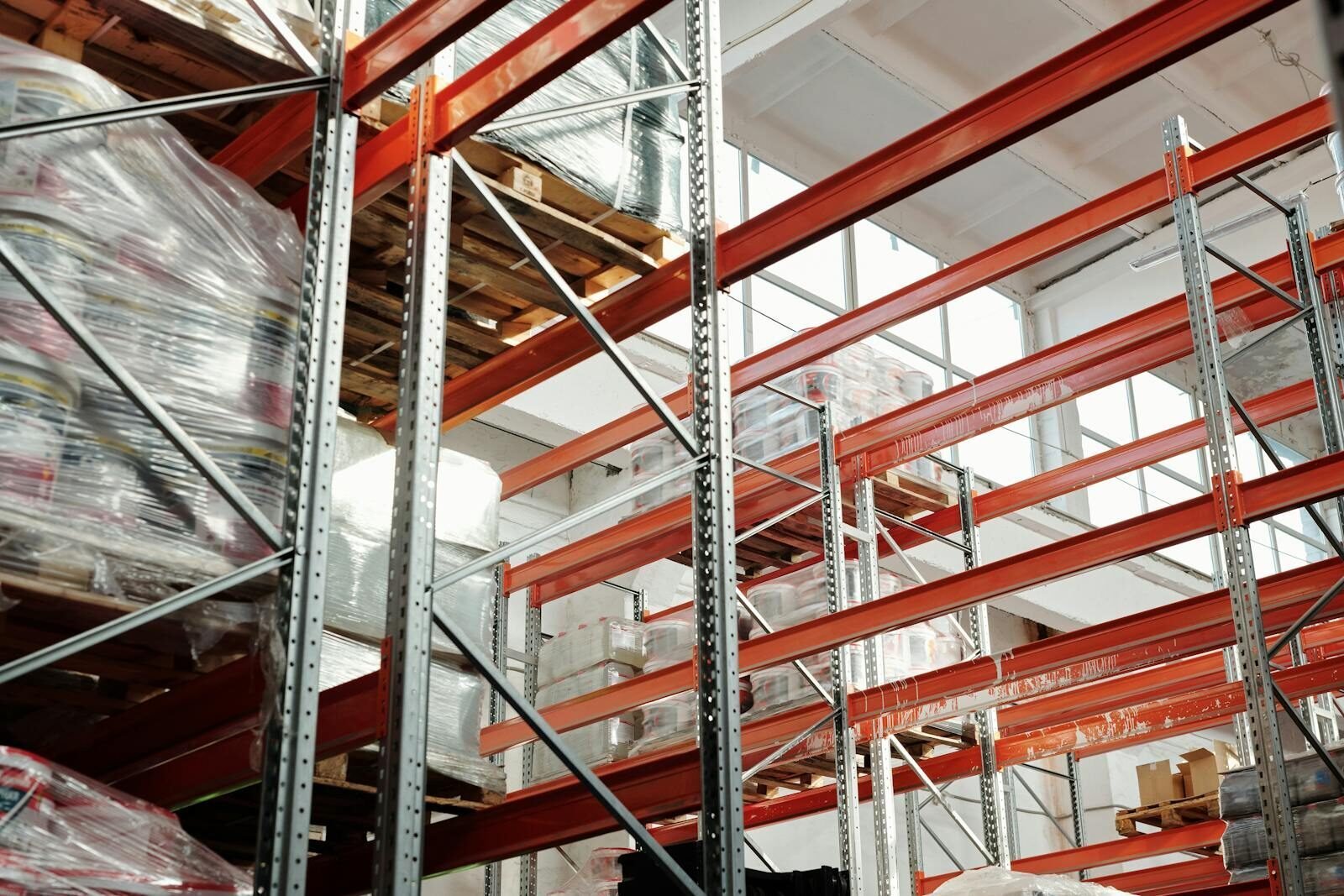
Every machine, utility connection, storage racking, overhead crane and service run mapped at the existing facility and validated against the new site layout.
Sequenced relocation plan
A phased move sequence designed around the production restart order — so when the first machine is recommissioned at the new site, it can actually run.
Multi-crew coordination
Rigging, transport, electrical disconnection teams and placement crews coordinated under one project manager, not left to sort themselves out.
Commissioning-ready placement
Every machine positioned to the approved layout, levelled to tolerance and handed over to your commissioning team with a completed placement record.
Sectors we work in
- Automotive and auto components — press shops, machining lines, assembly and sub-assembly
- Pharmaceuticals — formulation plants, API manufacturing, packaging lines under GMP conditions
- Plastics and rubber — injection moulding, extrusion and compounding facilities
- Food and beverage processing — hygienic process equipment, filling and packaging lines
- Textiles and garments — weaving, spinning, dyeing and garmenting facilities
- General engineering — fabrication, machining and assembly plants
How a plant relocation runs
- Full-facility survey. Our team surveys the existing plant, catalogues every asset, maps all service connections and reviews the new site layout for access, floor loading and service availability. Gaps between what the new site provides and what the plant needs are identified at this stage.
- Sequenced project plan. We produce a phased move plan that sequences assets by production dependency — which lines must be operational first, which can follow — and maps each phase to a calendar with milestone dates your business can plan around.
- Execute in phases. Each phase is executed to the approved method: machines disconnected, lifted, loaded, transported and positioned at the new facility. Each completed phase is signed off before the next begins.
- Commission-ready hand-off. When all assets are in position, we carry out a final placement check against the approved layout and hand the facility to your commissioning team with a complete record of what was moved, where it was placed and how it was set.
Plant and factory relocation is the largest-scale tier of our machinery moving service. For individual machine moves, see industrial equipment relocation. Every plant move is scoped from a survey — there is no template quote because no two facilities are the same. Talk to us about your facility and we will plan it properly.
The shutdown window decides the shape of the project
Before any sequencing work makes sense, a plant relocation has to answer one question: does production stop once, or never quite stop at all? A single-window move — the whole plant down, moved and restarted — is the fastest and cheapest in pure moving terms, and it suits businesses that already take an annual shutdown and can build finished-goods stock ahead of it. A phased move keeps part of the plant producing while lines transfer one at a time; it costs more and takes longer, but for a supplier locked into delivery schedules with an OEM customer it is often the only defensible choice.
Stock build is the quiet hero of either approach. A plant that enters its move with six weeks of finished goods in the warehouse negotiates every surprise from a position of calm; one that enters with four days of stock turns every slipped crane slot into a customer call. The calendar matters too — where large pieces will stand in open yards or travel as oversized loads, the months outside the monsoon make everything about the movement simpler, and heavy-haul equipment books out around the same dry-season peak everyone else wants.
A realistic programme for a mid-size plant
Numbers vary with scale and sector, but a manufacturing unit of thirty to fifty machines moving between states tends to follow a recognisable arc. The table shows the arc, not a promise — your dated programme comes out of the survey.
| Phase | Typical duration | What is happening |
|---|---|---|
| Survey and asset mapping | 1–2 weeks | Every machine weighed on paper, services traced, new layout validated against reality |
| Planning and approvals | 3–6 weeks | Method statements, phase sequence, transport and route arrangements, destination civil works closed out |
| Pre-move works | 2–4 weeks | Foundations and utilities readied at the new site, transport frames made, access openings prepared |
| Phased execution | 2–8 weeks | Lines stripped, moved and placed in restart order; each phase signed off before the next begins |
| Placement checks and handover | 1–2 weeks | Levelling records completed, layout verified, facility handed to commissioning |
Read the middle column honestly and a truth emerges: execution is barely a third of the elapsed time. Businesses that engage a relocation partner three months before the intended restart are planning; those that call three weeks before are already late, whatever the contractor tells them.
Utilities, services and the things nobody owns
Machines have owners on an asset register; the stuff between the machines often does not, and it is the stuff between the machines that wrecks restart dates. Compressed air ring mains, busbar and cable-tray runs, coolant and hydraulic piping, dust and fume extraction ducting, DG sets and their fuel storage, the compressor house, overhead cranes and their rails, storage racking, even the weighbridge — each is either moving, being replaced, or being abandoned, and someone has to decide which before the first truck is booked. The full-facility survey forces those decisions into the open early.
Isolation discipline carries the safety load here. Electrical supplies are isolated and proven dead under the plant’s own lockout procedures before dismantling begins; pressurised lines are vented and drained; refrigerant systems and fuel storage are handled by licensed specialists. A factory being emptied is a more hazardous environment than a factory running — guards come off, floors carry loads sideways, and routine assumptions stop holding. The method statements treat the dismantling weeks with the respect they demand.
Paperwork that moves with the machines
An interstate plant move is also a compliance event, and the goods themselves travel on documents. Used capital equipment moving between states goes under delivery challans with e-way bills generated per vehicle, and the GST treatment of transferring assets between units of the same company is a question for the company’s tax advisers to settle before dispatch — settled late, it can hold loaded vehicles at the gate. Oversized pieces travel under movement permissions issued by each state’s transport authority along the route. Insurance deserves equal attention: transit cover should be placed against a declared asset list at agreed values, because discovering an underinsured press after an incident is a conversation nobody recovers from gracefully.
Our part in this is order and evidence: the asset register that ties every item to a vehicle and a challan, the photographs at strip-down and placement, the levelling and position records at handover. Your finance and compliance teams get a paper trail that matches the physical one — which, in an audit or a claim, is the entire point.

Choosing the new site with the move in mind
By the time a relocation contractor is usually consulted, the new site is signed and its shortcomings are permanent. Consulted earlier, the move perspective changes what gets signed. Door and gate dimensions against the largest single piece the plant owns; floor slab capacity in the heavy bays, checked against machine point loads rather than the brochure’s uniform figure; power sanction and transformer capacity at the new site versus the connected load travelling to it; whether trailers can enter, turn and stand off the public road during unloading weeks; crane beams where the process needs them, at the capacity the process needs. Industrial parks quote plots in acres and sheds in square feet, and none of those numbers answers the question that matters on day one of the move-in: can the press get through the door and stand on the floor? An hour spent walking a candidate site with the people who will move the plant into it is among the cheapest de-risking available to the whole programme.
Who does what — drawing the line early
Plant relocations go wrong in the gaps between contractors, so the scope matrix is written before mobilisation and read aloud until everyone is bored of it. In a typical arrangement, the relocation contractor owns dismantling, rigging, transport, placement and levelling; the client owns process decisions, stock strategy and statutory notifications; electrical reconnection sits with the client’s contractor working from the tagging records the move produces; civil works at the destination — foundations, trenches, epoxy flooring — finish before execution phases begin, with cure times respected in the programme rather than discovered by a machine sinking into green concrete. OEM engineers attend for the machines whose warranty or precision demands it. None of this allocation is exotic; what matters is that it is written, dated and agreed while changing it is still free. The single project manager exists precisely so that when something falls between two scopes anyway — something always does — it is caught and assigned within a day instead of surfacing at restart.
The plant is machines plus everything around them
Two categories ride along with every factory and are chronically underestimated in early planning. The first is the support ecosystem: the tool crib with its thousands of catalogued items, jigs and fixtures that belong to specific machines and must travel with them, gauges and instruments whose calibration status has to survive the journey on paper as well as in fact, maintenance spares, dies and moulds — often the plant’s most valuable movable assets per kilogram — and the raw-material and WIP stock that either moves, gets consumed down before the shutdown, or is written off. The survey inventories all of it, because a line that restarts without its fixtures has not really moved.
The second category is knowledge. Experienced operators and maintenance fitters carry an unwritten map of every machine’s habits, and a relocation timed without them — over a notice period, across a site the workforce cannot reach — restarts with amnesia. Sequencing the physical move so the people who know each line are present when it comes back to life is a client-side decision, but it is one the move programme can protect: restart dates aligned to shift plans, the tool crib unpacked before the machines that draw on it, and the maintenance workshop among the first areas made operational rather than the last. A factory is a system of machines, materials and memory; the good relocations move all three.
Questions plant owners ask first
Can the factory keep supplying customers during the move?
Usually, if the stock build starts early enough and the phasing is honest. The lines feeding your most exposed customers move first or last depending on which restarts faster at the new site, and finished goods are built ahead to cover the gap. What does not work is promising uninterrupted supply and then discovering in week three that the second line cannot restart until the compressor house does.
Which machines are the hardest to move?
Rarely the heaviest. The awkward ones are the machines with foundations poured around them, the ones whose maker no longer exists, the ones whose geometry was last set by a fitter who has since retired, and anything under a validation regime — a pharmaceutical line that must be requalified after the move is a documentation project as much as a rigging one. The survey hunts for these early, because each adds weeks to the programme rather than tonnes to the crane.
How is a plant move priced?
From the asset register, not from the shed area. Each machine carries a handling method and a cost; the services and racking carry theirs; transport is built from vehicle counts and distance; over-dimensional pieces add route work. Phasing changes the price more than anything else, since a plant moved over five weekends mobilises crews five times. The quotation lists it by phase, so your finance team can see what each week of the programme costs and what a slipped phase would add.
Restarting on the other side
The relocation is judged on one morning: the day the first line is supposed to run at the new site. Everything in the project points at that morning — the restart-order sequencing, the sign-off gates between phases, the slack held at the recommissioning end. When the plan has been honest, that day arrives as an anticlimax: machines level on their new foundations, services live, operators finding their stations, and the project manager’s biggest task being the snag list. Anticlimax is the deliverable. If your business is weighing a factory move — next quarter or next year — the most useful first step is a survey conversation long before a date is fixed, while every option is still open and cheap to choose.