
Industrial Equipment Relocation
Industrial equipment relocation across India — machines surveyed, planned and moved to minimise production downtime, with method statements for every job.
Every hour a production machine is offline has a cost. When that machine is moving — being disconnected, lifted, transported and recommissioned at a new site — the downtime is planned, not accidental. The difference between a machinery relocation that recovers quickly and one that does not is almost entirely in how much of the work was thought through before the first spanner turned. Seemleius industrial equipment relocation treats the downtime figure as the objective to minimise, and plans everything around it.
The India context
Industrial equipment relocation in India happens for many reasons: factory consolidation as manufacturers rationalise multiple sites into a larger facility; movement from older industrial estates to new SEZ or logistics park locations with better infrastructure; replacement of legacy lines with new equipment requiring the existing machines to be repositioned; and capacity-sharing between group companies in different states. Each scenario has its own sequencing logic, and we plan for the one you are actually in.
What the service includes
Pre-move site assessment
Origin and destination surveys covering machine weights, dimensions, fixing arrangements, utility connections and access constraints at both ends.
Written method statement
A document setting out, machine by machine, how disconnection, lifting, transport and placement will be carried out — reviewed and approved before work starts.
Precision placement
Machines positioned to your layout plan and levelled to tolerance, so commissioning can begin without correction.
Production window planning
The move scheduled into your planned maintenance shutdown, weekend window or phased production pause to minimise lost output.
Machine types we relocate
- CNC machining centres, turning centres and grinding machines
- Injection moulding presses and blow moulding equipment
- Stamping presses, power presses and hydraulic presses
- Packaging lines, conveyors and automated assembly equipment
- Pharmaceutical manufacturing equipment — reactors, tablet presses, coating pans
- Food processing equipment — mixers, pasteurisers, filling lines
How an industrial equipment move runs
- Site survey (both ends). We survey the machine at origin — weight, footprint, fixing points, service connections — and the destination to confirm access, flooring capacity and layout alignment.
- Method statement. The method statement is prepared and submitted to your engineering or maintenance team for review. Any access modifications or pre-move works are identified at this stage, not during execution.
- Disconnection and preparation. The machine is isolated, utility connections are safely disconnected, and any guards or ancillaries that need removal for transit are taken off and inventoried.
- Move and position. The machine is lifted, loaded on a suitable vehicle and transported. At the destination it is unloaded, positioned to the approved layout and levelled. Your team takes over for reconnection and commissioning.
Industrial equipment relocation is the core of our machinery moving service. When the scope is larger — multiple machines across a full production facility — see our plant and factory relocation service. Tell us about your equipment and we will plan the move from survey.
Millwrighting — the trade behind the move
Transporting a machine is logistics; making it produce again is millwrighting, and the two should never be confused. A CNC machining centre that arrives intact but sits half a millimetre out of level per metre will cut scrap. Millwright work is what closes that gap: positioning the machine to the layout datum, shimming and levelling against precision instruments to the tolerance the manufacturer specifies — often measured in hundredths of a millimetre per metre — checking geometric alignment where beds and columns were separated for transport, and supervising the grouting and anchor-bolt work that fixes the machine to the slab for good.
Coupled equipment adds a second layer. Where a motor drives a pump or gearbox through a coupling, the shafts must be brought into line before the machine turns under power; misalignment shows up later as bearing failures and vibration that nobody connects back to the move. This is skilled-trades work, and it is the reason our machinery crews include people who think in microns as comfortably as the transport planners think in tonnes.
The shutdown window is booked before the trucks are
An equipment move that steals production time was planned backwards. The sequence that works starts with your operations calendar: the annual maintenance shutdown, the Diwali closure week that much of Indian manufacturing already takes, a planned changeover between product runs, or a string of weekends if the plant cannot stop at all. The move plan is then compressed or stretched to fit inside that window — crew sizes, vehicle counts and pre-rigging work all flex around the dates rather than the other way round.
Foundations deserve early attention in the same calendar. A machine that sat on a plain slab at the old plant may need an engineered foundation at the new one — heavier presses in particular — and concrete cures on its own schedule, indifferent to shutdown dates. Anchor-bolt positions are set out from the machine drawings weeks ahead, and epoxy grouting under a levelled baseplate needs its own cure time before the machine takes cutting loads. A relocation programme that shows the civil works finishing the day before the trucks arrive has already failed; it just has not told anyone yet.
Two practical habits protect the window. First, everything that can happen before the shutdown does happen before it: access openings prepared, foundations cured at the destination, transport frames fabricated, trial runs of the route driven. Second, the plan carries deliberate slack at the recommissioning end, because the last days of a window are where surprises land — and a machine that restarts a day early is a story your production head enjoys telling, while the opposite story gets told about the contractor.
The road between two factories
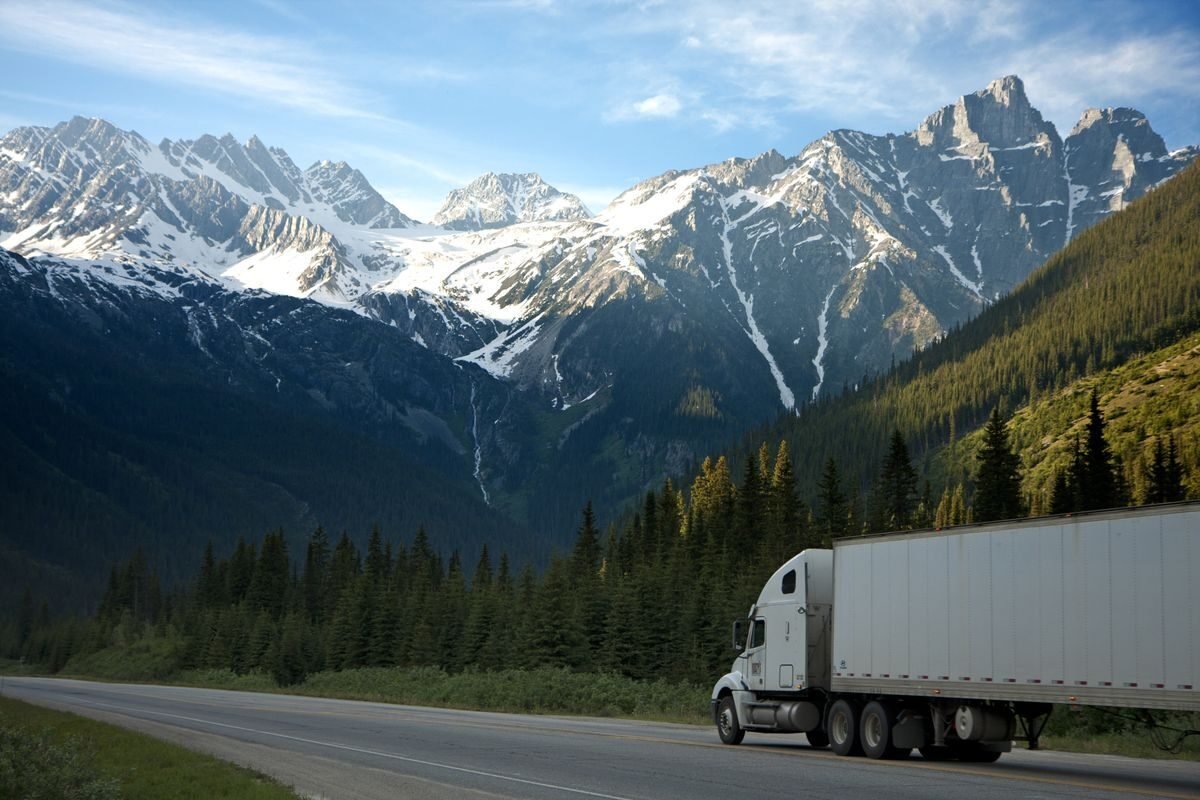
Machines suffer more in transit than in lifting, because transit lasts longer and nobody is watching. So the transport leg gets engineering attention of its own. Loads are lashed against calculated restraint requirements — a 14-tonne press braking hard at a toll plaza generates forces that shrug off decorative rope work. Machined surfaces are protected and sensitive assemblies supported so they cannot resonate over expansion joints and broken patches of state highway. During the monsoon months, tarping and sealed wrapping stop an open trailer becoming a corrosion experiment between Gujarat and Tamil Nadu. Impact and tilt indicators travel on vulnerable machines, so a rough journey announces itself at the destination instead of during commissioning.
Route choice belongs to this workstream as well. The shortest line on the map may cross a bridge with a posted limit below the loaded weight, or pass under a rail bridge lower than the machine on its trailer; oversized pieces move under state transport authority permissions arranged for each leg of the journey. The route that works is surveyed, not assumed.
How far do you strip a machine?
Dismantling depth is a genuine engineering decision, and the two wrong answers sit at opposite ends. Strip too little and the machine may not clear a door, may exceed a bridge limit on its trailer, or may carry vulnerable assemblies exposed through a thousand kilometres of vibration. Strip too much and reassembly consumes the shutdown window while introducing its own risks — every disturbed joint is a joint that must be set right again, and some geometric relationships on older machines were achieved at the factory and are unwise to disturb without cause.
The method statement therefore records, per machine, exactly what comes off: guards and sheet metal almost always; counterweights, tooling and fluids as a rule; heads, columns or beds only when transport dimensions or weight force the split, and then with match-marking, protected machined faces and photographed reference points so reassembly is reconstruction rather than reinvention. Fluids deserve their own line — hydraulic oil, coolant and cutting fluids are drained and either disposed of through authorised channels or shipped separately in sealed containers, because forty litres of coolant loose in a machine sump becomes forty litres on the trailer deck at the first hard stop. OEM involvement is arranged where warranties or calibration demand it; on a five-axis machine still under service contract, the maker’s engineer supervising the head removal protects both the geometry and the paperwork.
What shapes the quotation
Machinery relocation is priced from engineering facts, and the survey exists to establish them. The weight and dimensions of each machine set the lifting and transport equipment. The state of the machine matters almost as much: a press that must be split into bed, crown and columns for transport is a different project from one that travels whole. Access at both plants — door heights, aisle widths, floor capacity, crane coverage — determines how much temporary work the move needs. Distance sets the vehicle economics, and over-dimensional pieces add route surveys and escort arrangements. Finally, the recommissioning scope: carry-and-place is one price, and full millwright service to a signed-off levelling record is another. A quotation that names one lump sum without listing these elements has skipped the survey, and the gap will surface later as variations.
A single machine is a task; a line is a system
Moving one standalone machine is bounded work — survey it, plan it, move it, level it. A connected line changes the nature of the problem, because the value is not in the machines but in the relationships between them. A packaging line’s filler, capper, labeller and case packer must land in positions that preserve conveyor geometry and transfer heights; an automated cell’s robots must return to a relationship with fixtures that was taught, not drawn. For line moves the survey therefore captures the system, not the units: datum points are established and recorded before strip-down, interconnections — conveyors, cable runs, guarding, safety circuits — are mapped and labelled as assets in their own right, and the placement sequence at the destination follows process order so each machine is set relative to the one before it. The extra discipline costs some hours at the front of the project and repays them at commissioning, when the line behaves like the line it was rather than a collection of correctly levelled strangers.
When the machine arrives by sea
A growing share of equipment relocations begin at a port rather than at another factory: a machine bought from an overseas plant, a used line picked up at an auction in Europe, or new capital equipment landing at Nhava Sheva, Mundra or Chennai on its way to a shed in Pune, Sanand or Sriperumbudur. The last leg is the same rigging and millwright work described above, but the port leg has rules of its own. A machine that fits a container travels inside one, blocked and braced to the floor; one that does not goes on a flat-rack or open-top, or as breakbulk on a vessel’s deck, and each option changes how it is lifted off at the terminal and which trailer collects it.
Customs is the part that catches importers out. Second-hand machinery entering India usually needs a chartered engineer’s inspection certificate stating its age, condition and value, and the consignment is assessed on that basis; without it the machine waits at the port while one is arranged, and port storage runs by the day. The packing list has to describe the machine as it is packed — bed, column and head on three pallets, not “one CNC machine” — or the examination takes longer than it should. Oils, a spare electrical cabinet or a crate of tooling travelling with the machine are declared as what they are. We coordinate the customs broker, the terminal lift and the trailer so the machine leaves the port on the day it clears, rather than sitting for a week because the trailer booked was the wrong length. From the port gate onwards it is a machinery move like any other, and the survey at the receiving plant has already been done.
Answers for plant engineers
Who handles electrical disconnection and reconnection?
Isolation and disconnection are done by your electricians or ours under your isolation procedures — the plant’s own lockout rules always govern. Utility connections are tagged and photographed at strip-down so reconnection follows a record. Final power-on and machine commissioning stay with your team or the OEM engineer, with our crew in support for position corrections.
Can a machine go into storage between the two sites?
Yes, and it is common when a new building runs late. Machines are stored on timber or steel stands, wrapped against dust and humidity, with corrosion-inhibiting protection on machined surfaces for longer stays. What matters is deciding the storage question early — a machine prepared for direct transfer is packed differently from one heading into three months of warehousing.
We have bought a used machine at another factory. Can you collect it?
Yes — purchased-asset collection is a steady part of this work, and it comes with a warning worth hearing. At an auction or asset-sale site, the seller usually offers no rigging support, the machine’s documentation is thin or absent, and the removal deadline is fixed by the site’s own vacation date. Survey the machine before you finalise the purchase price, not after: access constraints or a required structural opening at the seller’s premises can add real cost to a bargain, and knowing that before bidding is worth far more than discovering it after.
How long does a single-machine move take?
As a planning envelope: a standalone CNC or moulding machine typically needs a day at each end plus transit, while a large press or a connected line runs to weeks including strip-down and reassembly. The survey turns that envelope into a dated programme — and the dated programme, not the envelope, is what your shutdown plan should be built on.