
Employee Relocation to the Netherlands
Employee relocation from India to the Netherlands, built for HR and mobility teams managing the 30% ruling corridor — Indian export clearance per employee, Dutch customs handled, and consistent delivery from any Indian city.
The Netherlands is one of the top three European destinations for Indian IT and engineering professionals, and the 30% ruling is a significant part of why. Dutch employers recruiting Indian professionals are typically well-organised on the administrative side — the sponsor filing, the residence documentation, the payroll setup. The household relocation programme is where the organisation sometimes breaks down: inconsistent vendors, variable documentation quality, no standard India-end process, and employees who feel they are managing the move themselves while simultaneously starting a new role in a new country. Seemleius employee relocation from India to the Netherlands is the consistent programme layer that closes that gap.
What the employer’s timeline means for the move
Indian-passport employees moving to the Netherlands are generally sponsored by a Dutch employer that is a recognised sponsor and that the Belastingdienst (Dutch tax authority) has approved for tax administration. The employee’s residence documentation and the salary threshold the role must meet sit upstream of the freight planning, are handled by the employer and its own advisers — and they set the timeline. We align the household survey, packing and sea-freight window against the agreed Dutch start date, not in isolation from it. Where the family follows later, we plan the move in two phases so the employee’s essentials travel first and family freight follows when school admissions and housing are confirmed.
The 30% ruling and the household move
The 30% ruling — formally the 30% facility — is typically applied from the employee’s first day of work in the Netherlands and runs through the Belastingdienst with the employer’s cooperation. The household move timing matters because furniture and personal effects that arrive before the ruling begins may be treated differently under Dutch tax rules than goods that arrive after the ruling is active. This is a nuance that the employee’s tax advisor should address, but we flag it consistently in our planning conversations so the question is raised before the shipment date is fixed, not after the container has cleared Rotterdam. Verhuisboedel transfer-of-residence relief on personal effects sits inside the Dutch import process; we lodge it from the Indian export documentation onward.
What the India end of a programme move requires
Each employee moves from a different city: one from Bengaluru, one from Hyderabad, one from Pune, one from Delhi NCR. Each ships from a different port: Nhava Sheva for the west, Chennai or Cochin for the south. Each has a different household size: a single professional with six cartons and a bicycle, a family of four with a full three-bedroom home. The programme must hold the same documentation standard, the same packing quality and the same employee communication across all of these — regardless of origin city, port or volume. That is what we deliver.
What the programme covers
India-side survey and packing
In-person or video survey from Bengaluru, Hyderabad, Mumbai, Pune, Delhi NCR, Chennai, Kochi or Kolkata — export-standard packing with a verified, itemised inventory.
Indian export clearance per employee
Shipping Bill filed on ICEGATE with AD code mapped for each employee’s shipment — consistent FEMA-compliant documentation process whether the shipment leaves Nhava Sheva, Mundra, Chennai or Cochin.
Rotterdam sea freight
Employees on this corridor benefit from the India–Rotterdam sea route’s genuine vessel frequency and transit time advantage (22 to 28 days from western Indian ports) — sea is a practical choice on tighter timelines here.
Programme reporting
Quotes, shipping documents, customs records and invoices in a consistent format across every employee move — ready for HR, finance and mobility reporting.
What employees encounter on arrival in the Netherlands
New Dutch residents must register with the local gemeente (municipality) within five working days of arrival — the BSN (Burgerservicenummer) that comes from this registration is required for bank accounts, healthcare registration, utilities and almost everything else in the Netherlands. The Kennismigrant employee arriving from India needs confirmed housing for day one — not because the system demands it on arrival day, but because the first week is substantially easier with a registered address. We brief each employee on the Dutch arrival sequence, what documents to have ready (apostilled marriage and birth certificates for family registration are the items most often missing), and what to do in what order during the first week.
The Dutch housing problem and the commuter belt
Amsterdam’s housing market is genuinely tight. Indian arrivals on a sponsored package frequently find that the first six months are an interim apartment, often in a serviced building, while a permanent home is searched out. We see employees finding longer-term value in the commuter belt — Almere for Amsterdam-bound roles (twenty-five minutes by train into Amsterdam Centraal), Haarlem for those who want the Randstad feel with more space, Veldhoven and Best for Eindhoven Brainport roles around ASML and Philips, Delft and Rijswijk for The Hague. We coordinate freight delivery into either the interim address or the permanent home, depending on where the household lands on the move date, and storage in the Netherlands between the two is a routine option we have budgeted for in the programme quote.
How the programme runs
- Programme alignment. We map to your mobility policy: entitlement tiers, freight mode guidelines (sea strongly recommended on this corridor for most volumes), documentation standards, employer-confirmed start-date windows, and reporting format.
- Move initiation. HR refers the employee; we schedule the India survey (in person or video), prepare Indian export documentation, and return a policy-checked quote.
- Manage the relocation. Packing, sea freight from Nhava Sheva, Mundra, Chennai or Cochin through Rotterdam, Dutch import clearance with Verhuisboedel relief and delivery to the employee’s Dutch address are coordinated with HR updated at each milestone.
- Report. ICEGATE Shipping Bill, packing list, Dutch Douane records and invoice delivered in consistent format for every move in the programme.
Whether you are relocating ten Indian professionals to the Netherlands this year or building a programme for sustained volume, the India-end infrastructure is in place. Get in touch and we will set the programme up correctly from the first move.
Entitlement tiers that hold up on this corridor
Mobility policies written for a global population tend to under-size the Dutch allowance, and there is one specific reason for it: the destination housing stock is let bare. An employee moving to Singapore or Dubai walks into a furnished apartment. An employee moving to Amsterdam or Eindhoven frequently walks into a floor, four walls and a light socket. Tiers that assume otherwise generate exception requests inside the first quarter.
| Profile | Typical volume | Freight shape that fits |
|---|---|---|
| Single professional, serviced or interim flat | Small | Shared consignment plus a modest air tranche for the first fortnight |
| Single professional, unfurnished let | Moderate | Shared or part container — this is the tier where policies most often fall short |
| Couple, unfurnished let | Substantial | A dedicated 20ft container usually costs less than the equivalent part-load volume |
| Family with children, house or maisonette | Full household | 40ft container, with school-term dates driving the sailing more than anything else |
| Two-phase family move | Split | Employee essentials first; the household consignment follows once the address is fixed |
This is a conversation worth having once with a mobility lead at policy level, rather than forty times as individual escalations.
Relief on used household effects: what the rules actually say
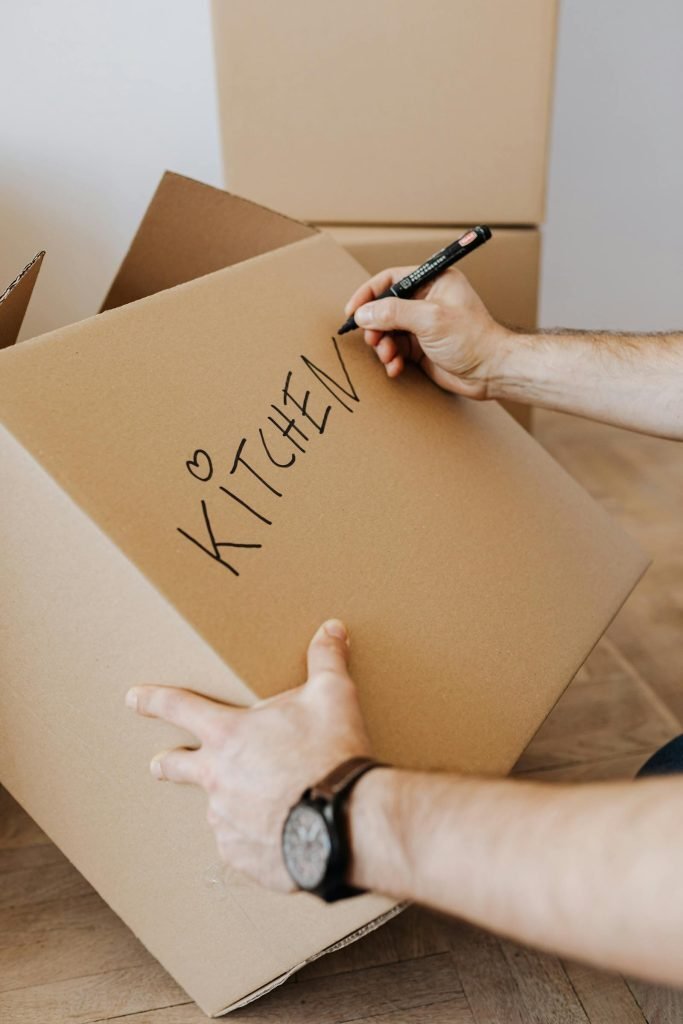
Used personal property brought into the European Union by a person transferring their normal place of residence from outside it may be admitted free of import duty. The framework sits in Union customs legislation and applies across the member states; in the Netherlands the declaration is made to Douane, and Dutch practice calls the consignment verhuisboedel. The conditions are the substance of it, and they are worth stating plainly because employees routinely assume the relief is automatic:
- The goods must have been owned and used at the previous residence for a period before the move — six months is the usual benchmark.
- They must be intended for the same use at the new residence, and must be declared within a set period of residence being established.
- The relief covers used personal property, not new purchases bought for the destination, and not goods intended for commercial use.
- Disposing of relieved goods within a period after entry can bring the relieved duty back into charge.
- Alcohol, tobacco and certain vehicles are treated separately and sit outside the general relief.
None of that is something a moving company can supply on an employee’s behalf. It is a customs relief the individual claims, assessed by Douane against those conditions. What matters at programme level is that the inventory, the valuations and the dates on the Indian export documents support the declaration when it is made. An itemised inventory produced at survey and carried through to the Dutch entry does that. A manifest reading “50 cartons, household goods” does not.
Storage is a programme line, not an exception
On most corridors storage is what happens when something has gone wrong. On this one it is close to the default. The Randstad rental market pushes new arrivals into an interim flat for the first months and the permanent home is found afterwards, which means the household consignment either lands into a property too small for it or lands before there is anywhere to put it. Programmes that have not budgeted for storage discover this on the fourth or fifth move and then retrofit it awkwardly.
There are two sensible places to hold goods. In India, before the container is stuffed — the cheaper option, and the right one when the Dutch address genuinely is not settled. Or in the Netherlands, near Rotterdam or inside the Randstad, which costs more but keeps everything within a day’s delivery of wherever the family finally lands. The choice usually turns on how firm the start date is: goods held in India cannot be delivered in a week, goods held near Rotterdam can. Both are priced at quotation so the mobility team sees the trade-off in advance rather than discovering it under pressure.
What the mobility team actually receives
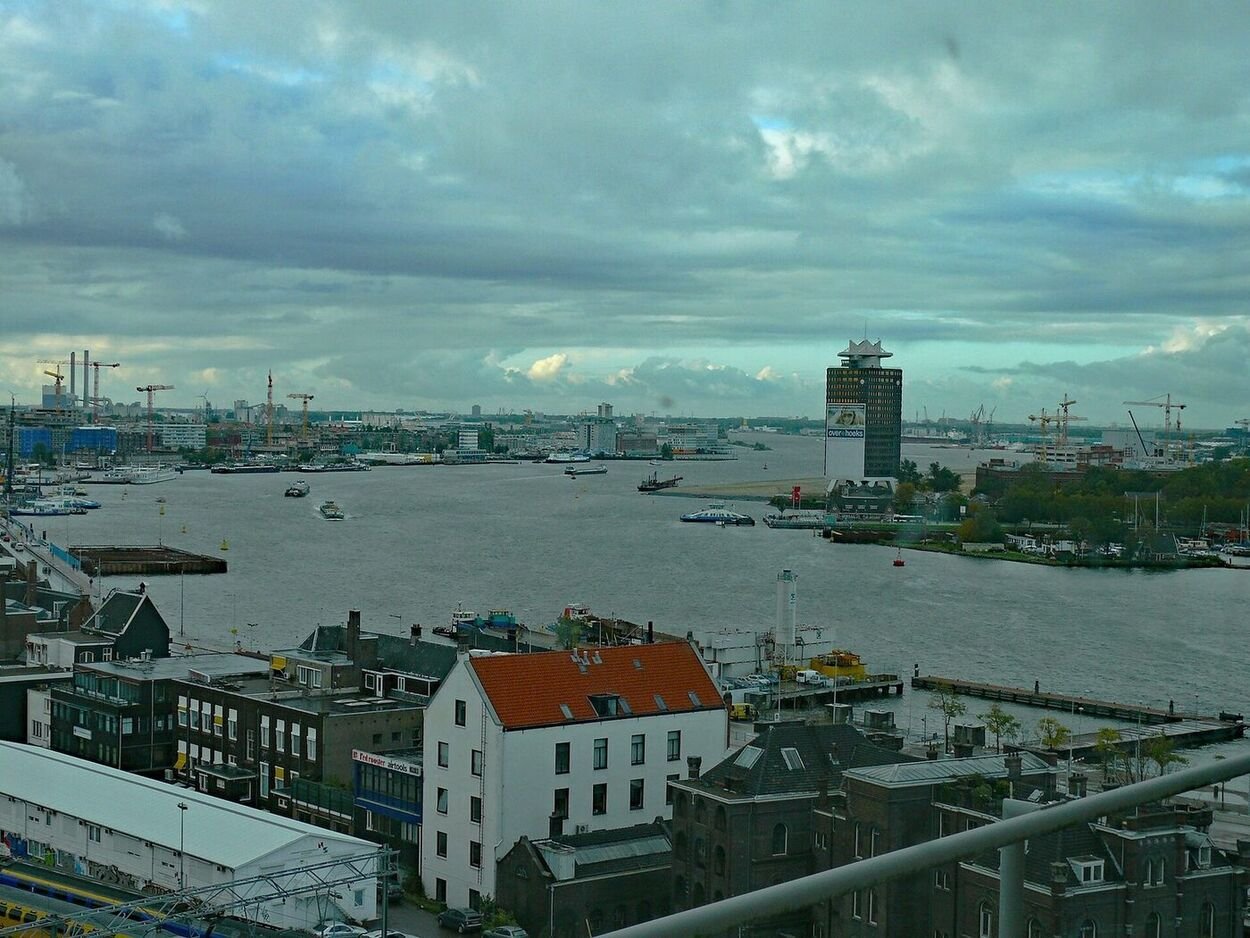
Programme reporting is only useful if it is identical from move to move. For every employee on this corridor the file contains the same four things: the itemised survey inventory with declared values, the Indian export documentation with its shipping bill reference, the Dutch import entry and clearance record, and the invoice mapped against the policy tier it was quoted under. The same format from a Kochi one-bedroom as from a Gurugram four-bedroom, so a year of moves reconciles without anybody rebuilding a spreadsheet.
Behind that sits one named coordinator rather than a shared queue. More than twenty years of India-origin export work are why the format does not drift.
Questions from HR and mobility leads
How much notice do you need for each employee?
Six to eight weeks from referral to sailing is comfortable on this lane and produces the cleanest documentation. Four weeks is workable. Under three weeks, the honest answer is that the sea option starts to strain, and a small air tranche with a follow-on consignment is a better recommendation than a rushed container.
Can employees pick their own vendor inside the programme?
Some policies allow it, and the resulting variance is usually why a mobility team ends up looking for a single India-end provider in the first place. The value of one origin partner is that the survey standard, the inventory format, the packing specification and the export filing are the same for the engineer leaving Hyderabad as for the analyst leaving Kolkata.
What happens if an assignment is cancelled after packing?
Before the container is stuffed, the goods go into store in India and the sailing is released. After it has sailed, the practical options are to clear and store near Rotterdam, or to arrange a return movement — which is a fresh export from the Dutch side and priced as one. Cancellations are uncommon, but they are not free, and the policy should say who carries the cost before it happens rather than afterwards.
Do you deal with employees directly or route everything through HR?
Directly, with HR copied on the milestones. Mobility teams do not want to relay questions about carton counts and delivery windows, and employees get better answers from the coordinator who has actually read the survey.