
Commercial Cargo & Freight to Germany
Commercial cargo and freight from India to Germany — sea from Nhava Sheva or Chennai into Hamburg, with Indian export clearance and German customs handled from start to finish.
India–Germany commercial freight moves across a wide range of sectors: pharmaceutical and chemical exports from Gujarat, automotive components from Pune and Chennai, textiles from Ahmedabad, Surat and Tirupur, and engineering goods from across the industrial belt that the Indo-German Chamber of Commerce has spent seventy years cultivating. What these shipments share is a dual customs environment: ICEGATE export clearance with the shipping bill, AD code and the right GST treatment (LUT for zero-rated export, or refund route where appropriate) at one end, and ATLAS electronic import processing with Zoll, EORI registration, 19% MwSt VAT and HS code scrutiny at the other. Both need to be accurate, and both need to be consistent with each other. Seemleius commercial cargo and freight on this corridor is built around that requirement.
The India–Germany sea freight corridor
The primary freight route from India to Germany is sea: container vessels from Nhava Sheva (JNPT) and Mundra in western India, and from Chennai Port in the south, calling at Hamburg and Bremerhaven. Hamburg is Germany’s largest port and one of Europe’s most important container hubs — the Burchardkai and Eurogate terminals handle the bulk of India-origin volumes — while Bremerhaven specialises in vehicles and project cargo. Transit times from Indian ports are typically 25 to 32 days depending on the routing and whether the vessel calls at intermediate ports such as Jebel Ali, Salalah or the Mediterranean transhipment hubs. From Hamburg, onward road delivery reaches every commercial address in Germany within 24 to 48 hours, subject to Sonntagsfahrverbot (the Sunday and public holiday HGV ban that runs from midnight to 22:00 on most heavy goods movements).
Air freight from Mumbai (BOM), Delhi (DEL), Bengaluru (BLR) or Chennai (MAA) into Frankfurt (FRA) or Munich (MUC) on Lufthansa Cargo, Air India and partner freighter services covers cargo that cannot wait on sea transit — high-value pharmaceutical APIs, automotive parts on a production-stop trigger, urgent replacement parts and time-sensitive commercial samples. We work with you to determine the right mode for each consignment, and we are honest about the cost differential.
Indian export documentation
ICEGATE shipping bill, AD code registration, commercial invoice, packing list, certificate of origin and, where relevant, RoDTEP (Remission of Duties and Taxes on Exported Products) and drawback claim handling — so the cargo leaves India with clean paperwork and the right export incentive position.
Sea freight from Nhava Sheva or Chennai
Full containers and consolidated groupage loads from India’s principal west and south coast ports into Hamburg and Bremerhaven — 25 to 32 days port to port, with realistic ETAs we will not optimistically shorten.
German commercial import clearance
EORI verification, ATLAS electronic import declaration, HS code classification and 19% MwSt VAT treatment confirmed before arrival — because Zoll holds shipments when paperwork is incomplete or inconsistent.
Onward delivery and bonded storage
Road delivery from Hamburg to any German commercial address, T1 and T2 EU transit document handling, and bonded warehouse options at Hamburg or Bremerhaven where duty deferral or pre-customs staging is required.
Why getting the HS code and origin treatment right at the India end matters
The HS code assigned to your cargo in the Indian shipping bill determines the duty treatment it receives in Germany. A misclassification on the Indian export documentation creates a discrepancy at the German import stage that can result in delays, back-duties and a compliance record against your EORI. We confirm the classification before the shipping bill is filed — not after the cargo arrives at Hamburg. The same care applies to the certificate of origin: while the India–EU Free Trade Agreement remains in negotiation, EUR.1 movement certificates and the rules of origin under the EU’s Generalised Scheme of Preferences (GSP) shape duty outcomes for many Indian export sectors, and getting the origin declaration right protects the duty position your finance team has priced into the deal.
Indian export sectors we work with regularly
- Pharmaceuticals and active pharmaceutical ingredients (APIs) — India’s largest export sector to the EU; handled with the temperature, documentation, RoDTEP, and regulatory requirements the EU market demands
- Engineering goods and industrial components — from Pune, Chennai and the MIDC, MEPZ and SIPCOT industrial clusters serving Mittelstand customers
- Textiles, garments and apparel — from Ahmedabad, Surat and Tirupur; coordinated with German importers, e-commerce fulfilment centres and the Hamburg distribution belt
- Automotive and auto component exports — a growing corridor as Indian Tier-1 and Tier-2 suppliers serve German OEMs and the Stuttgart-Munich axis directly
- Chemical and dyestuff exports from Gujarat — with the hazardous goods (IMDG/ADR) classification, MSDS handling and documentation the route requires
- Project cargo and exhibition material — including ATA carnet handling for temporary exports to German trade fairs such as Hannover Messe, IAA Mobility and Drupa
How a commercial shipment runs
- Brief us. Cargo description, HS code if known, value, weight and dimensions, origin in India, applicable GST/LUT treatment, RoDTEP eligibility, and the required arrival date in Germany.
- Quote and route. A clear freight quote with mode, realistic transit time, and the Indian export and German import documentation treatment explained — including any T1/T2 transit or bonded warehouse staging where it benefits you.
- Document and book. ICEGATE shipping bill and export paperwork filed; ATLAS import documentation prepared; EORI verified; space booked and cargo collected from the India origin.
- Monitor and clear. Your coordinator tracks the shipment through transit and the Hamburg port process, manages Zoll import clearance, and confirms delivery at the German destination.
From a single consignment of pharmaceutical APIs to a recurring weekly programme of automotive components, the documentation rigour is the same. Request a freight quote and we will confirm the right approach for your cargo, your timeline and your compliance requirements.
Import VAT, deferment and the numbers behind the landed cost
Duty is usually the smaller number on an India–Germany import. The larger one is Einfuhrumsatzsteuer — import VAT — charged at the standard 19% on most goods, with a reduced 7% band covering a narrow list that includes books, printed matter and certain foodstuffs. The base it is charged on catches people out: it is not the invoice value. Import VAT is calculated on the customs value plus any customs duty plus the transport and insurance costs incurred up to the first destination inside the EU. On a low-duty commodity arriving from India with a long freight leg, the freight itself materially moves the VAT bill, which is why a landed-cost model built off the commercial invoice alone always comes out light.
A German VAT-registered importer normally recovers that import VAT as input tax, so the real issue is cash timing rather than cost. Two mechanisms address it. A deferment account with Zoll shifts payment from the moment of release to a fixed monthly settlement date, which removes the need to fund duty and VAT at the quay for every consignment. Separately, where goods clear in Germany but are destined for a customer in another member state, the onward intra-EU supply can be handled so that import VAT is not charged at the German border at all — a structure worth raising with your tax adviser before the first shipment rather than after the fourth. Both depend on a valid EORI number held by the party acting as importer of record, and on that party being correctly identified on the declaration in the first place.
Classification you can actually defend
The EU Common Customs Tariff is applied through a ten-digit code, and the duty rate, any anti-dumping measure, any licensing requirement and the VAT band all hang off it. A guess that survives one clearance does not become correct through repetition; it becomes a pattern that a post-clearance audit will follow backwards through every entry you have made. Where a product sits near a classification boundary — and engineered components, textiles with mixed fibre content and chemical preparations very often do — German customs will issue a binding tariff decision on application, valid across the EU for a defined period. It takes weeks to obtain and it removes the argument permanently. For a recurring programme that is a straightforward trade.

Two further layers apply to Indian-origin goods specifically. Anti-dumping and countervailing measures cover a shifting list of products and origins, and a measure applies to the goods rather than to the shipper, so a first-time importer inherits it in full. And the EU’s carbon border adjustment mechanism now sits over iron and steel, aluminium, cement, fertilisers, hydrogen and electricity: the reporting and certificate obligations fall on the declarant inside the EU, but the embedded-emissions data has to come from the Indian producer. Exporters in those sectors are increasingly asked for that data as a condition of the order, and gathering it after the container has sailed is considerably harder than gathering it before.
Packaging, pallets and the rules that travel with the box
Three separate regimes attach to the outside of your cargo, and each has stopped Indian consignments at a European port.
- Wood packaging. Pallets, crates, cases and dunnage of solid wood must be heat-treated and marked to the ISPM 15 standard before entering the EU. The mark has to be legible and on the timber itself. An unmarked pallet under an otherwise perfect consignment can result in the whole load being refused, treated at your cost or destroyed, and it is the single most avoidable failure on this lane.
- Packaging waste. German law places an obligation on whoever first places packaging on the German market to register it and participate in a recovery scheme. Where an Indian exporter sells to a German buyer on delivered terms, that obligation may land closer than expected, and it is worth resolving in the contract rather than discovering it through a letter.
- Dangerous goods. Chemicals, dyestuffs, batteries, aerosols and many pharmaceutical intermediates need classification, correct packing, marking and declaration under the maritime code at sea and the European road agreement inland. A safety data sheet that does not match the declaration is a hold, not a discussion.
Moving the goods inland before they clear
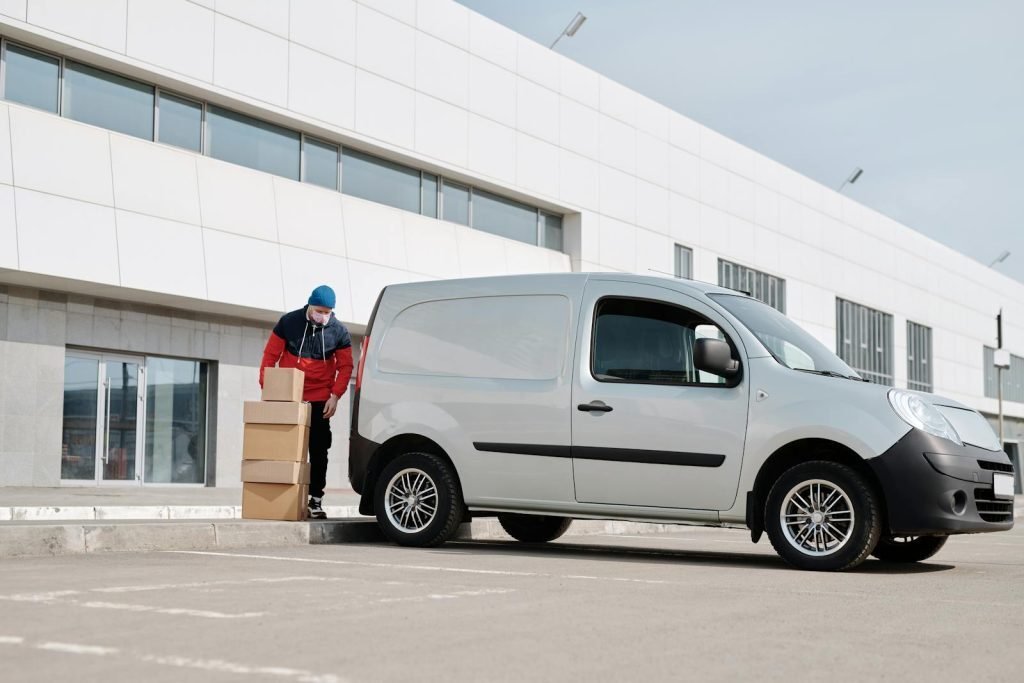
Clearing at the port of discharge is not compulsory. Under external transit, non-Union goods move from Hamburg or Bremerhaven under duty suspension to an inland customs office or an approved consignee’s premises, and the import declaration is made there instead. That matters for two reasons. A Munich or Stuttgart consignee clearing inland avoids paying storage rates at a container terminal while a query is resolved. And a shipment that will move onward to another member state can travel under transit without a German import entry at all.
The inland leg itself is worth planning rather than assuming. Hamburg moves a large proportion of its hinterland containers by rail, with scheduled block trains to the southern German terminals and to Duisburg, and for anything above a couple of containers the rail option is usually cheaper and less exposed to driver availability than road. Road remains faster door to door, but it runs into the Sunday and public holiday heavy goods ban, and into the summer restrictions that apply to certain routes on Saturdays during the main holiday weeks. Neither is an obstacle when it is in the plan; both are when the delivery was promised for a Sunday afternoon.
Questions from finance and supply chain teams
Who should be importer of record, us or our German customer?
It depends on the incoterm you have agreed and on whether you have an EU establishment. Selling on terms where the buyer clears is the simplest structure for an Indian exporter with no German entity. Selling delivered-duty-paid puts the customs obligation, the EORI requirement and the VAT registration question on you. The choice belongs in the commercial negotiation, and it should be made before the pro forma invoice is issued because it changes the paperwork all the way back to the shipping bill.
Can we hold stock in Germany without paying duty on arrival?
Customs warehousing exists precisely for that. Goods sit under duty and import VAT suspension until they are released for free circulation, which suits an exporter building a European buffer stock against uncertain demand. It carries an authorisation requirement, a stock-record obligation and a guarantee, so it earns its keep on recurring volume rather than on a single consignment.
Does the GST position in India affect the German end?
Not legally — they are separate tax systems — but they meet in the paperwork. Whether you export under a Letter of Undertaking without paying IGST or pay it and claim the refund, the values and descriptions on the shipping bill have to agree with the commercial invoice that the German declarant will use. A mismatch introduced to suit one side creates a query on the other, and refund processing in India is unforgiving about inconsistency.
How much lead time does a first shipment need?
Allow longer than you will for the second. A first consignment carries the one-off items: AD code registration at the load port, EORI confirmation at the German end, classification agreed, and the incoterm and importer-of-record question settled. Four to six weeks before the intended sailing is realistic. Once that groundwork exists, a repeat shipment on the same lane is booked on ordinary freight lead times. Send us the cargo details and we will tell you which of those steps are still outstanding before we quote a date.