
Moving to Ireland
Ireland is India’s most direct route into the English-speaking EU — a corridor driven by tech, pharma and student moves from Mumbai, Bengaluru and beyond.
- 20+ years moving households & cargo
- 184 countries destination corridors covered
- In-house customs clearance filed by our own team
- One coordinator from quote to delivery
Ireland draws Indian professionals, students and families for a cluster of reasons that no other European country offers in quite the same combination. It is the only majority English-speaking country in the European Union, which removes the language barrier that complicates settlement in France, Germany or the Netherlands. Dublin has become one of Europe’s most significant technology hubs, hosting the European headquarters of firms that employ thousands of Indian-origin engineers, product managers and data professionals — Google, Meta, LinkedIn and Microsoft cluster in Silicon Docks, Intel anchors a vast Leixlip campus, and Pfizer Cork has become a magnet for Indian quality and regulatory professionals. The Indian community in Ireland has grown to roughly fifty thousand and is now the fastest-growing demographic in the country, which means the practical infrastructure — grocery shops, temples and gurdwaras, weekend cricket leagues, dosa and biryani restaurants in Dublin 15 — has caught up with the arrivals.
Employer-led hiring from India into Irish technology, pharmaceutical and medical-device companies is long established, which is why so much of the traffic on this corridor is tied to a confirmed start date at an Irish employer. We are a relocation partner, not an immigration adviser — the freight plan is built around the dates you give us. For Indian students, Ireland’s universities — Trinity College Dublin, University College Dublin, University College Cork, NUI Galway — have seen substantial growth in Indian enrolment, and a good number of graduates go on to build careers from an Irish base inside the EU. For families, Ireland’s EU membership means that once settled, movement across Europe is straightforward. The India–Ireland move is a gateway as much as a destination.
This page covers how the corridor works from an Indian origin. From here, choose the guide that fits your situation: household and personal, corporate and office, employee relocation, commercial cargo, or pets and vehicles.
The India–Ireland corridor in context
From India, Ireland is a sea-and-air corridor with distinct timing realities. Sea freight from Nhava Sheva (JNPT), Mundra, Chennai or Cochin reaches Dublin Port in roughly twenty-eight to thirty-five days, and almost every routing is transhipped — goods move on a feeder service to a North European hub at Rotterdam or Antwerp, then onto a short-sea vessel into Dublin. There is no direct main-line container service from India to Ireland; understanding the transhipment leg matters because it explains why the transit window is wider than a comparable India–UK or India–Continental Europe move. Air freight from Mumbai (BOM), Delhi (DEL), Bengaluru (BLR) or Chennai (MAA) reaches Dublin Airport (DUB) in nine to ten hours direct, and is used primarily for time-sensitive or high-value items rather than full household or commercial volumes. The two modes complement each other, and most planned moves use both in some form.
The Indian export side
A move from India to Ireland is an export from India as well as an import into Ireland. Household goods and commercial cargo leaving India on a long-term or permanent basis require a shipping bill filed through ICEGATE, India’s electronic customs portal, with Authorised Dealer (AD) bank coordination where foreign exchange aspects apply under FEMA. For commercial shipments, the GST LUT (Letter of Undertaking) regime allows zero-rated export without paying IGST upfront and then claiming refund, which is the standard route for business cargo. The export documentation prepared in India — commodity descriptions, values, inventory — forms the basis of the Irish import declaration, so accuracy at the Indian end matters. We prepare and manage the Indian export side alongside the Irish import clearance, keeping both consistent.
Ireland as an EU member — what it means for import
Ireland applies EU customs procedures for goods arriving from outside the bloc, and Revenue Ireland (the equivalent of HMRC) is the clearing authority. For household goods, the Transfer of Residence (TOR) relief is available to people establishing a new primary residence in Ireland, claimed through the AIS C&E1076 form — potentially eliminating or substantially reducing the import duties and the standard 23% Irish VAT on personal goods owned and used for a qualifying period. For commercial cargo, EU classification, duty rates and the 23% VAT on importation all apply, with VAT typically reclaimable for VAT-registered Irish businesses. We handle Irish customs clearance for both household and commercial shipments, with TOR guidance where it is relevant.
Indian export documentation
ICEGATE shipping bill, AD bank coordination under FEMA and GST LUT handling for commercial cargo — prepared at Nhava Sheva, Mundra, Chennai or Cochin and kept consistent with the Irish import filing.
Sea & air freight from India
Full-container and consolidated sea loads from Indian ports transhipped via Rotterdam or Antwerp to Dublin; air freight from BOM, DEL, BLR or MAA for priority or high-value items.
Irish customs clearance
Revenue Ireland EU import procedures, Transfer of Residence relief via the AIS C&E1076 route, and commercial classification, duty and 23% VAT managed on your behalf.
One coordinator
A single point of contact from survey at your Indian home or business through to delivery in Dublin, Cork, Galway or Limerick.
How a move from India to Ireland unfolds
- Survey and quote. We assess your volume and situation — in person or by video — recommend the right freight combination, and return a clear quote with the Indian export and Irish import steps explained.
- Indian export clearance. The ICEGATE shipping bill is filed at your gateway port, AD bank and GST LUT formalities completed where applicable, and export documentation prepared. Your goods are packed to export standard with a full inventory.
- Freight to Ireland. The shipment travels on the booked routing — sea via a North European transhipment hub into Dublin, or direct air from BOM/DEL/BLR/MAA to DUB — with Irish customs documentation prepared during transit.
- Irish customs and delivery. We manage Revenue Ireland clearance, including TOR relief via the AIS C&E1076 where applicable, and coordinate delivery and unpacking at your Irish address.
Choose the guide below that fits your type of move, or request a quote and a coordinator will point you to the right starting point.
Why this cargo stopped crossing Britain
For years the quickest way to shift a box between Ireland and the European mainland was to put it on a truck. Roll off the ferry at Holyhead, drive across Wales and England, cross at Dover or through the tunnel — the “land bridge” bought a day or so against a direct sailing and opened the whole European road network to Irish traffic. Since the United Kingdom left the EU customs union, every one of those frontiers is a customs event. A load moving Ireland to the continent by road now leaves EU territory at one coast and re-enters it at another, which brings a transit procedure, a financial guarantee and a stack of formalities nobody was filing in 2019.
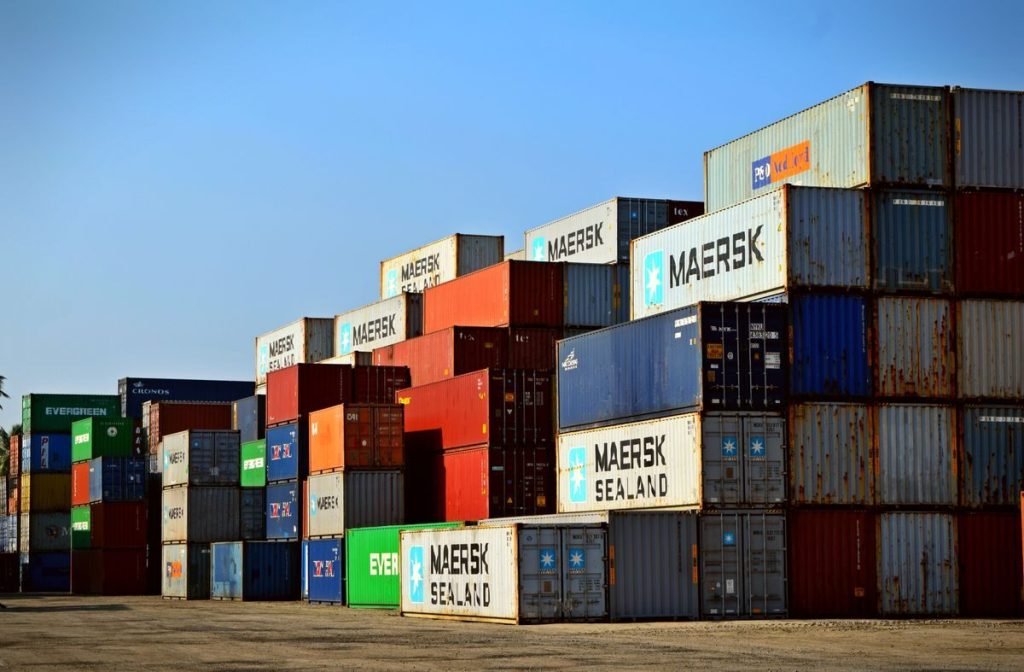
The market’s answer was to stop crossing Britain at all. Direct roll-on/roll-off services from Dublin and Rosslare Europort to Cherbourg, Dunkirk, Zeebrugge and Rotterdam multiplied, and Rosslare in particular went from a modest ferry harbour to a serious continental gateway. Deep-sea container cargo out of India shifted the same way, more quietly. Where an India–Ireland consignment might once have discharged at Felixstowe or Southampton and reached Dublin on a short feeder or a lorry, it now discharges at Rotterdam, Antwerp or Le Havre and picks up a feeder into Dublin Port. The container never leaves EU customs territory after it is unloaded, so there is a single Irish import declaration and no British paperwork whatsoever.
None of that makes the lane slow. It does make the transit a two-leg affair with a hub in the middle, and the second leg runs to a feeder schedule rather than a main-line one — typically a sailing every few days rather than daily. Miss the connection at Rotterdam and the shipment waits for the next one, which is far and away the most common reason an Irish arrival date slips by three or four days. When you compare quotations, ask which hub the routing transships at and how often that feeder sails. That answer predicts your delivery date better than the headline transit figure does.

Which Irish port your shipment lands at, and why
Ireland has five commercial gateways of any consequence and they are not interchangeable. For a household or office consignment out of India the realistic answer is Dublin Port in almost every case — it takes the large majority of the country’s container traffic, the feeder services from the North European hubs call there, and the customs and haulage infrastructure around it is the deepest in the State. The others matter when the delivery address, the commodity or the equipment says so.
| Gateway | What it handles | When it comes into play for India cargo |
|---|---|---|
| Dublin Port | Container (lo-lo), roll-on/roll-off, the bulk of Irish unitised trade | The default for household goods, office relocations and general containerised freight |
| Cork — Ringaskiddy | Deep-water container terminal, cruise and bulk | Occasionally used where the delivery is in Cork or the wider Munster pharmaceutical belt and a suitable feeder call exists |
| Waterford — Belview | Container and general cargo on the Suir | Niche; south-east deliveries where a service happens to fit |
| Shannon Foynes | Bulk and break-bulk, Ireland’s largest tonnage port | Project and out-of-gauge cargo rather than containers |
| Rosslare Europort | Roll-on/roll-off to France, Belgium and the Netherlands | Onward continental movement of goods already inside the EU, not the India arrival leg |
By air the picture is simpler still. Dublin Airport (DUB) takes essentially all the air freight on this lane from Mumbai (BOM), Delhi (DEL), Bengaluru (BLR), Chennai (MAA) and Cochin (COK). Cork (ORK) and Shannon (SNN) have cargo capability, but an India-origin consignment routed to either arrives via a European hub and a trucked leg, which usually adds days rather than saving them. If the delivery is in Cork or Limerick, flying into Dublin and driving down is normally the shorter answer.
The months that move the price
Both ends of this corridor have a calendar, and they do not line up. On the Indian side, the south-west monsoon between June and September slows road haulage into Nhava Sheva and Mundra and makes packing days harder to guarantee — not impossible, but a survey booked for a wet week in Mumbai should carry a day of slack. The Asian export peak from roughly August into October tightens space and rates on the North Europe strings your shipment feeds into. Diwali takes packing crews, transporters and customs brokers out for the best part of a week, and the days either side run at reduced pace. Lunar New Year in late January or February reshuffles the feeder capacity of the whole network, with a knock-on effect on North European hub connections that lasts a fortnight.
At the Irish end, the academic intake in September concentrates student and family arrivals into Dublin, Cork and Galway, which puts pressure on delivery crews and short-term storage in the weeks either side. The last fortnight of December is quiet in a way that costs money: Irish quays, hauliers and delivery teams wind down for Christmas, and a container that berths on the 22nd will not be delivered before the new year.
Practically: book a full-container load four to six weeks before you want it collected, and eight or more if the collection falls in the Indian peak or across Diwali. Groupage needs longer again, because the consolidation has to fill before it sails.
How the quotation is put together
A sea quotation on this lane starts with volume in cubic metres, established at survey, and everything else follows from it. Below roughly fifteen cubic metres a consolidated load usually wins; above thirty a dedicated twenty-foot container is normally cheaper than paying groupage rates for the same space, and a large family home runs to a forty-foot. The crossover is not a fixed number — it moves with the season and with how full the consolidation is when you book.
The other lines that genuinely change the figure:
- Distance from your origin city to the gateway. A Pune or Nashik collection running to Nhava Sheva is a short haul; a Coimbatore collection to Cochin or Chennai is not.
- Access at both ends. Whether a container or a large vehicle can reach the door, or whether the load has to be shuttled in a smaller truck. Stairs, lift dimensions and parking restrictions in Dublin do more damage to a budget than most people expect.
- The transhipment leg. Which hub, which feeder, and whether the routing carries a terminal handling charge at the hub as well as at both ends.
- Irish port and delivery charges. Dublin Port handling, customs entry, and the road distance from the quay to the address — Galway and Cork add a haulage leg that Dublin 4 does not.
- Storage. Booked in advance it is a modest line; discovered on arrival because the house is not ready, it is a scramble.
- Declared value for insurance. Cover is priced against replacement value at destination, which for Irish replacement prices is usually higher than owners first estimate.
Air freight is quoted on a different basis again and is priced separately from the sea leg. Most families and most offices end up with both: a small air consignment of the things that cannot wait five weeks, and the bulk by sea.
Questions we are asked about the Ireland run
Is there a direct sailing from India to Ireland?
No main-line container service runs India to Ireland without a transhipment. Every routing on this corridor changes vessel at least once, normally at a North European hub. That is not a shortcoming of any particular carrier; the volume between the two countries does not support a direct string, and it is unlikely to any time soon.
Why does the quoted transit have a five-day spread in it?
Because two schedules have to meet. The main-line leg from Nhava Sheva or Mundra is reasonably predictable; the feeder from the hub into Dublin runs every few days, so where your box lands in that cycle decides the arrival week. Weather in the Bay of Biscay and congestion at the hub can each move it a further day or two. Anyone quoting a single fixed date five weeks out is guessing.
Has the Red Sea situation affected this corridor?
It has. When services on the Asia–North Europe trades route around the Cape of Good Hope instead of through Suez, roughly ten days to a fortnight goes onto the sea leg, and the hub connections downstream get less reliable with it. Whether that applies to your booking depends on the carrier and the week, which is exactly why a coordinator confirms the routing at the point of booking rather than quoting a generic transit figure.
Should the container leave India before the family flies?
Usually a few weeks before, so it berths shortly after arrival rather than long before. Shipping months ahead buys nothing but storage charges at the Irish end, and Irish customs formalities on personal effects are built around a person who has actually transferred residence — a consignment that arrives well ahead of its owner tends to sit. Line the sailing up with the start date you have been given, and leave a fortnight of margin either side of it.
If you are ready to put dates on this, the corridor guides below go into detail for each type of move — household and personal, employee relocation, corporate and office, commercial cargo and pets and vehicles. Or request a quote and one coordinator will take it from the survey through to the Irish doorstep.
Your move to Ireland, your way
Every move is different. Pick the guide that matches your situation for advice and pricing built around it.
Commercial Cargo & Freight to Ireland
Commercial cargo and freight from India to Ireland — Indian export compliance, EU customs clearance and start-to-finish coordination from JNPT,…
Read the guideCorporate & Office Relocation to Ireland
Relocating an office or business operation from India to Ireland — Indian commercial export, EU customs clearance, and sequenced delivery…
Read the guideEmployee Relocation to Ireland
Employee relocation from India to Ireland for HR and global mobility teams — permit-aware timing, Indian export documentation, and consistent…
Read the guideHousehold & Personal Moves to Ireland
Moving your home from India to Ireland — Indian customs export, sea or air freight to Dublin, and EU Transfer…
Read the guidePets & Vehicle Relocation to Ireland
Relocating pets and vehicles from India to Ireland — EU pet entry requirements from a third country, the Ireland-specific tapeworm…
Read the guide