
Corporate & Office Relocation to Switzerland
Relocating a business or office from India to Switzerland — Indian export compliance, Swiss Federal Customs for commercial goods, and operational continuity across the corridor.
Corporate relocations from India to Switzerland have been growing steadily, driven by two main currents. Indian pharmaceutical companies establishing European headquarters or R&D operations in the Basel region bring equipment, documentation systems and specialist kit that require careful handling and precise customs classification. Indian financial services and technology firms opening Zurich or Zug presences bring office infrastructure and IT systems that must come back up on schedule in one of the world’s most demanding business environments. For both, the move is judged entirely on whether the operation continued — and Seemleius plans it accordingly.
The Indian export side of a corporate move
A corporate relocation from India involves more than booking freight. Commercial goods leaving India — office equipment, machinery, laboratory instruments, IT hardware — require a correctly filed shipping bill through ICEGATE, an Authorised Dealer (AD) code at the gateway port, and an export declaration that accurately describes the goods, their value, and their purpose. For zero-rated GST treatment on commercial exports, a valid GST LUT (Letter of Undertaking) must be in place; where the goods are eligible, drawback or RoDTEP claims are filed against the shipping bill to recover embedded duties. The classification matters: re-exportable capital equipment is treated differently from finished goods, and errors in the Indian export documentation create problems at both the Indian gateway and the Swiss border. We prepare the full Indian commercial export file as part of every corporate move, before anything is packed.
Swiss customs for business goods — the non-EU reality
Swiss customs for commercial imports operates under Swiss tariff law, not EU regulations. Switzerland is outside the EU customs union and outside the EU VAT area, so a commercial consignment is a full import however it arrives; goods routed through Genoa, Hamburg, Rotterdam or Antwerp all cross EU territory on T1 or T2 transit documents before clearing into Switzerland with the Federal Office for Customs and Border Security (BAZG/OFDF). Every category of equipment, furniture and commercial stock is assessed against the Swiss Customs Tariff, with duties and Swiss VAT at 8.1% calculated at Swiss rates. Laboratory and pharmaceutical equipment entering Basel faces Swissmedic alignment and Swiss product-standard requirements. IT equipment may carry CE marking for the EU but still requires Swiss conformity assessment in some categories. We identify applicable Swiss requirements for your specific cargo before the shipment is booked — not after it arrives at the European port.
Indian commercial export file
ICEGATE shipping bill, AD code, GST LUT and drawback/RoDTEP filings, plus commercial invoice prepared for the Indian gateway — correctly classified before packing begins.
Office furniture and equipment
Workstations, conference-room furniture and specialist kit packed, shipped under T1/T2 transit and reassembled to the Swiss floor plan in Zurich, Basel, Geneva or Zug.
IT and laboratory systems
Sequenced carefully: powered down in the right order in India, handled for a multi-leg transit, brought back up correctly in Switzerland against the FADP 2023 data-handling framework.
Swiss commercial customs (BAZG)
BAZG clearance with import VAT assessed at the border and recovered through the Swiss entity’s VAT return where it is registered, with product-standard compliance checks completed before departure from India.
Where Indian companies set up — and what each location requires
Where an Indian company chooses to base its Swiss entity shapes the move. Zurich’s Bahnhofstrasse and Paradeplatz district hosts financial-services back offices and family-office subsidiaries; floor-plate density is high, freight access is restricted to specific delivery windows, and IT-heavy moves often run across a long weekend. Basel anchors pharma and biotech — Novartis and Roche dominate, and Indian generics and contract-research firms establishing European liaison offices or R&D outposts cluster nearby. Geneva is the location of choice for trading houses, NGOs and international-organisation-facing consultancies. Zug — the crypto valley — attracts fintech, blockchain and crypto-asset operations, with cantonal corporate taxation among the lowest in Switzerland. Each location carries cantonal differences in commercial registration, withholding tax administration and tenancy law that affect the relocation timeline.
Setting up the Swiss entity — AG, GmbH and the data question
Most Indian corporate moves to Switzerland involve a Swiss subsidiary structured as an AG (Aktiengesellschaft, the joint-stock company) or a GmbH (Gesellschaft mit beschränkter Haftung, the limited-liability company). Capital requirements, board composition and registered-office rules differ between the two forms, and the choice has knock-on consequences for the freight side — an AG with substantive Swiss operations imports under a Swiss VAT number from day one, while a GmbH lean structure may rely on the parent’s arrangements initially. Multi-canton operations — a head office in Zurich, a research lab in Basel, a sales office in Geneva — require freight planning that respects cantonal commercial-registry differences. On the data side, Switzerland’s Federal Act on Data Protection (FADP) as revised in 2023 sits alongside the EU GDPR with broadly equivalent obligations; Indian parent companies handling employee or customer data on Swiss servers should brief their IT relocation team accordingly.
Typical corporate move types on this corridor
Every Indian corporate move to Switzerland has its own character:
- Pharma and biotech from Hyderabad, Mumbai or Ahmedabad to Basel — laboratory equipment, regulatory documentation, specialist cold-chain items, often coordinated with Swissmedic timelines
- Financial services and fintech from Mumbai or Bengaluru to Zurich or Zug — IT-heavy, time-critical, often phased across a long weekend with a parallel data-migration track
- Technology and consulting from Bengaluru or Pune to Zurich or Geneva — mixed freight, with a premium on the IT systems being usable from day one in cantonally distinct office locations
How a corporate relocation runs
- Survey both premises. We assess the Indian origin (Mumbai, Bengaluru, Hyderabad, Ahmedabad) and the Swiss destination — floor plan, building access, cantonal delivery rules — and build the move plan around both.
- Classify and document. Every item category is assessed against Swiss import requirements; the Indian export file is filed on ICEGATE to match.
- Execute the move. Our crew packs to commercial export standard, the shipment leaves the Indian gateway on schedule, and Swiss import clearance is managed at the border office or at an inland customs office near the delivery address.
- Restart in Switzerland. The Swiss premises are set up to the agreed floor plan; IT systems are sequenced back up so the team can walk in and begin.
The corridor from India to Switzerland rewards precision at both ends. Talk to us about your corporate move and we will plan it around your operational requirements and your timeline.
Swiss buildings set the move plan
The floor plan is the easy part of a Swiss office move. The building is the hard part. Zurich’s Kreis 1, around Bahnhofstrasse and the Niederdorf, keeps a medieval street layout: lanes too narrow for an articulated trailer, goods lifts that were retrofitted into stairwells and will not take a server rack, and loading bays shared between several tenants. Standing a lorry on a public road or putting a hoist against a façade requires an authorisation from the city, applied for days in advance and, in some communes, a fortnight.
Swiss road law then narrows the window further. Vehicles over 3.5 tonnes are barred from the roads on Sundays, on public holidays and between 22:00 and 05:00, so the classic Friday-night-to-Monday-morning cutover has to be built around Saturday rather than across the whole weekend. Building rules — the Hausordnung — and the tenancy agreement govern evening working, lift protection panels and where materials may be staged.
Destination adds its own layer. On the Basel life-sciences campuses, anything crossing into a controlled area needs site induction, contractor badges and an escort, and equipment entering a GMP zone needs the client’s own quality sign-off before it is unwrapped. Geneva’s international quarter around Place des Nations runs vehicle screening and fixed delivery windows. In Zug the buildings are newer and the logistics easier, which is one reason fit-outs there move faster than anywhere else on this corridor. We survey the Swiss destination before quoting, because two identical inventories can carry very different delivery costs.

How office cargo is classified and taxed
The first thing to understand is that none of it qualifies for the household transfer-of-residence concession. That relief exists for a person establishing a home in Switzerland; a company importing its own assets is making a straightforward commercial import, and the whole consignment is assessed accordingly.
Because Swiss duty is largely assessed on gross weight, mass is the enemy of the business case. A steel filing cabinet or a solid conference table can attract more in freight and duty than replacing it in Switzerland would cost. Electronics run the other way: light for their value, and generally in low-duty headings, though the 8.1% import VAT still applies.
| Cargo type | Usual Swiss treatment | Practical note |
|---|---|---|
| Servers, network kit, laptops | Commercial import; low duty; 8.1% VAT | Worth shipping; often flown |
| Desks, storage, conference furniture | Duty on gross weight; 8.1% VAT | Compare landed cost against local supply first |
| Laboratory instruments | Commercial import; product-standard checks may apply | Calibration and re-qualification on arrival |
| Exhibition stands, demonstration units | Temporary admission, ATA Carnet | Must leave again within the Carnet validity |
| Paper archives and records | Commercial import; heavy for its value | Digitise before shipping wherever the retention rules allow |
Timing the Swiss entity’s VAT registration against the arrival of the first container is a detail worth attention. A registered entity recovers the import VAT through its return; goods landing before registration is complete usually mean the tax becomes a genuine cost rather than a cash-flow item. Where the registration is still in progress, holding the consignment in a bonded warehouse until it completes is usually the cheaper answer.
Sequencing a Zurich or Basel cutover
An office move is judged on one question: did the business keep working? Answering it means splitting the consignment by criticality rather than by category.
- Twelve weeks out. Survey both premises, agree the Swiss floor plan, and decide what is being shipped, replaced locally or retired in India.
- Ten weeks out. Book the sea leg for the bulk — furniture, storage, non-critical stock — and file the Indian export documentation against it.
- Eight weeks out. Confirm classification for everything on the manifest, including anything that may need a product-standard check.
- Six weeks out. The sea container leaves the Indian gateway.
- Two weeks out. The air consignment goes: servers, network hardware, the equipment for the desks that must be live on day one.
- Cutover weekend. Decommission in India on the Friday, deliver and install in Switzerland on the Saturday, test on the Sunday, open on the Monday.
Two things make this hold together. The Swiss delivery must not depend on the sea container arriving to a fixed date, because ocean schedules move; and there has to be a buffer for the gap between the container landing and the fit-out being ready for it.
Storage, and the gap between two leases
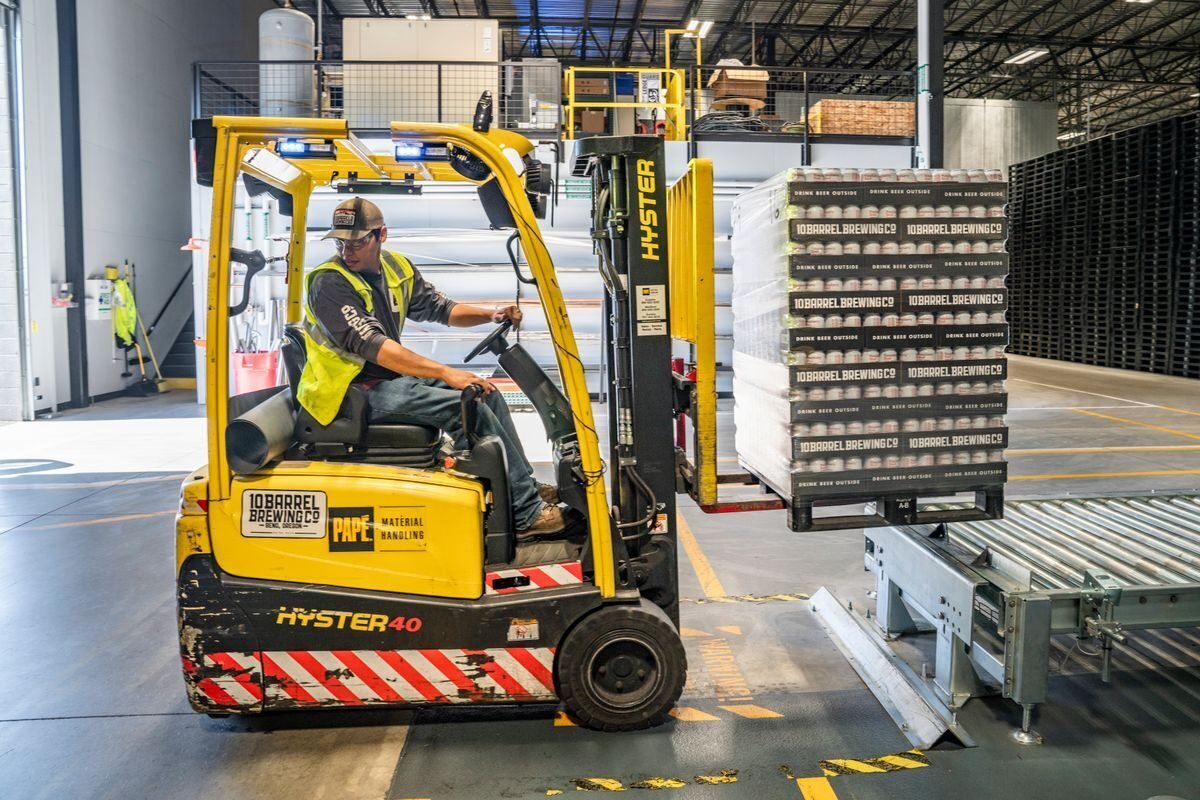
Commercial lease dates and shipping schedules almost never line up. Two kinds of storage solve it, and the difference matters financially. Bonded storage holds the goods before clearance, with duty and import VAT suspended until they are released — useful when the entity’s VAT registration is still in progress, or when the fit-out has slipped. Free-circulation warehousing holds goods that have already cleared, and is simply a rental question.
Basel is the natural bonded node for a company serving both Switzerland and the EU, sitting where the German, French and Swiss borders meet with rail, motorway and Rhine access in the same place. For a single-market Swiss operation, storage close to the destination city is usually cheaper once the trucking is counted.
One more thing worth raising early: Swiss record-keeping obligations under the Code of Obligations run to ten years for accounting records. An Indian parent shipping paper archives to a Swiss subsidiary should decide what has to travel physically and what can be digitised in India, because archive boxes are heavy, dutiable by weight, and expensive to store in Swiss city centres.
Three questions we are asked at the planning stage
Should we ship the Indian office furniture at all?
Usually only the pieces that are genuinely worth it — bespoke items, boardroom furniture with real value, anything with a long local lead time. Standard desking and storage rarely survives the comparison once ocean freight, weight-based duty, 8.1% VAT and Swiss delivery access are added up. We give you both numbers so the decision is arithmetic rather than instinct.
What if we cannot use air freight for the IT?
Then the cutover date moves, or the Swiss office opens on locally procured hardware while the shipped kit follows. Both are workable, but the choice needs making at the planning stage rather than in week ten, because it changes the packing brief and the insurance position.
Who is the importer of record if the Swiss entity is not yet registered?
That has to be resolved before the goods sail. Options include completing the registration first, using bonded storage until it completes, or structuring the import through a Swiss representative. We flag it at the survey, because it is a legal and tax question with a hard deadline attached to a moving container.
Tell us the go-live date and the Swiss address, and we will build the plan backwards from it. Start with a quote, or read how the corridor works in general on our India to Switzerland page.