
Commercial Cargo & Freight to Singapore
Commercial cargo and freight from India to Singapore — Indian export customs managed at source, accurate Singapore GST classification, and start-to-finish coordination into one of Asia’s most capable trade hubs.
Singapore is the commercial and logistics nerve centre of Southeast Asia, and Indian exporters shipping into it benefit from that infrastructure directly. The freight corridor is strong: Nhava Sheva (JNPT), Chennai Port, Mundra and Cochin all connect to PSA Tuas and Pasir Panjang by regular sea services on roughly seven-to-ten-day transit; BOM, BLR, MAA and DEL offer direct air cargo capacity into Changi. What makes the difference between a shipment that clears efficiently and one that sits at the Singapore end is not the corridor’s quality — it is the quality of the documentation at the Indian origin end, the correct use of CECA preferential origin where eligible, and the accuracy of the Singapore import classification.
The Indian export side of a commercial shipment
Commercial exports from India require a Shipping Bill filed through ICEGATE with Indian customs at the originating port or airport. The exporter’s AD code must be registered with the port of export and the IEC (Importer Exporter Code) must be active. The HS classification of the goods, their declared value, the export purpose and the freight documentation all form part of the export record. For exports under zero-rated GST treatment, a GST LUT (Letter of Undertaking) must be filed and renewed annually; without it, IGST is payable upfront on every consignment with a refund claim to follow.
Indian exporters of qualifying goods also have access to the duty drawback scheme and the RoDTEP (Remission of Duties and Taxes on Exported Products) scheme, which together remit embedded duties and levies that would otherwise erode export pricing. For businesses exporting regularly from India to Singapore — whether consumer goods, manufactured products, IT equipment, pharmaceuticals, textiles or industrial components — a well-structured export documentation template, set up once with the AD code, IEC, LUT, drawback and RoDTEP framework in place, makes the process repeatable and efficient. We build that template at the start of a recurring freight relationship and apply it to every consignment.
CECA — the preferential-origin advantage
The India–Singapore Comprehensive Economic Cooperation Agreement (CECA) has been in force since 2005 and provides preferential tariff treatment on a substantial portion of the tariff schedule for qualifying goods of Indian origin. For exporters meeting the CECA rules of origin and supplying the required certificate of origin, the duty differential at Singapore entry can be significant — and material to landed cost. We identify CECA-eligible lines at the documentation stage, secure the correct certificate of origin from the issuing authority in India, and ensure the Singapore entry claims the preference rather than defaulting to MFN treatment.
Singapore’s import environment for Indian commercial cargo
Singapore’s trade regime is open: most goods face zero or low tariffs even before CECA preference is applied. The primary customs obligation is accurate 9% GST accounting, which depends on correct HS classification and declared value. Singapore Customs takes classification seriously — misclassification is not a minor error, it is a compliance issue. Entry is filed through TradeNet, Singapore’s electronic trade-documentation system, which links Singapore Customs and the regulatory authorities in a single workflow. We classify correctly from the India end, so by the time the shipment reaches Singapore, the TradeNet entry matches what the goods actually are.
Certain categories require pre-clearance from Singapore regulatory authorities before customs release: food and agricultural products from the Singapore Food Agency (SFA), health products and supplements from the Health Sciences Authority (HSA), and communications equipment from the Infocomm Media Development Authority (IMDA). We identify these requirements at the quoting stage and plan for the approval timeline, not around it.
Indian export documentation
ICEGATE Shipping Bill, AD code, IEC, HS classification, GST LUT, drawback / RoDTEP setup, CECA certificate of origin and Indian customs clearance at Nhava Sheva, Chennai Port, Mundra, Cochin or the air hubs.
Sea freight — FCL and LCL
Full-container loads for larger commercial volumes; consolidated LCL for smaller consignments, both on regular India–Singapore services into PSA Tuas and Pasir Panjang on roughly seven-to-ten-day transit.
Air freight
Direct cargo capacity from BOM, BLR, MAA and DEL to Changi — the right option for time-critical, high-value or perishable commercial consignments.
Singapore import clearance
TradeNet entry, 9% GST accounting, CECA preference claimed where eligible, and any SFA, HSA or IMDA pre-approvals managed before the shipment reaches Singapore waters.
FTZ, bonded warehousing and regional hub use
A number of Indian businesses use Singapore not as a final destination but as a distribution and transshipment point for Southeast Asia. PSA Tuas and Pasir Panjang sit within Singapore’s Free Trade Zones, where goods can be held, repackaged or onward-shipped without entering Singapore’s customs territory and without attracting GST until they do. Bonded warehousing in Singapore extends the same treatment further inland. If your operation uses Singapore as a regional hub — whether for Southeast Asian distribution, regional consolidation or transshipment to non-ASEAN destinations — we structure the freight, Indian export documentation and Singapore entry to support that model rather than treating each consignment as a standalone import.
How a commercial shipment from India to Singapore runs
- Brief us. Nature of goods, HS codes if known, origin city in India, weight, dimensions, declared value, CECA eligibility, FTZ / bonded requirement and required Singapore delivery date.
- Classify and assess. We check Indian export requirements, Singapore HS classification, GST treatment, CECA preferential origin, FTZ / bonded planning and any regulatory pre-approvals needed, and return a clear quote with freight mode and transit time explained.
- Book, document and dispatch. Freight space booked; goods collected; ICEGATE Shipping Bill, AD code, LUT and Singapore TradeNet documentation prepared before the vessel or aircraft departs.
- Clear and deliver. Your coordinator manages Indian export customs, monitors the transit, handles Singapore TradeNet clearance with CECA preference claimed where eligible, and confirms delivery to the Singapore consignee or FTZ position.
Recurring freight from India to Singapore runs most efficiently once the documentation framework is set up correctly at the start. Request a freight quote and we will assess your cargo and set up the India-export template — AD code, LUT, CECA certificate of origin and TradeNet workflow — before the first shipment moves.
Singapore is a hub before it is a destination
A large share of the boxes that cross PSA’s quays never enter Singapore’s customs territory at all. They are lifted off a mainline vessel, held in a Free Trade Zone and lifted onto a feeder bound for Port Klang, Belawan, Jakarta, Ho Chi Minh City, Manila or Yangon. For an Indian exporter that is not a piece of trivia — it is a structural choice about how the trade is organised.
Shipping into Singapore as a final destination means one import entry, GST accounted for, goods delivered. Shipping into Singapore as a hub means the consignment stays outside the tax net until it is either re-exported or brought in, and the onward feeder network does the regional distribution that a direct sailing from India to a secondary ASEAN port would do slowly and expensively. Mainline capacity from Nhava Sheva and Chennai to Singapore is deep and frequent; direct capacity from Nhava Sheva to a mid-sized Indonesian or Philippine port is neither. Consolidating in Singapore and breaking bulk there is often faster than the direct route, even counting the transhipment handling.
The decision has to be made before the bill of lading is cut, not afterwards, because the routing, the consignee and the documentation all differ. An exporter who imports into Singapore and then re-exports has paid and reclaimed GST and generated two entries; one who routes through the FTZ has done neither.
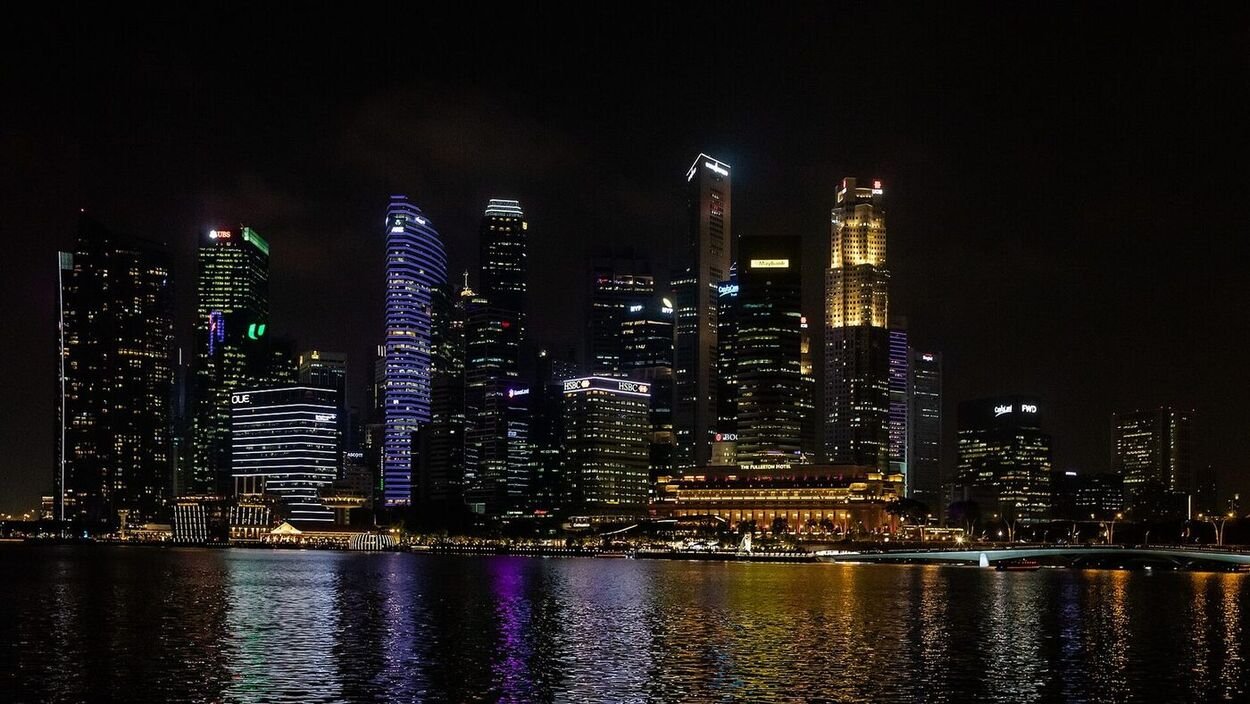
Zero-GST warehouses, licensed premises and the Major Exporter Scheme
Beyond the Free Trade Zones, Singapore Customs runs a set of schemes that suspend or defer GST for businesses holding stock on the island. They matter to Indian exporters supplying a Singapore-based distributor, or running their own regional stock position, because they change working capital rather than freight cost — and working capital is usually the larger number.
- Zero-GST Warehouse Scheme. Approved premises for storing imported non-dutiable goods with GST suspended until the goods leave for the local market. Approval is granted at tiers according to the scale and complexity of the operation, and the premises are licensed to the operator rather than to the cargo.
- Licensed Warehouse Scheme. The equivalent for dutiable goods — liquor, tobacco, motor vehicles and petroleum products — where both duty and GST are suspended while the goods sit in the licensed premises.
- Major Exporter Scheme. Administered with the tax authority for businesses whose imports substantially serve export or re-export. Approved companies import without paying GST at the point of import, which removes the cash-flow drag of paying at the border and reclaiming later.
- Import GST Deferment. A lighter alternative that shifts import GST from the border to the GST return, so it is declared and offset in the same period rather than funded up front.
None of these is something a freight forwarder grants. They are approvals your Singapore entity or your consignee holds, and the practical work at our end is making sure the entry we lodge through TradeNet actually claims the treatment your counterparty is entitled to. A consignment declared as a plain import into a business running under the Major Exporter Scheme has cost that business money for no reason.

Air earns its place on this lane more often than exporters expect
Seven to ten days of water is short enough that the usual sea-versus-air arithmetic bends. Chennai to Changi is under four hours in the air; Mumbai and Delhi are five to six. Add ground handling at both ends and a well-run air consignment is delivered in Singapore inside three to five days of collection in India, against three to four weeks door to door by sea once consolidation and clearance are counted.
For commercial cargo the case for air is rarely about impatience. It is about a production line waiting on a component, a pharmaceutical consignment with a cold chain and a shelf life, a launch date that a distributor has already advertised, or a sample set that has to be in front of a buyer before a competitor’s. It is also about inventory: air lets a Singapore stock position run leaner, and on a dense high-value line the freight premium is smaller than the carrying cost it removes.
Where air stops making sense is exactly where you would expect — anything with volume and no value density. Furniture, packaging materials, building products, bulk chemicals and low-value consumer goods belong in a container, and the seven-to-ten-day transit means they do not have to wait long for it.
How the quote is built
A commercial freight quote on this corridor is assembled from parts, and knowing which part is which makes it possible to compare two quotes honestly rather than on a single headline figure.
| Component | What it covers and what changes it |
|---|---|
| Origin haulage | Factory or warehouse to the Indian gateway. A Tiruppur or Coimbatore consignment railing or trucking to Chennai costs differently from a Bhiwandi load running to Nhava Sheva. |
| Indian export clearance | Shipping Bill filing through ICEGATE, examination if selected, terminal handling. Repeat shippers with a settled documentation template clear faster and cheaper than first-time exporters. |
| Ocean or air freight | The rate itself, plus bunker and currency adjustments on sea and fuel and security surcharges on air. This is the part that moves with the market and the part that quotes usually lead with. |
| Consolidation | LCL is priced on the greater of weight or volume, and a badly stacked pallet is charged for the air around it as well as the goods. |
| Singapore entry | The TradeNet declaration, GST accounting, and any competent-authority approval the goods need before release. |
| Terminal and destination handling | Discharge, de-consolidation where applicable, and delivery to the consignee, an FTZ position or a licensed warehouse. |
| Marine cargo insurance | Priced on declared value and the nature of the goods, not on the freight. Optional, and worth taking on anything you could not simply remake. |
Questions from exporters new to the lane
How much lead time does a first shipment need?
The freight itself needs a fortnight. The documentation framework — AD code registration at the port of export, an active IEC, the LUT if the supply is zero-rated, and the origin evidence for a preference claim — is what sets the real lead time on a first consignment. Set that up once and subsequent shipments book in days.
Do we need a Singapore entity to import?
Someone in Singapore has to be the declaring party, which is normally the consignee — your buyer, your distributor or your own registered entity. Where an Indian exporter has no Singapore presence, the usual answer is that the buyer imports on their own account, and the commercial terms are set so the responsibilities land where each side expects.
What gets held at the Singapore end?
Almost always a mismatch between the declaration and the goods — a classification that does not match the description, a value that does not match the invoice, or a category that needed a competent-authority approval nobody applied for. Food, health products, telecommunications equipment and anything with a battery are the categories that most often need clearing before, not after, the vessel sails.
Can one consignment be part-delivered and part-transhipped?
Yes, and it is common. The container is stripped in the Free Trade Zone, the Singapore-market portion is entered and delivered, and the balance stays in the zone for the onward feeder. It has to be planned into the packing list and the stow, though — splitting a load that was packed as one block costs more in handling than it saves.
Is wood packaging an issue in either direction?
Yes. Solid wood pallets, crates and dunnage must be treated and marked to the ISPM 15 standard, and an unmarked pallet is a straightforward way to have a consignment held on arrival. We specify treated packaging at the origin so the question never arises at the destination.