
Corporate & Office Movers and Packers to Saudi Arabia
Relocating an office or business operation from India to Saudi Arabia — sea and air freight, Indian export clearance and Saudi customs handled from start to finish.
Saudi Arabia’s Vision 2030 programme is actively attracting international business, and Indian companies — in technology, engineering, professional services, construction and manufacturing — are among those establishing or expanding operations in the Kingdom. Moving an office from India into Saudi Arabia is not just a freight exercise; it is an operational project with dependencies on both sides of the Arabian Sea. Seemleius corporate and office moves handles the logistics so the operational side can keep moving.
Indian companies entering Saudi Arabia
Most Indian businesses establishing a presence in the Kingdom now do so through an LLC licensed by the Ministry of Investment (MISA, formerly SAGIA), and a growing number are setting up Regional Headquarters under the RHQ Programme, which from 2024 became a condition for major Saudi government contracts. Riyadh is the natural home for RHQ structures and corporate teams; Jeddah remains the commercial and trade hub; Dammam and Al Khobar serve operations linked to the Eastern Province energy sector. We work with companies whose Saudi entities are already licensed and ready to receive freight — the logistics side waits on the legal entity, never the other way round.
The Indian origin adds a layer that matters
A corporate move from India to Saudi Arabia involves formal export clearance of commercial goods under Indian customs law before a single piece of equipment leaves the country. Business assets — IT equipment, workstations, specialised machinery — each need to be correctly classified, valued and documented in a shipping bill filed on ICEGATE, with the company’s AD code registered at the port and the GST LUT in place where commercial freight is moving alongside the office contents. Under-declaring or mis-classifying commercial goods at this stage creates problems at the Saudi import stage that are expensive to resolve. We prepare the Indian export documentation accurately, which makes the Saudi import side run cleanly.
What the move covers
Office furniture & fit-out
Desks, storage systems, meeting-room furniture and specialist equipment dismantled, wrapped, sea-freighted from Nhava Sheva, Mundra or Chennai and reassembled to your Saudi floor plan.
IT & sensitive equipment
Servers, workstations, networking hardware and sensitive kit handled under a specific protocol — powered down, individually packed and sequenced for restart at the Saudi end.
Indian export clearance
ICEGATE shipping bill filed, HS classification verified, AD code aligned, customs declarations prepared and Indian export clearance obtained before the freight moves. No surprises at Nhava Sheva or Chennai.
Saudi customs & commercial import
Saudi Arabia’s FASAH-driven commercial import procedures managed at Jeddah or Dammam, with SABER conformity registered where required and GCC duty plus fifteen per cent Saudi VAT settled cleanly.
Freight planning for a corporate move
Most corporate office moves from India to Saudi Arabia use sea freight as the primary mode — ten to fourteen days from Nhava Sheva or Mundra into Jeddah, similar from Chennai or Cochin into Dammam — cost-effective and suitable for the bulk of furniture and equipment. For IT infrastructure, sensitive systems or the components that need to be operational before the main shipment arrives, air freight from BOM, DEL, BLR or MAA into RUH, JED or DMM is the parallel track. We recommend the freight split that serves your operational priorities honestly, with transit times and costs set out so you can plan around them.
Delivery and the Saudi working week
Saudi Arabia’s weekend falls on Friday and Saturday, which compresses the delivery window for office moves; we plan unloads for Sunday through Thursday and coordinate with building management at Riyadh, Jeddah, Khobar or Dammam offices accordingly. Dock access, service-lift bookings and crew details are agreed with building management before the trailer leaves the port. For corporate teams moving toward NEOM, Diriyah, the Red Sea Project or Qiddiya, access and security protocols are more involved and we build them into the delivery plan early.
Sequenced for operational continuity
A corporate move succeeds when the new office is ready to work in from the day the team arrives. We build the delivery sequence around your Saudi start date — the IT infrastructure first, the furniture and fit-out to follow, with reassembly to the floor plan your team will work in. The gap between the India office closing and the Saudi office opening should be measured in days, not weeks.
How a corporate move from India runs
- Survey both ends. We assess the India premises, confirm what is shipping and what is not, assess the Saudi destination and map the access and delivery constraints at each end.
- Build the freight plan. The mode split between sea and air, the port of export, the transit timeline and the sequencing at the Saudi end are all set out in a clear plan before anything is booked.
- Export from India. ICEGATE shipping bill prepared, Indian customs clearance obtained, freight dispatched from the nominated Indian port or airport.
- Deliver and restart in Saudi Arabia. FASAH clearance and SABER managed, delivery made to the Saudi address, reassembly to floor plan completed so your team can start work on the first Sunday.
From a technology consultancy relocating a project team from Delhi to Riyadh, to a construction firm moving operational equipment from Chennai to Dammam, the priority is the same: continuity. Talk to us and we will plan the move around your Saudi operational timeline.

An office move is a commercial import, with all that implies
Household goods and office contents are treated differently at the Saudi border, and companies moving a working office into the Kingdom for the first time are often surprised by how much of the process looks like importing stock. The Saudi entity is the importer of record: its commercial registration and its customs registration are what the declaration is filed against, and the freight cannot outrun the entity that has to receive it. New assets bought in India for the new office — workstations, chairs, monitors, switches, lighting, small appliances for the pantry — are new goods rather than used effects, which puts many of them inside the conformity regime and means certificates have to be raised through the Saudi entity’s account before the shipment lands. Used office assets moving from an existing Indian office are treated more straightforwardly, but they still need a valuation that a customs officer will find credible, because a nominal value on a container of IT equipment invites the kind of attention nobody wants at Jeddah.
The practical lesson is to split the consignment at planning stage. Used assets in one bill of lading, newly purchased items in another, with the conformity work started on the second the moment the purchase orders are placed in India. Mixing them into one box and hoping the mixture clears as office effects is the most common way a corporate move loses three weeks.
A workable calendar for an office move
Twelve weeks from decision to a working floor is comfortable. Eight is achievable. Six means air freight for anything that matters.
| Stage | Typical duration | What has to be true before it starts |
|---|---|---|
| Survey at the Indian premises | 1–2 days | A decision on what is shipping, what is being sold in India and what is being bought in the Kingdom. |
| Freight plan and quotation | 3–5 days | The Saudi destination address, the floor plan and the date the team needs to be operational. |
| Conformity work on newly bought items | 2–4 weeks, in parallel | Purchase orders placed and the Saudi entity’s platform account active. |
| Dismantle, pack and load | 2–5 days | The Indian office wound down to the point where the floor can be worked on. |
| Indian export clearance and sailing | Cut-off several days before departure | Shipping bill filed, classification agreed, AD code aligned at the port of export. |
| Sea transit | 10–14 days direct | A confirmed booking on a named vessel rather than a general space allocation. |
| Clearance in the Kingdom | Days, when the file is complete | Certificates in place, duty and VAT funded, consignee details matching the bill of lading exactly. |
| Delivery, reassembly and restart | 2–4 days | Building access agreed, the floor finished, and power and data live at the desk positions. |
The inland leg, the loading dock and the one service lift
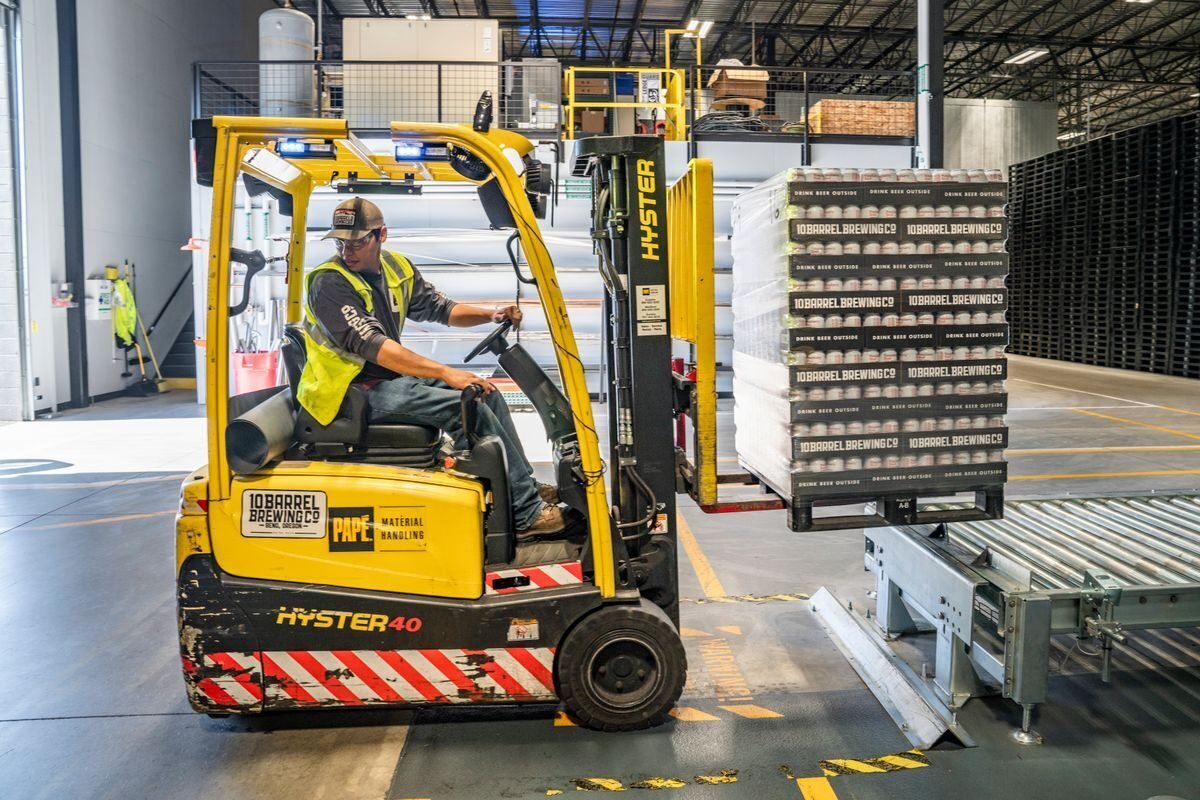
The distance between a Saudi port and a Saudi office floor is where corporate moves quietly lose their schedule. A forty-foot trailer that clears at Dammam still has four hundred kilometres of road to Riyadh, and on arrival it frequently cannot approach the building at all — central Riyadh and Jeddah towers commonly need a transfer to a smaller vehicle, a booked dock window and a service lift reserved with the building management for a specific half-day. Lift dimensions decide whether a two-metre meeting table goes up whole or goes up in pieces, which is a question worth answering with a tape measure before the table is packed in India rather than after. The working day is also punctuated by prayer times, so unloading windows are agreed with the building rather than assumed from an Indian schedule. Where the destination is one of the Vision 2030 project sites, site induction and vehicle access take longer to arrange than the drive itself and should be started weeks ahead.
What is worth shipping, and what to buy in the Kingdom
Not everything on an Indian office floor earns its place in a container. The rule of thumb that survives contact with reality is to ship what is expensive, specified or hard to replace, and to buy what is bulky, cheap and generic.
- Ship — servers and network hardware, calibrated or specialist equipment, technical libraries and drawings, branded reception and signage elements, ergonomic chairs bought recently, and anything with a maintenance contract attached to the specific unit.
- Consider — desking systems, if they are modular and recent. Older systems rarely survive a dismantle, a sea voyage and a reassembly in a way that looks acceptable in a new office.
- Buy locally — pantry appliances, water dispensers, consumables, filing units, and most storage furniture. Freight and conformity work on a filing cabinet costs more than a filing cabinet.
- Leave behind — anything running on an Indian mains assumption without a specification check, and anything the Indian office was already planning to replace.
Storage between two leases
Very few office moves have the Indian lease ending on the day the Saudi fit-out finishes. Where there is a gap, the cheaper side to hold the goods is almost always the Indian side: warehousing near the export port is inexpensive compared with a bonded facility or a commercial store in the Kingdom, and it keeps the shipment under one set of documents until the destination is genuinely ready. Where the gap runs the other way — the Indian office has closed but the Saudi floor is not finished — the shipment can be held at destination, but the meter runs faster and it is worth knowing that before the container is loaded.
Questions from operations and finance teams
Can the IT equipment travel separately and arrive first?
Yes, and on most corporate moves it should. Servers, switches and workstations go by air from BOM, DEL, BLR or MAA so the network can be built and tested while the furniture is still at sea, which is the difference between a team that starts working on day one and a team that sits in a finished room with no connectivity.
How is a container of used office equipment valued for the declaration?
On a depreciated basis that can be evidenced from the company’s own asset register. Book values and purchase records support the figure, and a valuation the finance team can defend is a valuation that clears.
What happens to the equipment the Indian office is not taking?
It is separated at survey stage and left out of the export documentation entirely, which matters because a shipping bill that lists assets still sitting in Bengaluru creates a reconciliation problem for finance later. Disposal, buy-back or handover to the landlord is your side of the line; keeping it cleanly out of the consignment is ours.
Do the crews reassemble the furniture to the new floor plan?
They do, provided the floor plan reaches us before the load is packed in India. Cartons and dismantled components are labelled against the destination plan at origin, which turns an unload into a placement rather than a puzzle.
Set out the operational date first and the freight plan is built to meet it. Talk to us with the floor plan and the target opening week.