
Corporate & Office Relocation to Oman
Relocating a business from India to Oman — Indian export clearance, sea freight in via Sohar or Duqm, and operational delivery in Muscat handled from start to finish.
Indian businesses in Oman are not a new phenomenon. The India–Oman commercial relationship is one of the oldest in the region, and Indian companies in trading, construction, engineering, healthcare and professional services have long had a presence in the Sultanate. What has changed is the pace: Oman’s Vision 2040 diversification programme is opening new sectors — logistics, manufacturing, tourism, mining, fisheries and ICT — and Indian companies are expanding or establishing operations more quickly than before. Moving a business operation from India to Oman requires a freight plan that accounts for the Indian export process, the sea voyage, and operational delivery at the Oman end — all under a single coordinator. That is exactly what Seemleius corporate and office relocation provides.
Setting up the Omani entity: the registration shape
Most Indian companies entering Oman do so via an Omani LLC or, in qualifying zones, a 100% foreign-owned entity. Commercial registration is filed with the Ministry of Commerce, Industry and Investment Promotion (MOCIIP) through the Invest Easy portal; a Chamber of Commerce membership and a municipal trade licence follow. The Omani working week is Sunday–Thursday, with Friday–Saturday as the weekend — a small but operationally significant difference from India that should be reflected in the office go-live plan. Seemleius International does not register companies. What the freight plan does is sequence delivery against the client’s own go-live date, so the office is physically ready on the morning the team walks in.
Three Oman corporate destinations
Corporate relocations from India to Oman typically land in one of three places, and the freight logistics differ between them:
Muscat — Knowledge Oasis Muscat (KOM) and the central business districts are the destination for professional services, healthcare, technology and financial operations. KOM is the country’s ICT and innovation cluster; the surrounding commercial districts hold the banking and corporate tier. Delivery is into the capital, though the freight itself lands at Sohar — Port Sultan Qaboos gave up its container business in 2014 — and comes down the Batinah highway by road. The priority is usually speed and operational continuity — IT infrastructure by air from BOM or DEL, furniture and fit-out by sea, delivery timed to a specific office opening date.
Sohar Port and Free Zone is the destination for industrial, petrochemical and energy operations, with its purpose-built port facility capable of handling heavy equipment, oversized freight and large commercial volumes. The freight logistics for a Sohar corporate relocation are different from Muscat — larger volumes, heavier goods, different delivery access — and we plan accordingly.
Duqm Special Economic Zone (SEZAD) on the central coast is Oman’s long-horizon industrial bet — heavy industry, logistics, dry dock and refining. Indian companies with capital-equipment cargo destined for Duqm benefit from the SEZ’s zero-corporate-tax holiday, customs exemptions on imported plant and 100% foreign ownership rules. The freight chain runs sea-direct from Indian ports.
Indian export compliance for commercial goods
Commercial equipment, IT assets and business goods moving from India to Oman require accurate export documentation under Indian customs law. A Shipping Bill is filed on ICEGATE with HS code classification, declared values and the exporter’s AD code; where the company is GST-registered, exports run under LUT (Letter of Undertaking) to avoid IGST on the outbound side, and drawback or RoDTEP benefits may apply to the commercial cargo. Getting this right at the India stage is what separates a smooth corporate relocation from one that stalls at the border.
What we handle
Office furniture & fit-out
Workstations, conference furniture and storage systems packed, sea-freighted and reassembled to your Oman floor plan.
IT & technology infrastructure
Servers, terminals, networking hardware and sensitive systems handled and sequenced for clean restart at the Oman end.
Industrial & heavy equipment for Sohar / Duqm
Oversized and heavy commercial cargo coordinated via Sohar or Duqm, with the port’s industrial handling capability factored into the freight plan.
Indian export & Oman import documentation
Shipping Bill filed on ICEGATE, Indian customs cleared, Bayan import documentation prepared — the documentation chain managed from start to finish.
How a corporate relocation from India to Oman runs
- Survey both ends. We assess the India premises and the Oman destination — Muscat office, Sohar industrial site or Duqm SEZ plot — and map a sequenced freight and delivery plan around the Sunday–Thursday working week.
- Prepare the Indian export. Shipping Bill filed on ICEGATE for all commercial goods, AD code and LUT confirmed, Indian customs clearance obtained, freight mode and port of export confirmed.
- Dispatch from India. Sea freight from Nhava Sheva, Mundra, Cochin or Chennai to the relevant Oman port; air freight for IT and priority items from BOM, DEL, BLR, MAA or COK.
- Clear and install in Oman. Bayan customs filing at the port; delivery to the Muscat, Sohar or Duqm premises with reassembly to your floor plan so the team can operate from day one.
Whether your India–Oman corporate move is a professional services office into Muscat KOM, a plant and machinery relocation into Sohar, or a Vision 2040 industrial commitment in Duqm, the logistics start at the India end. Talk to us and we will plan it around your Oman operational timeline.
Working backwards from the day the office opens
An office relocation carries a date in a way a household move does not. Somebody has told a landlord, a client or a board when the Oman operation starts working, and every freight decision sits downstream of that commitment. So the plan is built in reverse. Fix the day the team needs to sit down at desks; subtract the installation and reassembly window; subtract the road leg from the port; subtract the clearance; subtract the ocean leg; subtract the export filing in India. What remains is the date the survey has to happen in Mumbai, Bengaluru or wherever the operation currently sits.
On this lane that arithmetic usually lands between six and eight weeks for a complete office, and longer wherever plant, machinery or out-of-gauge items are involved. It is not a long corridor, but there are two customs regimes on it and each works to its own pace.
One further item belongs on the plan early: the Omani calendar is not the Indian one. During Ramadan the working day shortens across the public and private sectors, and throughput at ports and government offices slows accordingly. The Eid holidays and National Day close things outright for several days at a stretch, and the dates shift year to year against the Gregorian calendar. Any go-live date within a fortnight of those windows deserves a longer contingency than one that is not.

What flies and what waits for the vessel
On a corridor where the ocean leg runs about a week, the reflex to fly anything important deserves resisting. Air freight into Muscat International genuinely does compress a schedule, but it compresses it by days rather than by the month it would buy on a European or North American lane, and the paperwork at both ends does not get any faster because the goods arrived on a pallet in a hold.
The short list that does justify the cost is narrower than most project plans assume. Servers, network cores and anything holding live company data. A small stock of workstations for the people who have to be productive from the first morning regardless of what else has arrived. Signage and branded material tied to an opening event with a fixed date. Anything genuinely irreplaceable, high-value in a small cube, or under a service contract that requires it to be in a rack by a stated date.
Everything else — desks, storage, meeting furniture, the archive, the kitchen, the second and third tranche of hardware — is better sailing. It arrives inside the window, it costs a fraction of the air figure, and the space it frees in the air budget is better spent on a genuine contingency than on shipping filing cabinets at a premium.
Phasing a cutover so the old office still works
Very few businesses can switch off in India on a Thursday and switch on in Oman on a Sunday. Most run both for a period, and the freight plan has to support that rather than assume a clean break.
In practice that means splitting the move into tranches with distinct purposes. A first tranche of infrastructure and a skeleton of furniture, sized so the Oman office is workable for a small advance team. A main tranche once the India operation has wound down to a core. A final tranche of records, remaining hardware and whatever the last people out are still using. Each tranche is a separate consignment with its own declaration and its own delivery slot, and the interval between them is the thing to agree before anything is booked — three consignments a fortnight apart is a very different plan from three consignments in a single week.
Where the Oman premises are not ready when a tranche is, bonded or ordinary storage in Oman absorbs the gap. It is a routine arrangement and much cheaper than a container sitting on a quay accruing charges while a fit-out contractor finishes.
Heavy, out-of-gauge and industrial cargo
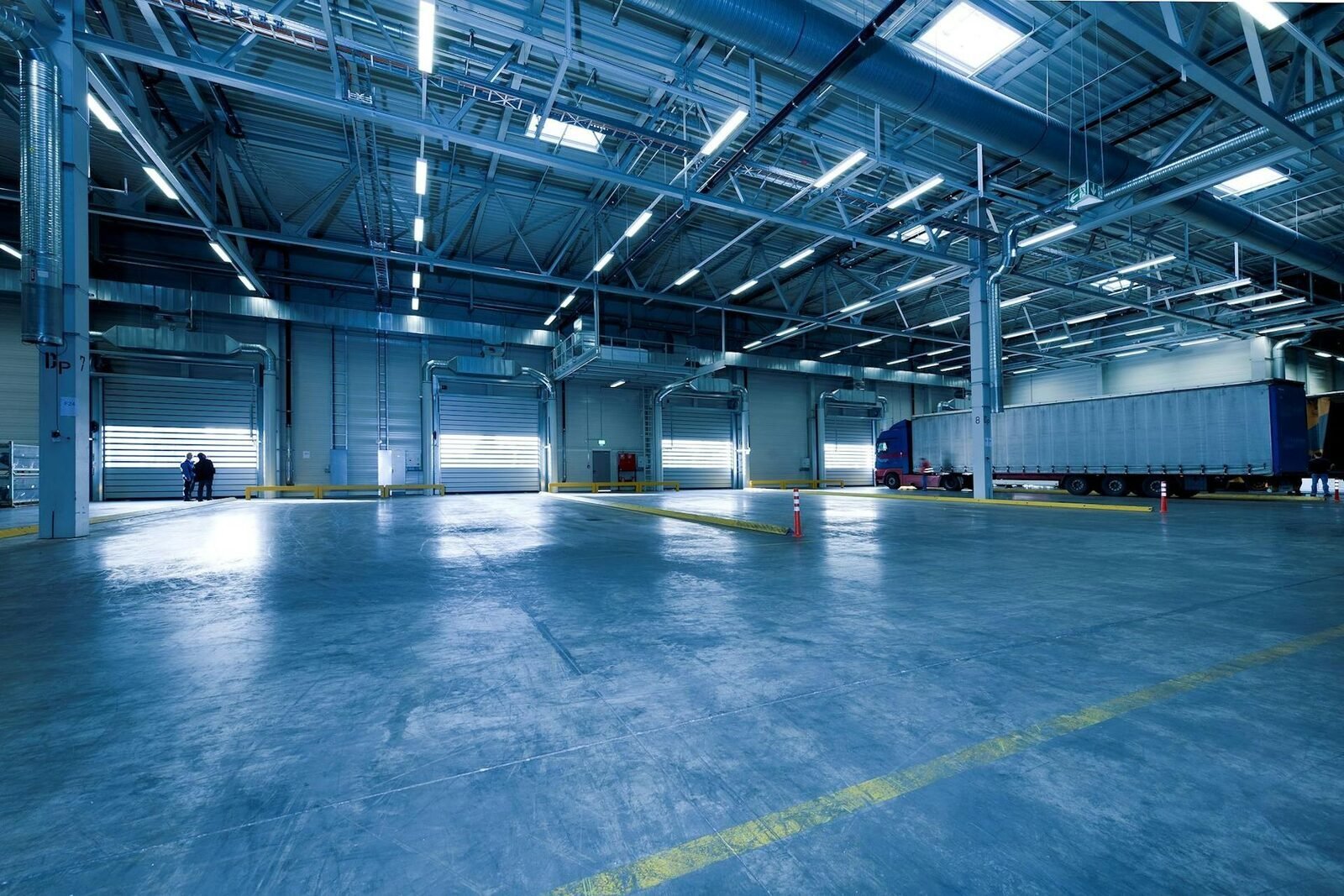
A professional-services office fits in standard equipment. A production line does not. Where an Indian company is moving machinery to Sohar or Duqm, the questions change shape entirely: whether the piece goes in a standard box, on a flat rack or as breakbulk; what it weighs and how that weight is distributed across the bed; what lifting points it has and whether they are rated; what has to be drained, disconnected, blanked or dismantled before it can travel; and what the receiving site can lift when it arrives.
Those answers come from a physical survey, not from a specification sheet, and they are worth getting early because they determine the vessel as much as the vessel determines them. Timber crating for machinery is heat-treated and ISPM 15 marked as a matter of course. Bare machined surfaces are protected against a salt-air crossing. And a lifting plan for the discharge and for the delivery site is agreed before the piece leaves the Indian factory floor rather than negotiated at the quay.
Surveying the Omani premises before anything leaves India
The origin survey is the one everybody remembers to book. The destination survey is the one that prevents the expensive surprises, and on a corridor this short there is rarely a good reason to skip it. A floor that will not take the point load of a safe or a server rack, a goods lift whose internal depth is shorter than the longest desk in the consignment, a loading bay with a canopy too low for a curtain-sided trailer, a landlord who allows deliveries only outside business hours — each of these is trivial to design around six weeks out and close to intractable on the morning a truck is standing outside.
The destination survey answers a short and specific list. What the access route from the street to the floor actually measures, at its narrowest point rather than on the drawing. Whether the goods lift exists, works, and can be booked. What the building allows by way of vehicle size and delivery hours. Where waste and packing debris can be staged and who removes it. Whether the fit-out contractor will genuinely have finished, or whether the first tranche is going to arrive into a live site with trades still working.
That information then flows backwards into the packing plan in India. Furniture that will not fit a lift is dismantled at origin rather than on a landing. Cartons are labelled to the destination room from the floor plan. And the delivery is booked into a slot the building has already agreed to, which is the difference between a placement exercise and a day spent negotiating with a security desk.
The paperwork finance will ask for afterwards
An office move generates an audit trail that somebody will need six months later, usually at an inconvenient moment. It is easier to assemble it as the move happens than to reconstruct it.
- An inventory with numbered line items that the fixed-asset register can be mapped against, so a written-down value can be attached to what actually arrived
- Copies of the Shipping Bill and the Indian export clearance for each consignment
- The Bayan import declaration and the duty and VAT assessment for each consignment in Oman
- Commercial invoices and packing lists in the form they were filed, not a later reconstruction
- The marine cargo insurance certificate, with the insured values and the basis of valuation stated
- Signed delivery notes against the same numbered inventory, with any exceptions recorded at the point of delivery rather than reported afterwards
What operations and facilities teams ask
Can the new office be laid out before anything is shipped?
It is the better order to work in. A floor plan agreed in advance lets cartons and furniture be labelled to a destination room at the Indian end, which turns a delivery day into a placement exercise rather than a sorting exercise.
What happens to equipment that will not be moving?
It is separated at survey and excluded from the export declaration. Disposal, sale or handover in India is the client’s own arrangement, but keeping it out of the inventory from the start prevents the tedious problem of an asset appearing on a customs declaration that was never meant to leave the country.
How is confidential material handled?
Records and server hardware travel in sealed, individually numbered containers with a documented chain of custody from the point of packing to the point of delivery, and the seal numbers appear on the inventory. Where a client has its own security requirements, they are agreed at the survey stage and written into the plan.
Is a single coordinator realistic for a project this size?
One coordinator owns the project and remains the point of contact throughout; crews, brokers and hauliers at both ends report through that person rather than to the client. It is the arrangement that has held across more than twenty years of moves, and it is the reason nobody at the client end has to chase a truck.