
Household & Personal Moves to Oman
Moving your home from India to Oman by sea — export-cleared in India, shipped in via Sohar or Salalah and delivered to your door in Muscat, Sohar or Dhofar.
The India–Oman household move carries something the Gulf’s other corridors do not quite have — a sense of established familiarity. Indian families have been building lives in the Sultanate for generations, and the corridor reflects that: strong port connections, an Omani customs process experienced with Indian goods, and an Indian community in Muscat and Sohar large enough that arrivals rarely feel entirely foreign. What the corridor shares with every other international move is the need for proper planning, correct documentation and a sea voyage that takes time. Seemleius household and personal relocation from India to Oman manages all of it.
Where your shipment begins: India
A household move from India to Oman begins with the Indian export process, and it is here that the move is either set up to run smoothly or set up to stall. Household goods leaving India are exported under Indian customs law, with a Shipping Bill filed via ICEGATE at the originating port or ICD, the exporter’s AD code registered, FEMA-aligned value declarations completed, and customs clearance obtained before loading. We handle this process at the India end — preparing every document, managing the port procedures and ensuring the shipment is clear before the vessel arrives.
Key Indian departure ports for Oman-bound household shipments:
- Nhava Sheva (JNPT), Mumbai — the largest container port in India; serves households from Mumbai, Pune, western Maharashtra and beyond
- Cochin (Kochi) — Kerala’s gateway, and one of the most active departure points on the India–Oman corridor given the large Malayali community in Oman
- Chennai Port — serving Tamil Nadu, Andhra Pradesh, Telangana and the broader south Indian corridor
- Mundra, Gujarat — cost-effective and efficient for households in Ahmedabad and the Gujarat region
Where Indian families settle in Oman
Indian arrivals tend to cluster in a recognisable set of neighbourhoods, and the delivery side of the move is planned around them:
- Al Khuwair and Madinat Qaboos — central Muscat, popular with professional families and corporate executives for the schools, amenities and proximity to embassies
- Qurum and Shatti Al Qurum — coastal, residential and well-served by Indian grocery, restaurants and schools
- Al Mouj and The Wave — modern, integrated waterfront communities favoured by senior corporate appointees and dual-income Indian families
- Ghala, Bawshar and Mawaleh — outer Muscat villas, often the choice for larger family homes and compound living
- Sohar and Salalah — for Indian families on industrial postings and Dhofar assignments respectively
Indian schools in Oman: a quiet decisive factor
For most Indian families, school choice anchors the housing decision. Oman has an established CBSE / Indian curriculum school network — Indian School Muscat (Darsait), Indian School Al Ghubra, Indian School Al Wadi Al Kabir, Indian School Salalah and Indian School Sohar among them — affiliated with CBSE and following the April–March academic year familiar from India. Term timing matters: a household shipment that arrives just after the new academic year has started leaves children settled before the home is fully unpacked. We plan the sea freight around school joining dates, not the other way round.
The document Omani customs look for
The Royal Oman Police (ROP) Resident Card is the national ID that Omani customs look for before treating a consignment as a household move under personal-effects rules rather than as general cargo. Until it is issued, the shipment can sit at the Oman port or be cleared on temporary procedures with a refundable deposit. Seemleius International is a relocation partner, not an immigration adviser. What we do control is the sailing: the vessel is chosen so the box arrives once the household is in a position to receive it, which keeps the gap short and the clearance on the ordinary personal-effects route rather than the expensive one.
Matching the freight to the destination
Muscat, discharged at Sohar
Container services from India’s west and south coast ports discharge at Sohar, and the household runs down to the capital by road. Al Khuwair, Madinat Qaboos, Qurum, Al Mouj and The Wave all sit inside our Muscat delivery network.
Sohar via Sohar Port
Purpose-built for industrial and heavy freight, but also handles household containers for families moving to Sohar’s residential areas and compounds.
Salalah via Salalah Port
A direct sea connection from Indian ports for households moving to Dhofar. The climate and character of Salalah make it a genuinely different Oman — and our delivery logistics reflect that.
Air freight for essentials
Documents, electronics, important clothing and immediate necessities sent by air from BOM, COK or DEL to MCT so you have what you need from day one.
What we move
The sea voyage from India to Oman is not long by international standards, but it is long enough for poor packing to cause real damage. Our packing is to export standard throughout:
- Furniture — dismantled where needed, double-wrapped and crated for the sea journey, reassembled at the Oman address
- Fragile items, glassware, mirrors and valuables — individually cushioned and crated
- Appliances and electronics — moisture-protected, packed against handling and documented with specification details relevant to Oman
- Clothing, books, kitchenware and the full everyday contents of a family home
When the timing does not line up
Move-out dates in India and move-in dates in Oman rarely align perfectly. If you vacate your India home before your Oman address is ready, we hold the shipment securely — either at the India end before dispatch or at the port in Oman after arrival — and release it when you give the word. The plan absorbs the gap without putting pressure on either end.
How your household move from India runs
- Survey in India. We assess your home, confirm volume and contents, recommend the right sea freight mode (FCL or LCL) and the air freight scope for essentials.
- Prepare the export. Inventory, Shipping Bill on ICEGATE and Indian customs documentation prepared before packing begins.
- Pack and ship. Export-standard packing at your India address; dispatch from the relevant Indian port or airport on the booked service.
- Clear and deliver in Oman. Bayan customs clearance managed at the Oman port; delivery to your Muscat, Sohar or Salalah address with unpacking and furniture placement.
From a compact apartment in Kochi to a full family home in Delhi, one coordinator manages the move from the India survey to your Oman door. Request your quote and we will plan it from your India departure.
What actually sets the price of a household move to Oman
Households comparing quotes usually find the totals differ by more than they expected, and the explanation is almost always in what each quote does and does not contain rather than in the freight rate itself. These are the levers that matter on this corridor:
- Cubic metres, honestly surveyed. A survey that under-measures produces an attractive number and an unpleasant revision later. The volume in the quote should be the volume the crew expects to load.
- Sole use of a container versus sharing one. A shared load is cheaper for a small home but travels to a consolidation schedule; sole use costs more and moves to yours.
- The road leg inside India. Distance from the home to Nhava Sheva, Mundra, Chennai or Cochin, and how much of the origin city’s traffic the crew has to work through on loading day.
- Stairs, lifts and parking. A fourth-floor flat with no service lift and a lane too narrow for the truck is a longer day and a bigger crew than the same volume on a ground floor with a driveway.
- How much of the packing the household does itself. A full pack by the crew, or a part-pack where the family handles books and wardrobes, changes both the labour and the insurance position.
- Crating for the awkward things. A piano, a marble tabletop, a large mirror, an armoire that will not come apart — each is a bespoke crate, priced individually.
- Storage, if the dates do not line up. Cheap in India before dispatch, more expensive in Oman after arrival, worst of all as demurrage on an uncleared box.
- Insurance. Priced on the declared replacement value of the inventory. It is the line most often trimmed and the one most missed when something goes wrong.

Heat is the packing problem, not distance
People assume the risk on a household shipment is proportional to how far it travels. On this corridor it is not. The crossing is a week; the problem is the temperature inside a steel box standing on a quay in Gujarat in May and again in Oman in July, and the humidity that gets loaded along with the furniture if the packing happens during the monsoon.
What that heat does is specific and predictable. Candles and cosmetics soften and leak. Vinyl records and photographs on the top layer of a stack take on a permanent curve. Adhesives on cheap furniture creep. Anything sealed with moisture inside it — a washing machine drum that was not fully drained, a well-packed but slightly damp rug — grows mould in a week of warm darkness. Condensation forms on the underside of the container roof and drips back onto whatever is highest in the load.
The countermeasures are practical. Appliances drained, dried and left ajar rather than sealed. Desiccant in real quantity, sized to the cube. Wooden and lacquered furniture blanket-wrapped rather than plastic-wrapped, so it is not sitting inside its own microclimate. Books and paper boxed away from the container walls. Electronics double-boxed with the original packaging where it survives. Nothing wax-based, aerosol or pressurised in the load at all. And on the loading side, a monsoon-season pack means covered loading and a truck that does not stand open in the rain while the crew finishes upstairs.
Sea and air, compared honestly
| Sea | Air | |
|---|---|---|
| Typical crossing | Seven to ten days from Nhava Sheva or Mundra; shorter from Cochin | Hours, from BOM, DEL, BLR, MAA or COK into Muscat |
| Door-to-door, realistically | Four to six weeks including survey, packing, filing and delivery | Around two weeks, because the paperwork does not travel faster than the goods |
| Suits | The whole household — furniture, appliances, books, kitchen | A settling-in consignment: clothes, laptop, tools, school files, medicines |
| Cost shape | Priced on volume; the sensible default on this corridor | Priced on weight and volume together; expensive for anything bulky |
| Not suitable for | Anything needed in the first fortnight | Furniture, appliances, anything with a battery or an aerosol in it |
Because the ocean leg here is so short, most families are best served by sending nearly everything by sea and flying a genuinely small set of essentials. On a long-haul corridor the split is often nearer half and half; on India to Oman that would be money spent for very little time saved.
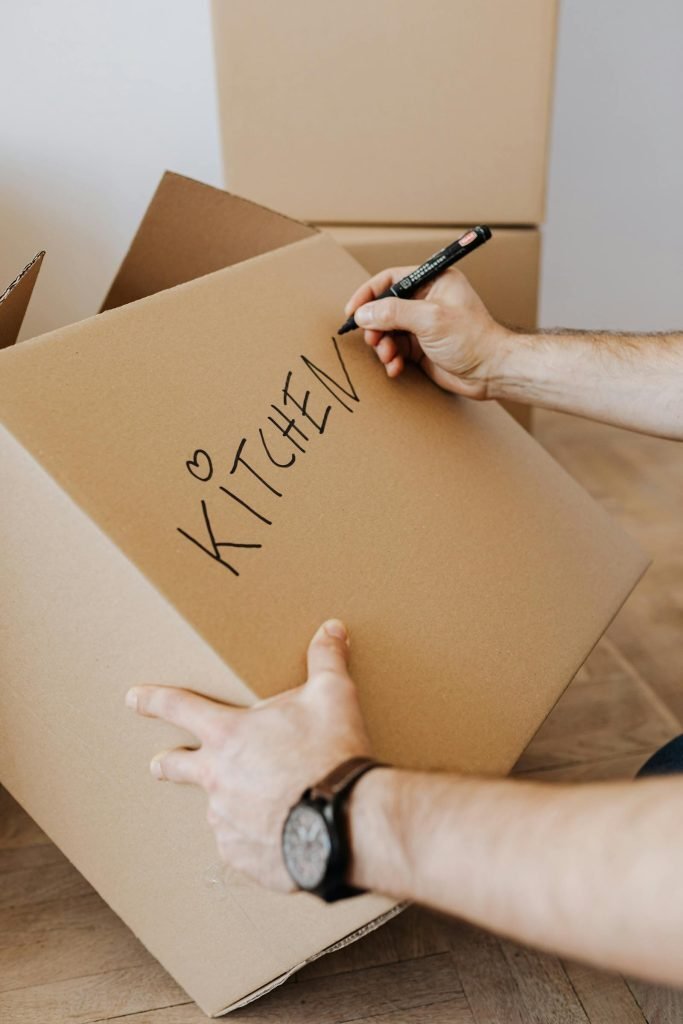
What has to come out of the boxes before they are sealed
Every family packing for the Sultanate hits the same short list, and it is better hit in the living room than at the quayside. The drinks cabinet does not travel: alcohol has no place in a shipped household consignment to Oman. Nor does anything from the freezer or the larder that derives from pork. Firearms and air weapons of any description are out. Narcotics are obviously out, and so is anything in the medicine cabinet that a household would not be comfortable declaring on an inventory.
Then there is the wider category of things that are allowed but conditional, and those are the ones that catch people. Books, films and artwork are assessed against Omani standards on public morals and religious sensibility, and a consignment can be inspected on exactly that basis. Drones, satellite receivers and radio-transmitting equipment need an approval from the relevant Omani authority before they arrive. Some medicines and medical devices do too. Plant material, seeds, soil on garden tools and untreated wooden items attract attention on agricultural grounds.
The rule that keeps everybody out of trouble is the same one that applies to the whole inventory: declare it. An item listed accurately and checked in advance is a five-minute conversation. The same item found in a carton that says “kitchen” is a held container and a bill for the days it sat there.
Delivery day at the Omani end
The last day of a move is the one families remember, and it is largely decided by information gathered weeks earlier. Villa compounds and apartment buildings in Muscat frequently require the delivery to be booked with building management, sometimes with a restriction on which hours a large vehicle may be on site. Older parts of Muttrah and Ruwi have lanes a full-size truck cannot enter, which means a shuttle in a smaller vehicle and a longer day. Al Mouj and the newer developments are straightforward but have their own access rules. Sohar and Salalah deliveries are usually simpler, though the drive from the point of discharge is longer for Dhofar addresses.
On the day itself, the crew works to the same numbered inventory that was written in India, so every line is checked off as it comes into the house. Furniture is reassembled and placed where the family wants it rather than left in the hall. Boxes are unpacked to the level agreed at the survey — full unpack, or kitchen and bedrooms only, or delivered and placed. And the packing debris leaves with the crew, which sounds like a small thing until it is a hundred flattened cartons in a Muscat villa in August.
Things families ask at the survey
Can the household be packed while somebody is still living in it?
Yes, and it is normal. The crew works room by room over one to three days, and a nominated set of items — bedding, a kettle, the things needed for the last night — is packed last and clearly marked.
Are Indian appliances usable in Oman?
Mains voltage and frequency are broadly compatible, but plug types differ and Oman commonly uses the three-pin British-style socket. The practical questions are about warranty and service support locally rather than about the electricity, and they are worth asking before shipping a large appliance rather than after.
What happens if something is damaged?
It is noted against the inventory line at the point of delivery, photographed, and raised with the insurer straight away. Recording it on the delivery note at the time is what makes a claim straightforward; discovering it three weeks later is what makes one difficult.
Is a full inventory really necessary?
It is the document that everything else runs on — the customs declaration, the insurance schedule and the delivery check-off all read from it. A vague inventory is the single most reliable way to turn a straightforward clearance into a slow one.