
Employee Relocation to New Zealand
Employee relocation from India to New Zealand for HR and mobility teams — MPI biosecurity built into every move, visa-aware timing, and one coordinator per employee.
New Zealand’s Accredited Employer Work Visa (AEWV) programme and its Green List of shortage occupations have made the India–New Zealand employee corridor a structured, high-volume route for healthcare, engineering, infrastructure and technology professionals. These are not casual moves: they typically involve permanent or long-term settlement, families accompanying the primary applicant, and a household shipment that represents years of accumulation. For the HR and mobility teams managing these relocations, the India–New Zealand corridor demands a programme approach, not a case-by-case improvisation. Seemleius employee relocation from India to New Zealand is built as exactly that.
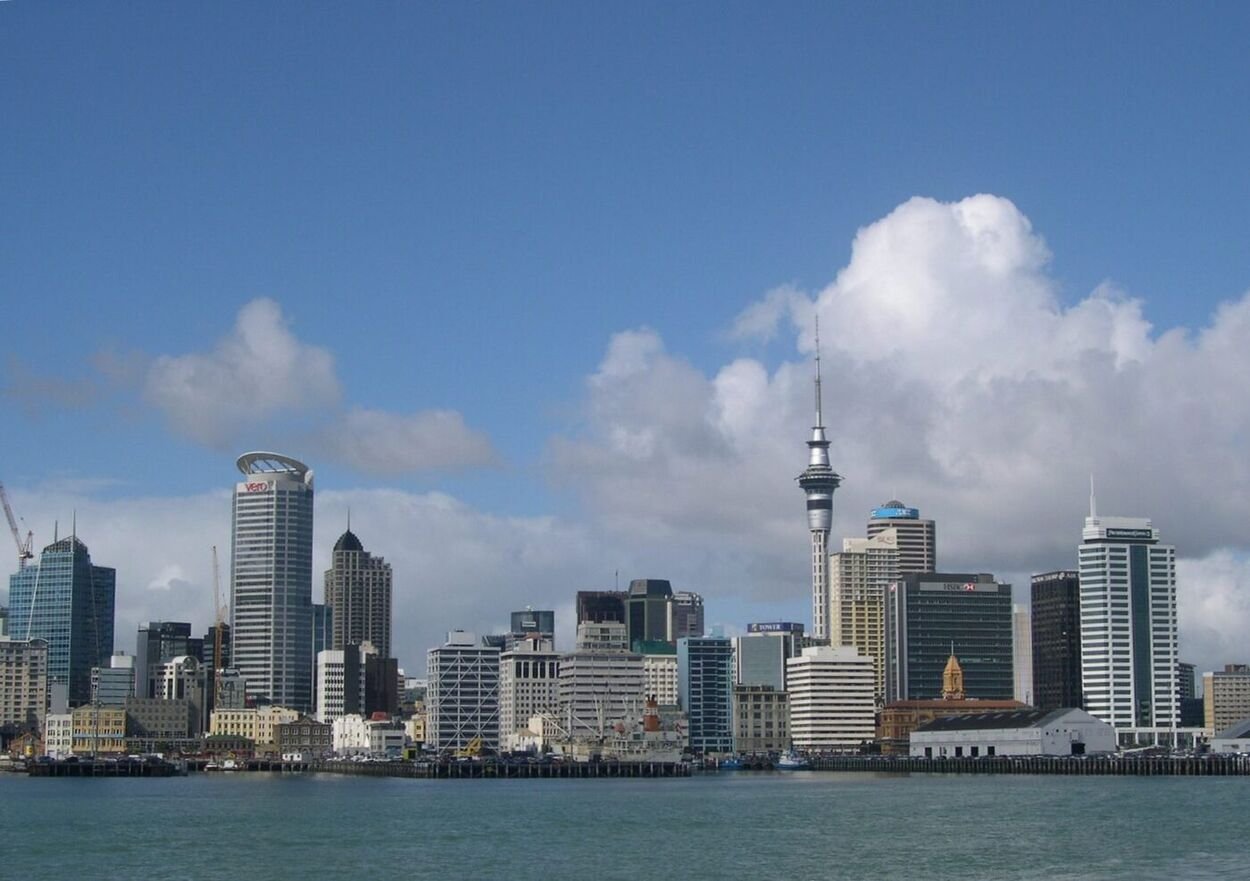
Work and residence routes used on this corridor
Most India–New Zealand employee moves run through one of four routes, and each shapes the timing and shipment plan differently. The Skilled Migrant Category (SMC) is the points-based residence pathway, awarding points for qualifications, skilled work experience and occupational registration, and is the long-term destination for many AEWV holders. The Accredited Employer Work Visa (AEWV) is the principal employer-sponsored route, requiring the New Zealand employer to hold accreditation, a job check and a market-rate offer; it has become the dominant pathway since 2022. The Specific Purpose Work Visa covers short-term, project-specific assignments where a permanent move is not the intent. Residence from Work, available after holding an eligible work visa for a qualifying period, is the transition route into residency for those entering the country on the AEWV. We are a relocation partner, not an immigration adviser. The shipment plan is tailored to the assignment type — a permanent move and a short-term project assignment do not need the same volume, the same departure timing or the same insurance arrangements.
Three things this corridor demands that others do not
Every employee relocation corridor has its peculiarities. India to New Zealand has three that matter most to a mobility programme. The first is the Indian export documentation: goods leaving India require an ICEGATE shipping bill filed with Indian Customs, with the bank’s AD code and the employee’s details linked accurately. If this step is skipped or done incorrectly, the NZCS import declaration at the other end will not match — creating holds that delay the employee’s household by weeks. The second is the MPI biosecurity pre-screening: Indian households carry a higher than average concentration of natural-wood furniture, organic goods and traditional items that MPI targets on inspection, and every India-origin container is x-rayed on arrival. Employees who are not briefed before they pack routinely face holds and treatment costs in New Zealand. The third is timing: with a thirty-five to forty-five day sea transit via Singapore transhipment from Nhava Sheva, Mundra or Chennai, the shipment needs to depart India well in advance of the employee’s own arrival date if the two are to coincide. A mobility programme that does not build this lead time in sends employees to New Zealand ahead of their belongings by a month or more.
How the programme manages these challenges
Pre-move MPI briefing
Every relocating employee receives a specific biosecurity briefing for Indian household goods before the survey — covering wooden furniture, natural-fibre items, vacuum cleaners, garden tools, food and traditional goods that need to be addressed before packing.
Indian export documentation
ICEGATE shipping bill, AD code linkage and export clearance managed at the relevant Indian port — Chennai, JNPT, Mundra or Cochin — so the New Zealand import filing matches without gaps.
Transit-aware departure scheduling
The sea freight departure date is set against the employee’s confirmed New Zealand start date, not the day they ask us to book — so the household and the employee arrive in New Zealand within a practical window of each other.
Flexibility when start dates move
Start dates shift. The shipment plan is built with contingencies so a change of date does not strand a container at an Indian port or create avoidable storage charges.
Origin city logistics within India
New Zealand-bound employees come from across India’s skilled-employment centres. The logistics for each are specific. Bengaluru (BLR) and Chennai (MAA) employees route through Chennai Port; Mumbai (BOM) and Pune through Nhava Sheva (JNPT); Hyderabad can route to either, with Chennai typically marginally faster for sea transit to Auckland; Delhi and NCR employees move household goods to JNPT or Mundra by rail-and-road and may use air freight from Indira Gandhi International (DEL) via Singapore or Sydney for priority items while the main household goes by sea. Passenger flights from BOM, DEL, BLR and MAA all connect to AKL through Singapore, Sydney or Hong Kong, with effective travel times of sixteen to eighteen hours — useful when planning the employee’s arrival relative to the container ETA. We build the right routing for each employee’s origin city as a standard part of the move plan, not an add-on they need to request.
Settling in — what the employee needs in the first weeks
The shipment is one part of the move; the settling-in admin in New Zealand is the other, and it is where employees most often feel under-supported. An IRD number from Inland Revenue is required before the first pay cycle, KiwiSaver enrolment follows automatically for eligible employees, an Indian driving licence can be converted to a New Zealand full licence under the licence conversion arrangement (typically requiring a theory and practical assessment for full-licence equivalence), a New Zealand bank account is the prerequisite for almost everything else, and rental tenancies in Auckland in particular require demonstrable income and references. We brief the employee on each of these before they leave India so the first three weeks in New Zealand are spent settling rather than chasing administrative basics.
How the programme runs
- Policy alignment. We map your relocation entitlements, freight caps, approval thresholds and any India-specific documentation requirements once. Every subsequent New Zealand move runs to those rules.
- Employee onboarding. HR refers the employee; we contact them, deliver the MPI biosecurity briefing, assess their origin city and routing, and return a policy-checked quote with a departure date built around the New Zealand start date.
- Managed move. Indian export clearance, packing, sea freight via Singapore transhipment, NZCS customs and MPI biosecurity clearance are all coordinated for the employee, with HR updated at the milestones that matter — packing day, departure, clearance and delivery.
- Close and report. Consistent documentation for every move — inventory, export record, invoice, clearance confirmation — in a format ready for finance and mobility records without reformatting.
The India–New Zealand corridor rewards getting the programme structure right before the first move, because the transit and biosecurity requirements mean there is very little room to correct things mid-move. Talk to us early about your programme and we will set it up so every move runs cleanly.
Sizing the shipment against the assignment
The most useful thing a mobility team can do on this corridor is stop treating every move as the same product. A two-year project posting and a permanent family relocation to Auckland have almost nothing in common once you look at the volume, and the difference shows up in cost, in departure timing and in how much of the household is exposed to a long voyage.
| Band | What it typically carries | Mode | Where it fits |
|---|---|---|---|
| Air consignment | Clothing, bedding, laptops, kitchen basics, children’s things | Air from BOM, DEL, BLR, MAA or COK to AKL | Short assignments, or a bridge so the family can function while the sea shipment is still at sea |
| Shared sea load | One or two rooms, personal effects, no large appliances | Consolidated container to Auckland | Single movers and couples going into a furnished or partly furnished tenancy |
| 20ft container | A two-bedroom household with furniture and appliances | Full container | The majority of accompanied family moves on this lane |
| 40ft container | A full family home, including large furniture, outdoor items and bicycles | Full container | Long-term and permanent moves, particularly where the family owns rather than rents in New Zealand |
One local fact pushes families up a band more often than mobility policies anticipate. New Zealand rental stock is generally unfurnished, and whiteware is not always included, so a family that would have travelled light to a serviced apartment elsewhere ends up shipping a fridge, a washing machine and beds. Policies written against a European or Gulf benchmark tend to under-allocate here, and the gap surfaces at the survey when the employee is already committed.
The concession for unaccompanied effects, in plain terms
New Zealand Customs applies a concession to unaccompanied household and personal effects brought in by a person taking up residence. The shape of it is worth understanding, because it is the single largest financial variable in an employee’s shipment and it is decided by the person’s own circumstances rather than by the freight arrangement.
In outline, and as a matter of published New Zealand requirements rather than advice: the goods must have been personally owned and used before the move; they must be intended for the person’s own continued use rather than for sale or disposal; and the person must hold documentation allowing them to live in New Zealand indefinitely. The declaration is made on the unaccompanied personal baggage form, supported by passport and travel details and the residence documentation the individual already holds. Goods that qualify are not charged duty or the fifteen per cent goods and services tax. Goods that fall outside it — items bought new for the move, gifts, anything intended for sale — are assessed on value in the ordinary way. Alcohol, tobacco and motor vehicles sit outside the household concession and are treated under their own rules.
The practical implication for a programme is that the paperwork the employee holds is theirs to produce, and the shipment declaration is prepared against it. What we can do is tell HR, at the point the move is triggered, exactly which items in a given household are likely to fall outside the concession, so the cost lands in the budget rather than in a surprise invoice eight weeks later.
Storage, split deliveries and the weeks before a tenancy starts
Very few employees on this corridor walk into a permanent home on arrival. The normal pattern is a few weeks in temporary accommodation while a tenancy is found, and in Auckland that search can be competitive enough to stretch. Meanwhile a container is berthing on a schedule that was fixed months earlier.
Three arrangements cover almost every version of this. The container can be held at the New Zealand end and delivered when the tenancy starts, which is simple but accrues the shipping line’s detention charges against the box. It can be unpacked at a transitional facility and the contents moved into storage, which stops the line’s clock and substitutes a weekly storage rate — usually the cheaper option beyond a week or two. Or it can be delivered in two parts, with the immediate-need cartons released to the temporary address and the bulk of the household held until the permanent one is ready. Which of the three is right depends on how long the gap is likely to be, and that is a question worth asking at booking rather than on arrival.
Storage is also the answer to the less comfortable scenario, where an assignment is deferred after the container has sailed. A shipment already on the water cannot be turned around, but it can be received, unpacked into storage and held until the picture is clear. Building that possibility into the programme costs nothing until it is used.
Questions HR and mobility teams ask about this corridor
How far ahead should a New Zealand move be triggered?
Fourteen to sixteen weeks before the employee’s start date for a sea shipment, and longer if the start date falls in January. That is not padding: it covers the survey, a booking into a schedule that is not daily, five to seven weeks at sea, and a clearance window at the far end that depends on inspection rather than on anyone’s urgency.
Can the household ship before the employee flies?
Routinely, and on this corridor it usually should, because the transit is long enough that departing together means arriving months apart. Sailing ahead is normal. Clearing ahead is not — the arrival-end declaration is completed against the individual’s own travel and residence documentation, so the shipment is timed to land with or shortly after the person, not long before them.
What does the employee personally have to do?
Less than they fear, but not nothing. They need to be honest and specific at the survey about what is in the house, they need to sign a declaration that is accurate, and they need to be reachable during the clearance window in case a question arises about a described item. Everything else — the export filing in India, the booking, the arrival-end entry, the inspection attendance and the delivery — is coordinator work.
What if the start date moves after the container has sailed?
The shipment continues and the plan changes around it. The container is received and cleared on its own schedule, the goods go into storage, and delivery is rescheduled to whenever the employee is settled. The cost is storage by the week rather than a lost shipment, which is why the contingency is written into the programme at the outset instead of being negotiated in the middle of it.