
Domestic Relocation
Moving home or office within India involves distances, logistics and diversity that few countries match. Seemleius domestic relocation handles every part of the journey.
India is not a small country to move across. A relocation from Mumbai to Bengaluru covers more than a thousand kilometres; a move from Delhi to Chennai is closer to two thousand. Factor in the different road conditions between metro highways and state routes, the challenge of building access in older city neighbourhoods, and the sheer volume of belongings in even a modest Indian home, and a domestic move becomes a genuine logistics exercise.
Seemleius domestic relocation is built for that scale. We move households and businesses between India’s major metros — Mumbai, Delhi / NCR, Bengaluru, Chennai, Hyderabad, Pune, Kochi, Ahmedabad, Kolkata — and into the tier-2 cities that are increasingly home to India’s mobile professional workforce. Every move gets a coordinator, a plan and a crew that understands how Indian cities actually work.
Moving across India’s geography
Indian intercity moves span a range that would count as international in much of Europe. A family relocating for a job transfer, a couple moving from a rented apartment in Pune to a new home in Hyderabad, a business shifting its registered office from Kolkata to NCR — the distances and the logistics demand proper planning, not improvisation. We handle route logistics, vehicle sizing, packing to road-transport standards, and delivery coordination at the destination city.
Intercity coordination
Moves planned across India’s metros and tier-2 cities, with road logistics and transit time managed upfront.
Professional packing
A trained crew packs to withstand long-haul road transport — not just a short local drive.
Right-sized vehicles
From a single tempo for a 1BHK to a full container truck for a large family home — matched to your volume.
Destination setup
Unloading, placement and furniture reassembly at your new address so you can settle in quickly.
How your domestic move comes together
- Survey and quote. We assess your home or office volume — in person for larger moves, by video or detailed inventory for smaller ones — and return an itemised quote that covers packing, transit and delivery.
- Plan the move. Your coordinator maps the route, confirms the vehicle and crew, and flags anything that needs arranging in advance: high-rise lift bookings, parking permissions, narrow-lane access in older neighbourhoods.
- Pack and load. The crew packs with materials rated for long-distance road transport, labels every carton by room, and loads to a sequence that protects your belongings through the journey.
- Transit and delivery. We track the shipment in transit and coordinate building access at the destination. On arrival, items go to the correct rooms, furniture is reassembled, and packing debris is cleared away.
What makes a domestic move with Seemleius different
Most damage in an Indian intercity move happens not because of bad luck but because packing was rushed, materials were inadequate for a multi-day road journey, or the vehicle was the wrong size and items shifted in transit. We engineer those risks out at the planning stage — correct vehicle, correct materials, correct crew size, correct timeline.
Because we operate across both ends of an intercity move, you have a single coordinator who knows the origin address and the destination city, owns the transit, and handles the handover. There is no second company introduced at the far end.
Whether you are moving a 1BHK apartment to a new city for a job, shifting a 4BHK family home across states, or relocating a business operation, the planning discipline is the same. Request your quote and we will design the move around your timeline and your cities.
The society gate is the first checkpoint
In Mumbai, Bengaluru, Gurugram or Noida, the hardest fifty metres of a move are often the first fifty. Gated societies run relocations on their own terms: a No Objection Certificate from the association office before a crew is allowed in, a refundable deposit against damage to lobbies and lift interiors, and a gate register entry for every crew member and vehicle. None of it is difficult — but all of it takes days rather than minutes, and a crew that turns up without it waits outside while your schedule burns.
So your coordinator asks the awkward questions early. Does the tower have a service lift, and does it need booking through the facility manager? Does the society restrict moves to fixed hours — commonly 9 am to 6 pm, and in some societies never on Sundays? Where exactly can a truck stand, and for how long? Newer townships in Gurugram, Noida and Whitefield often route everything through a podium level with height-restricted entry, which decides the vehicle before anything else does. Older buildings pose the opposite problem: no lift at all, a stair carry from the fourth floor, and a lane too tight for anything larger than a tempo — so the line-haul truck holds at the main road and a shuttle runs the gap. Spotted at survey, each of these is just a line in the plan. Discovered on moving day, each is a delay with an argument attached.
A worked example makes it concrete. A family leaving a 14th-floor flat in a Powai society for a villa plot community outside Bengaluru needs, in order: the society NOC and deposit lodged, the service lift blocked for the packing morning, gate passes for a five-person crew, a tempo shuttle from the tower to a container truck holding on the main road — and, at the destination, the new community’s own gate formalities, which are their own small bureaucracy. Every one of those items sits in the move plan with a date and an owner before the first carton is folded.
Truck timing is the last piece. Most metro cores restrict heavy-vehicle entry during daytime hours, so the long-distance vehicle frequently loads or departs at night even when the packing happened in daylight. That is normal, and the plan says so in advance.
Two thousand kilometres is a plan, not a drive
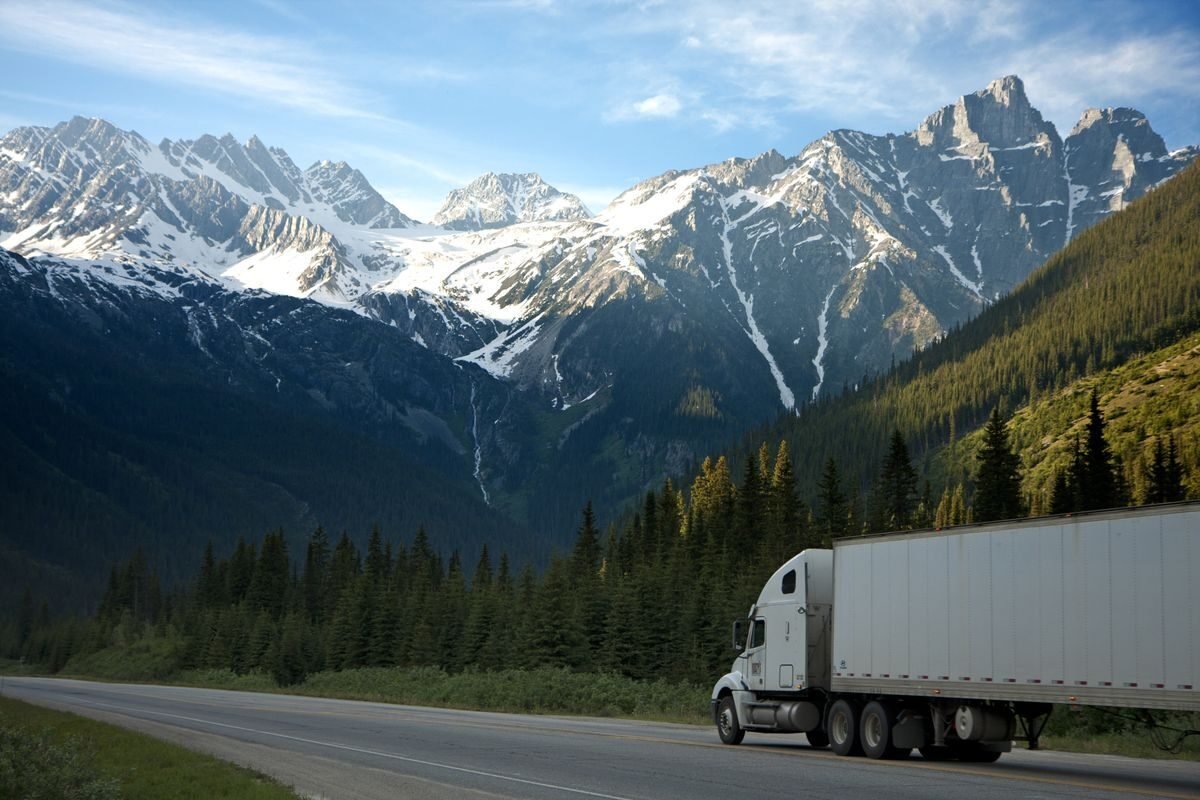
Once loaded, your consignment becomes highway freight. Mumbai to Bengaluru runs roughly a thousand kilometres down NH48 through Pune, Satara and Belagavi — two to three days for a dedicated household vehicle driven with lawful rest halts. Delhi to Chennai on NH44 is more than double that, and four to six days is the honest figure; a promise of two means someone intends to drive it dangerously or has not planned it at all.
GST removed most of the old border friction from interstate moving, and used household effects are exempt from the e-way bill requirement — but the vehicle still travels fully documented: the consignment note, our invoice, and an inventory that matches the carton labels, so any checkpost query is answered from paper rather than from persuasion. Night halts happen at secured yards, not on open roadside, and in transit you hear from your coordinator, not from a driver’s borrowed phone.
There is also a choice worth understanding: dedicated versus shared. A dedicated vehicle carries only your household and goes directly. A shared (part-load) vehicle combines consignments heading the same way — it costs less and arrives within an agreed window rather than on a fixed day. Both are legitimate ways to buy a move; the quote states plainly which one you are getting.
What you experience during transit should be quiet. The coordinator confirms departure, gives you a midpoint update on multi-day runs, and fixes the delivery slot a day out so you are not guessing when to be at the new address. If weather or a breakdown moves the schedule — it occasionally does, over these distances — you hear it from us first, with a revised window, not silence followed by a truck at the gate.
Monsoon, summer rush and the fog weeks
The moving year in India has a shape. May and June are the crunch — school terms end and corporate transfers take effect, so crews and vehicles on the popular corridors are committed weeks ahead. Book early in this window or accept whatever dates remain.
From June to September the monsoon changes technique rather than feasibility. Every carton and soft item gets a waterproof wrap layer as standard, loading happens under cover wherever the building permits, and the ghat crossings — the climb out of Mumbai towards Pune, the Shiradi ghat down to the Karnataka coast — go visibly slower in heavy rain, so west-coast routes carry buffer days. A monsoon move done properly is unremarkable; one done with dry-season habits is how water damage happens.

December and January bring fog to the northern corridors out of Delhi and across NCR, which adds morning delays to departures and a buffer day to long north–south runs. Diwali week the industry largely stands down, and schedules that straddle it regret it. The quiet stretches — late August into September, and November — are the easiest weeks of the year to book and often the smoothest to run.
If your dates are governed by a flat handover or a registration, work backwards from the immovable date rather than forwards from today: fix delivery, then transit, then packing, then survey. Sequenced that way, even a peak-season move holds together, because the scarce resources were claimed before anyone else wanted them.
What moves the price of a domestic move
Two quotes for “a 3BHK from Pune to Hyderabad” can differ by half, and the difference is almost always in the assumptions rather than the margin. These are the levers that actually set the number:
- Volume. Cubic feet, not weight, is the base of the price — which is why the survey matters more than the room count.
- Distance and corridor. A metro-to-metro run on a national highway prices tighter than a route that ends on state roads.
- Access at both ends. Floor number, lift availability, carry distance from door to truck, and whether a shuttle vehicle is needed.
- Packing intensity. A home with crated marble, glass and artwork costs more to pack than the same volume of cartons and soft furniture.
- Dedicated or shared vehicle. Direct transit against a lower price and a delivery window.
- Season. May–June peak pricing is real; so is the value of the quiet months.
- Storage. Days between move-out and move-in, if the dates do not meet.
- Insurance. Priced against the declared value of the consignment, and always shown as its own line rather than buried in the total.
When you compare quotes, ask what each one assumes about access and vehicle type. An implausibly low figure usually assumes a lift that does not exist and a truck that will not fit the lane. It is also worth asking how the goods will be documented: a proper mover hands you a carton-level inventory and a GST invoice at the end, and treats both as routine rather than as favours.
Domestic moving, asked and answered
How much notice does an intercity move need?
Two to three weeks is comfortable for most corridors; in the May–June rush, give it four or more. Shorter notice can usually be accommodated, but the trade-off is choice — of dates, of vehicle type, and sometimes of price.
Can my car or two-wheeler travel with the household?
Yes. Vehicles are moved alongside the household consignment — carried, not driven — with their own condition report at pickup and delivery. Tell the surveyor at the start so the vehicle is planned into the load rather than bolted on later.
What if the new home is not ready when the truck arrives?
The consignment goes into inventoried storage at our facility rather than sitting on a vehicle accruing charges, and delivers when your dates resolve. If a gap looks likely, say so at booking — a planned storage leg is cheaper and calmer than an improvised one.
Do you relocate offices between cities as well as homes?
Regularly. Office moves add their own layers — IT equipment packed and labelled by desk, records boxed in sequence, and a weekend or overnight schedule so the business reopens on time — and the same coordinator model applies: one plan, both cities, no handover to a stranger at the far end.
A domestic move done properly is mostly invisible: the paperwork cleared before anyone noticed it existed, the truck that arrived when the plan said it would, the cartons in the right rooms by evening. That is the standard the sections above describe, and it is the one to hold any mover to — ours included. Tell us your two cities and we will show you the plan before you commit to anything.
Explore Domestic Relocation in detail
Furniture & Single-Item Moves
Moving a single piece of furniture or a few items within India — properly wrapped, professionally handled, and delivered without…
Learn moreHome Moving
Intercity home moves across India, from studio flats to large family houses — packed for long-haul road transport and delivered…
Learn moreOffice & Commercial Moving
Office and commercial moves within India, planned to minimise downtime — from small studios to full commercial floors, across any…
Learn morePacking & Unpacking
Professional packing and unpacking for Indian home and office moves — the right materials for long-haul road transport, methodical labelling,…
Learn more