
- 20+ years moving households & cargo
- 184 countries destination corridors covered
- In-house customs clearance filed by our own team
- One coordinator from quote to delivery
Denmark has become one of the more deliberate destinations for Indian professionals and families leaving the subcontinent — less a mass corridor than a considered one. The country’s strength in life sciences, wind energy, maritime technology and design draws a particular kind of mover: the researcher recruited to a Copenhagen biotech, the engineer joining the offshore wind cluster around Esbjerg, the IT specialist hired by a Danish software house, the family following a partner already settled in Aarhus. The Danish business presence in India is long-standing — Maersk, the Danish shipping group, has been a fixture of Indian ports for generations, and the bilateral Green Strategic Partnership signed between the two governments has deepened co-operation in renewable energy and water. For the households making the move, the logistics need to be as well organised as the opportunity that prompted it. Seemleius handles that logistics from start to finish.
The India–Denmark move begins firmly on the India side: export customs clearance through ICEGATE at Nhava Sheva (JNPT), Mundra, Chennai Port or Cochin, preparation of the shipping bill under the Customs Act, AD code registration with the originating port, and the careful packing of a household or office for a sea voyage of several weeks. That groundwork carries more weight than people expect — most coordination problems on this route trace back to an India side handled without care. Once the shipment reaches a Danish port, the destination process begins: customs clearance with Toldstyrelsen, the Danish Customs Agency, the import VAT (moms) question, and the EU transfer-of-residence relief that, when correctly claimed, removes duty and VAT on used personal effects a family has owned and used before the move.
The India–Denmark corridor
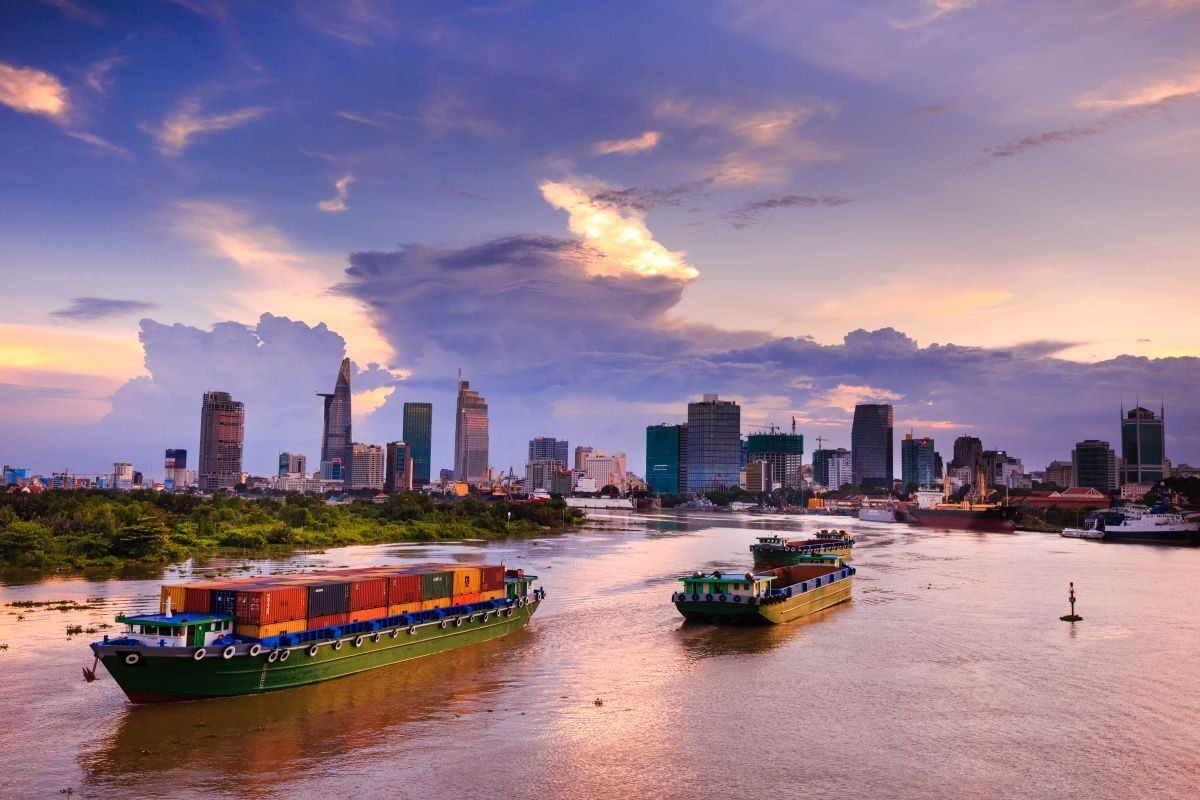
Sea freight is the backbone of this corridor for household and commercial volumes. Container vessels from Nhava Sheva and Mundra reach Denmark through Aarhus — the country’s largest container port — as well as Copenhagen and Fredericia, generally with a transhipment leg through a northern European hub such as Hamburg, Bremerhaven or Rotterdam. Realistic port-to-port transit on this routing runs from roughly 28 to 38 days depending on the connection and the intermediate calls. Chennai Port and Cochin serve origin cities across South India well. From the Danish port, onward road delivery reaches Copenhagen, Aarhus, Odense, Aalborg, Esbjerg and any address in the country, including the islands linked by the Storebælt and Øresund fixed crossings.
Air freight from Mumbai (BOM), Delhi (DEL), Bengaluru (BLR) or Chennai (MAA) into Copenhagen (CPH) serves moves where the timeline cannot absorb a sea voyage. Copenhagen Airport is the principal air gateway for Denmark, and shipments route there directly or via a one-stop connection through a European hub. We are open about the cost difference: air freight costs several times what the same consignment costs by sea, and the right choice depends on whether your confirmed start date, school term or office opening leaves room for the slower mode. We help you weigh speed against budget rather than defaulting to either.
Why the India end matters so much
Indian export clearance
Shipping bill filed on ICEGATE, AD code registration, FEMA-aware documentation and Indian customs clearance managed at Nhava Sheva, Mundra, Chennai or Cochin — so the shipment leaves India correctly and any GST or LUT position is left intact.
Denmark’s customs regime
EU import declarations to Toldstyrelsen, EORI registration where required, Danish import VAT (moms) treatment confirmed in advance, and EU transfer-of-residence relief claimed accurately for personal-effects shipments.
Sea and air options
Sea via Aarhus, Copenhagen or Fredericia for household and commercial volumes, roughly 28 to 38 days with a northern European transhipment; air via Copenhagen when the schedule leaves no room for sea transit.
One coordinator, both ends
The same person manages your India packing survey, ICEGATE shipping bill and export documentation, sea or air dispatch, and Danish delivery — with no handover gap between the origin and the destination.
Who moves on this corridor
- Skilled-worker professionals — researchers, engineers, IT specialists and healthcare staff from Bengaluru, Hyderabad, Pune and Delhi NCR moving to Copenhagen, Aarhus and Odense, usually with a confirmed Danish start date already in the diary
- Students and academics — admissions to the University of Copenhagen, Aarhus University, the Technical University of Denmark (DTU) and the Danish business schools bring a steady flow of moves from India
- Families joining a partner — households reuniting with someone already settled in Denmark, usually scheduled around a school term and the date the Danish home becomes available
- Indian corporates — businesses establishing a Danish presence in life sciences, renewable energy, maritime technology and software, often anchored in the Copenhagen and Aarhus clusters
Where we deliver in Denmark
We move regularly to all of Denmark’s major cities and the regions around them: Copenhagen (København) and the wider Greater Copenhagen area on Zealand; Aarhus and the East Jutland belt; Odense on Funen; Aalborg in North Jutland; and Esbjerg on the west coast, the hub of the Danish offshore wind industry. We are familiar with the registration sequence that follows arrival in each — the CPR number issued at the local Borgerservice and the folkeregister entry that opens the door to almost everything else in Danish daily life. If your destination is a smaller town or one of the islands, ask us; we deliver across the whole country.
Starting the move
- India-side survey. We assess volume and contents at your home or office in India — in person in the major cities, or by video — and return a clear quote with sea and air options explained, including realistic Danish arrival windows.
- Export documentation. Indian export paperwork is prepared: shipping bill filed through ICEGATE, AD code confirmed, packing list, invoice and any FEMA-related declarations relevant to your move. None of this is left to the final week.
- Pack and dispatch. Our crew packs to export standard from your India origin, and the shipment is booked and dispatched on the confirmed route to Aarhus, Copenhagen, Fredericia or, by air, to Copenhagen.
- Clear and deliver in Denmark. We manage the Danish import clearance with Toldstyrelsen, prepare the documentation an EU transfer-of-residence relief claim has to be supported by, and coordinate onward road delivery to your address in Denmark.
Pick the guide below that fits your situation — commercial freight, a corporate office move, an employee relocation, a household and family move, or pets and vehicles — or request a quote and your coordinator will walk you through the right starting point for a move from India.
How India cargo actually reaches a Danish quay
It is worth being plain about the routing, because the language used to sell this lane often is not. There is no regular direct container service between an Indian port and a Danish one. A box loaded at Nhava Sheva or Mundra sails to a North Sea hub — Rotterdam, Antwerp, Bremerhaven or Hamburg — is discharged there, and continues north on a feeder vessel. Aarhus takes the large majority of that feeder traffic, because it is the one Danish port with deep-water container terminals sized for the North Sea and Baltic trades. Anything arriving from India in a container either lands there or is trucked up from a German or Dutch terminal instead.
That structure has two practical consequences. The first is that days are usually lost at the feeder connection rather than on the ocean leg: feeders run weekly rotations, so a missed connection in Rotterdam costs a week, not an afternoon. The second is that road from the continent is sometimes genuinely faster than waiting for a feeder, particularly for one household consignment landing in February when sailings thin out. Where that is the better route we say so, and the goods move north under a T1 transit document to clear in Denmark.
The other Danish ports serve narrower purposes and are worth knowing by name. Copenhagen-Malmö Port, operated jointly across the Øresund with the Swedish side, handles ro-ro, vehicle imports and cruise traffic rather than deep-sea boxes. Fredericia on the Little Belt takes bulk, liquid and project loads. Esbjerg on the west coast is the country’s offshore-wind port and the natural landing point for heavy energy-sector cargo. In the air, Copenhagen (CPH) is the working freight gateway; Billund (BLL) in central Jutland and Aalborg (AAL) in the north matter for onward positioning rather than as arrival points from India.
What sets the price on this corridor
Two households moving between the same two cities can be quoted very differently, and none of the difference is arbitrary. These are the variables that actually move the figure.
| Driver | What it does to an India–Denmark quote |
|---|---|
| Volume in cubic metres | The single largest factor. Sea freight is sold by space, so an accurate survey is worth more to your budget than any negotiation afterwards. |
| Groupage or a full container | Below roughly the contents of a two-bedroom flat, shared container space usually wins. Above it, a dedicated container is often cheaper and always faster, because it skips consolidation and deconsolidation at both ends. |
| Origin city and port | A Kochi household routed through Cochin, or a Bengaluru one through Chennai, avoids a long domestic haul to Nhava Sheva. The port that suits the sailing schedule is not always the one nearest the door. |
| Access at both ends | A fourth-floor flat in Mumbai with a small lift and a fourth-floor flat in Copenhagen with none are two separate cost lines. The Danish end is the one people forget to describe. |
| Feeder or road from the continent | A feeder into Aarhus is normally cheaper; trucking from Hamburg or Rotterdam buys time. The gap between them narrows in winter. |
| Marine insurance | Cover is written against a valued inventory, and the premium follows the declared value. The valuation exercise is not a formality. |
What does not vary is the documentation work. The shipping bill, the AD code, the inventory and the Danish import declaration take the same effort on a small consignment as a large one, which is why very small household moves look expensive per cubic metre and large ones look cheap.

Booking windows: the monsoon, the Danish summer and the December gap
The two ends of this route have their difficult months at opposite times of year, which is useful once you see the pattern.
In India, the south-west monsoon between June and September is the constraint. Packing a house in Mumbai, Kochi or Chennai during heavy rain means wrapping against moisture that is already in the air, loading between downpours, and accepting that port handling slows when weather closes in. None of it is impossible — monsoon moves happen every year — but it needs a crew that plans for it rather than one that discovers it on the day. The festival weeks from Dussehra through Diwali then tighten crew and transport availability across most of the country.
In Denmark, the pressure points are July and the fortnight around Christmas. A large part of Danish industry takes its holiday in the same few weeks of July; caretakers, building managers and lift-hire firms are away with everyone else, and a delivery that needs a furniture lift and a reserved kerb becomes hard to arrange. Between Christmas and the first working week of January the country is effectively closed. Winter delivery is possible throughout, but December in Copenhagen gives roughly seven hours of daylight, and a hoist working against a building façade needs light.
The clean windows on this corridor are February to May and September to November. If your Danish start date falls outside them, book earlier rather than hoping for a gap.
Delivery day in a Danish street
The last two hundred metres are where a move like this is won or lost, and they look nothing like the last two hundred metres in Pune or Gurugram. A forty-foot container rarely reaches a Danish residential address at all; the shipment is devanned at a depot and shuttled in a smaller rigid truck. In central Copenhagen that truck still needs somewhere to stand, which means applying to the municipality to occupy the kerb, usually several working days ahead. Copenhagen, Aarhus, Odense and Aalborg also run low-emission zones that exclude older diesel lorries, so the vehicle sent has to be the right one.
Then there is the building. Blocks in Nørrebro, Vesterbro, Østerbro and Frederiksberg are handsome and old, with narrow back stairs, tight turns and frequently no lift of any kind. The Danish answer is the møbellift — an external ladder hoist that runs up the façade and takes furniture in through a window. It is routine in Denmark and unfamiliar to almost every family arriving from India, and it has to be booked rather than improvised. Older Danish blocks usually come with a basement room (kælderrum) or a loft room (loftsrum) allocated to the flat, which is often where the last few crates end up. This is why we ask for floor, lift, stairwell width, window sizes and legal truck standing early: unglamorous information that decides how the day goes.
Further questions about moving from India to Denmark
How long does the whole move take, door to door?
Plan on eight to twelve weeks from survey to delivery for a sea shipment. The ocean and feeder legs account for roughly 28 to 38 days of that; the rest is Indian export preparation, sailing availability, Danish clearance and the delivery booking. Air compresses the transit to days but not the paperwork.
Can the shipment wait in Denmark until we have keys?
Yes. Goods can be held in a Danish warehouse after clearance, which is often the sensible plan when a tenancy starts later than the vessel arrives. Storage is charged by the week, so the arithmetic usually favours delaying the sailing rather than paying for a long Danish wait.
Do wooden crates need special treatment for the EU?
They do. Solid-wood packaging entering the EU must be heat-treated and marked to the ISPM 15 standard, and unmarked timber is a straightforward way to have a container held at the frontier. Any crating built for your shipment in India is made from compliant timber as a matter of course.
Is a full container worth it for a two-bedroom flat?
Usually not, though it depends on what is in it. A twenty-foot container holds considerably more than a typical Indian two-bedroom household ships, and shared space avoids paying for air. Where a family is moving a piano, a large hardwood dining set or a workshop, the calculation changes quickly.
Your move to Denmark, your way
Every move is different. Pick the guide that matches your situation for advice and pricing built around it.
Commercial Cargo & Freight to Denmark
India–Denmark commercial freight covers a narrower but high-value set of sectors than the bulk corridors: pharmaceutical formulations and active ingredients…
Read the guideCorporate & Office Relocation to Denmark
An Indian business opening in Denmark is managing a relocation that sits inside a wider establishment project: registration of an…
Read the guideEmployee Relocation to Denmark
Denmark recruits Indian talent in a focused way — into life sciences, IT, engineering and the renewable-energy sector — and…
Read the guideHousehold & Personal Moves to Denmark
A household move from India to Denmark is usually tied to a date that will not flex: an employer’s start…
Read the guidePets & Vehicle Relocation to Denmark
Families moving from India to Denmark often raise two questions that fall outside the household shipment: what happens to the…
Read the guide