
- 20+ years moving households & cargo
- 184 countries destination corridors covered
- In-house customs clearance filed by our own team
- One coordinator from quote to delivery
Burundi is a small, densely populated nation in the Great Lakes region of East Africa, landlocked between Tanzania, Rwanda and the Democratic Republic of the Congo. The India–Burundi relationship is built on development co-operation, pharmaceutical trade and a small but established Indian business community in Bujumbura. For the families, NGO staff and businesspeople making the move from India, Burundi rewards careful logistical planning, because nothing about the route to a landlocked Central African country is automatic.
A move to Burundi is, before anything else, a move through a transhipment hub. With no coastline, every shipment from India clears export customs in India, crosses the Indian Ocean to an East African port, and then travels overland through Tanzania to reach Bujumbura. Getting the India end right keeps that long inland leg from becoming an expensive problem. Seemleius coordinates the whole chain so the handovers between sea, port and road are managed by one team.
The India–Burundi corridor
Export clearance in India begins with the shipping bill filed on ICEGATE, AD code registration with the loading port and export-standard packing. Sea freight departs from Nhava Sheva (JNPT), Mundra, Chennai or Cochin and is routed to Dar es Salaam in Tanzania — the practical gateway port for Burundi-bound cargo — with port-to-port transit typically 18 to 28 days. From Dar es Salaam the shipment continues by road roughly 1,400 kilometres through Tanzania to the border at Kabanga and on to Bujumbura, along the established Central Corridor. Customs clearance in Burundi is handled by the Office Burundais des Recettes (OBR), which administers import duty, VAT and the conditions for relief on used personal effects under transfer-of-residence provisions.
Air freight from Mumbai (BOM), Delhi (DEL), Bengaluru (BLR) or Chennai (MAA) reaches Burundi through Bujumbura International Airport (BJM), via a connection in Addis Ababa, Nairobi or a Gulf hub. Air suits urgent or high-value consignments; the cost premium over sea is substantial and we are candid about when it is justified.
Indian export clearance
Shipping bill filed on ICEGATE, AD code registration, FEMA-aware documentation and customs clearance at Nhava Sheva, Mundra, Chennai or Cochin — so the shipment leaves India correctly for the long route to Burundi.
Transhipment via Dar es Salaam
Cargo routes through Dar es Salaam and crosses Tanzania by road on the Central Corridor — we plan and track the inland leg, not just the sea voyage.
Burundi customs
Clearance with the Office Burundais des Recettes (OBR), import duty and VAT confirmed in advance, and transfer-of-residence relief claimed where eligible.
One coordinator, both ends
The same person manages your India packing survey, export documentation, sea or air dispatch and Bujumbura delivery — no handover gaps.
Who moves on this corridor
The India–Burundi route serves a mix of movers. Households — NGO staff, healthcare and education professionals, and families joining relatives in Bujumbura — make up much of the personal-effects volume. Business and office moves arise as Indian pharmaceutical, trading and services companies establish a presence in Burundi. Commercial freight covers equipment, project cargo and supplies for development programmes. This single corridor page serves all three; your coordinator tailors documentation and routing to your consignment.
Where we deliver in Burundi
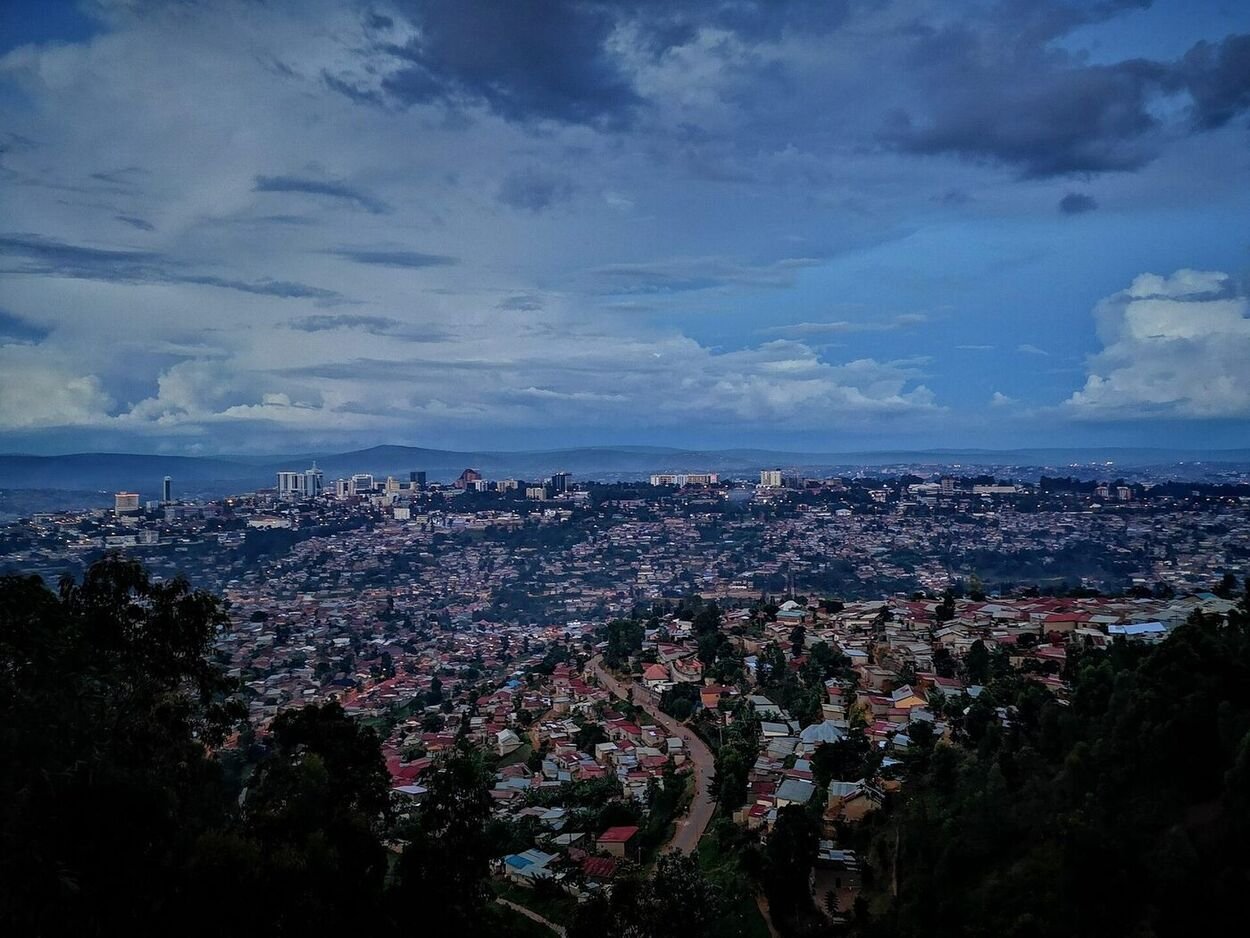
We deliver to Bujumbura, the largest city and commercial centre on Lake Tanganyika; Gitega, the political capital in the interior; and regional towns including Ngozi, Rumonge, Muyinga and Ruyigi. Bujumbura handles most moves. If your destination is a smaller town, ask us — we arrange final delivery countrywide.
How your move works
- India-side survey. We assess volume and contents at your home or office in India — in person or by video — and return a clear quote with sea and air options and realistic Bujumbura arrival windows.
- Export documentation. Indian export paperwork is prepared: shipping bill filed through ICEGATE, AD code confirmed, packing list, invoice and any FEMA-related declarations.
- Pack and dispatch. Our crew packs to export standard from your India origin, and the shipment is booked and dispatched via Dar es Salaam or by air to Bujumbura.
- Clear and deliver in Burundi. We manage OBR import clearance, advise on transfer-of-residence relief, and coordinate road delivery to your address.
To start a move from India to Burundi, request a quote and your coordinator will walk you through the documentation, routing and timeline.
Two corridors, one destination
Bujumbura can be reached from the Indian Ocean two ways, and the honest comparison between them is the most useful thing on this page.
The Central Corridor from Dar es Salaam. This is the route described above, and it is the one we use most. The container lands at Dar es Salaam, is declared for transit, and travels by road west across Tanzania — Morogoro, Dodoma, Singida, Nzega, Kahama — to the Kabanga/Kobero crossing and on through Muyinga and Ngozi to Bujumbura, around 1,400 kilometres. The upside is a single transit country. The downsides are that Dar es Salaam runs congested more often than not, and that sailings from India to Dar are fewer than to Mombasa, so you may wait for the vessel.
The Northern Corridor from Mombasa. The container lands at Mombasa, travels the Nairobi–Eldoret–Malaba road into Uganda, on through Kampala to the Katuna/Gatuna crossing into Rwanda, through Kigali, and finally over the Kanyaru crossing into Burundi and down to Bujumbura. That is closer to 2,000 kilometres and three border crossings instead of one. Why would anyone choose it? Because Mombasa has more frequent sailings from Nhava Sheva and Mundra, because parts of the Northern Corridor are better run than the Central, and because when Dar es Salaam is backed up, a longer road can still be the shorter wait. It is subject to the Rwanda–Burundi crossing being open to freight at the time, which we confirm at booking.
There is also a lake. Cargo can reach Kigoma on Lake Tanganyika by road or rail and cross to Bujumbura by barge. It exists, it is used for bulk goods, and we do not recommend it for household effects: the schedules are irregular and every extra handling of a container is a risk.
Sea, air, or the sensible split
Most Burundi moves we handle end up as two shipments, and we would rather say so up front than let you find out after the survey. The bulk of a household — furniture, kitchen, books, the things that make a house in Bujumbura feel like yours — goes by sea, because the air-freight price on a full household would be hard to justify. But a sea container to Bujumbura is a two-to-three-month proposition from packing day, and few people want to live out of a suitcase for that long. So a smaller air consignment carries what you need in the first weeks: bedding, essential kitchen kit, children’s things, work equipment. It flies from Mumbai, Delhi or Bengaluru to Bujumbura’s Melchior Ndadaye International Airport via Addis Ababa, Nairobi or a Gulf hub, and it clears far faster than sea cargo. The two shipments are quoted together, packed together and managed by the same coordinator.
Small consignments — a single professional’s effects, a returning student’s boxes — sometimes go entirely by air. Above a certain volume the sums flip to sea; below it, air is both quicker and less exposed to the overland risk. We do the sums for you rather than push one answer.
Customs at three points, not two
A Burundi shipment is examined by customs in India, checked through transit in Tanzania (or Kenya, Uganda and Rwanda on the Northern Corridor), and finally cleared in Burundi. Each is a separate file and a separate set of people.
In India, the export side is the standard package: the shipping bill filed on ICEGATE, the AD code registered with the port of loading, packing list and invoice, and export clearance at Nhava Sheva, Mundra, Chennai or Cochin. Used household goods being exported by a private individual are not a difficult export; they simply need to be described accurately, and the inventory needs to match what the container actually holds.
In Tanzania, the container is not imported; it is declared for transit and travels under a customs bond lodged by the clearing agent at Dar es Salaam. The seal stays on. Tanzanian customs tracks the transit electronically, and the bond is discharged when the goods are confirmed out of the country at Kabanga. A transit declaration lodged late, or a bond guarantee that has not been arranged, is the single commonest reason a Burundi container sits on the Dar quay accumulating storage charges.
In Burundi, the Office Burundais des Recettes clears the goods for home use. Relief on used personal effects for someone moving to Burundi exists and is worth claiming, but OBR sets conditions on how long the goods have been owned, how soon after your arrival they land, and what residence documentation supports the claim. We confirm the current terms before you pack and tell you exactly which papers the clearing agent in Bujumbura will ask for. We are a relocation partner, not an immigration adviser. Where relief does not apply, duty and VAT are assessed on the declared value, and we help you prepare a sensible, defensible valuation.

From a door in Kochi or Pune to a door in Bujumbura
Here is how it tends to run, told as a story rather than a schedule. You call us eight to ten weeks before you need to be in Bujumbura. Within a few days a surveyor has walked through your flat, in person or on a video call, and you have a quote showing the sea-plus-air split with volumes for each. You confirm, and packing is booked for a date around six weeks before your travel date. The crew packs and wraps over a day or two; the air consignment leaves first and is usually in Bujumbura before you are. The sea container is trucked to the port, cleared for export, and loads onto the next Dar es Salaam service, which may be a direct call or a transhipment via Colombo, Salalah or Jebel Ali depending on the line. Three to four weeks later it is on the quay in Dar es Salaam. The transit file, lodged while the vessel was still at sea, is processed, a bonded truck collects the box, and it heads west. A week to ten days of road later, with a border stop at Kabanga, it is in Bujumbura for OBR clearance and delivery to your address. From packing day to delivery, expect two to three months on the sea shipment. The air consignment is measured in days.
Two things stretch that timeline more than any other: congestion at Dar es Salaam, which comes and goes, and the rains. Burundi and western Tanzania have two wet seasons, roughly February to May and October to December, and the heaviest months make the last stretches slower. There is not much to be done about weather except to know it is coming and not to promise a delivery date in the middle of it.
What to bring, and what to leave in India
Burundi runs on 220 volts, so Indian appliances work without transformers, and a well-packed container of furniture, kitchen equipment, bedding, books and clothes is exactly what the corridor handles best. Solid furniture travels well if it is corner-protected and loaded tight; flat-pack pieces should be dismantled and their fittings bagged and labelled, because a fourteen-hundred-kilometre road finds every loose joint. Bring the pressure cookers, the tawa, the mixer-grinder and the spice boxes — Indian kitchen equipment is not easy to find in Bujumbura and the freight on it is trivial next to the difference it makes.
Leave behind the large white goods unless they are near-new; the freight to a landlocked destination usually costs more than a replacement in Bujumbura, and fridges and washing machines are available locally. Generators, solar kit and anything that looks like commercial equipment are handled as commercial freight with their own customs treatment, not slipped into a household consignment. Vehicles are a separate import file altogether. And anything you would be upset to lose — documents, jewellery, photographs — travels with you, not on a truck across Tanzania.
Thin diaspora, real consequences
The Indian community in Burundi is small: some long-established trading families in Bujumbura, a rotating population of NGO, UN-agency and healthcare staff, and a few company postings. There is Indian food in Bujumbura if you look for it, but there is no Indian neighbourhood, no community storage, and nobody to lend you a pressure cooker while the container is at sea. Plan on being self-sufficient for the first two months, which is one more reason the air consignment earns its keep.
Three questions we hear every time
Is the road from Dar es Salaam safe for a household container?
It is a well-used commercial corridor and household containers travel it every week. Damage risk is about handling and road surface rather than anything else, which is why we pack for the road and load the container tight.
Can I use Mombasa instead if I am moving from Chennai?
You can use either port from any Indian origin. The choice is about sailing frequency and port conditions in the month you ship, not about where in India you start. We check both.
Do you deliver to Gitega?
Yes. Gitega is a couple of hours inland from Bujumbura on a reasonable road, and the container is usually cleared in Bujumbura and delivered onward by truck. Ngozi, Rumonge and the other regional towns are quoted case by case.