
An Indian business opening in Croatia is undertaking a project with many moving parts: incorporating a d.o.o. (the Croatian limited liability company) through the court registry, registration with the tax administration and the issue of an OIB for the company, EORI registration for cross-border trade, opening local banking, getting staff’s residence documentation in hand, and signing the lease at the chosen address. The physical relocation of office equipment, IT infrastructure and operational goods cannot be the element that introduces delay. Seemleius corporate and office relocation from India to Croatia is planned as an operational project — sequenced, documented and managed so the Croatian office is ready when your team arrives, and the dependencies between corporate setup and physical setup are visible from the first planning meeting.
Why India–Croatia corporate moves need both-end expertise
A corporate relocation is not simply a large household shipment. Office furniture and IT equipment are, in handling terms, straightforward; what adds the complexity on this corridor is the dual customs environment. India’s export side requires a shipping bill filed on ICEGATE, AD code registration, commercial valuation supported by invoice, and the applicable GST treatment — a Letter of Undertaking for zero-rated export, or the GST refund route where that fits. Croatia’s import side applies the EU Common Customs Tariff through Carinska uprava, with import VAT, EORI verification and HS code scrutiny. An error at either end can leave a shipment held at Rijeka — and a held shipment means a delayed office opening, an HR team explaining to relocating staff why their workstations are still in port, and a launch date that quietly slips. We prepare both ends of the documentation chain in parallel, from the same verified inventory, so there is no gap between what India exports and what Croatia imports.
Indian commercial export
ICEGATE shipping bill, AD code registration, commercial export documentation and GST treatment (LUT or refund route) confirmed with Indian Customs — correct classification and valuation from the India end, before the cargo moves.
Office furniture & fit-out
Workstations, storage, meeting furniture and specialist equipment dismantled, packed, shipped and reassembled to your Croatian floor plan — sized against the dimensions of the chosen premises and the building’s access constraints.
IT decommissioning & recommissioning
Systems decommissioned to a documented inventory at the India end, packed and sequenced for transport, and recommissioned in a structured order at the Croatian destination so the operation comes back up correctly.
Croatian EU import clearance
HS codes, commercial invoice, EORI and the import declaration to Carinska uprava prepared precisely — with VAT addressed correctly and end-use clarified for any equipment that crosses a customs sensitivity threshold.
Indian corporate origins and their Croatian destinations
The India–Croatia corporate corridor tends to run between recognisable city pairings, reflecting where Croatia’s sectoral strengths and lower operating costs make the most sense for an Indian business:
- Bengaluru / Hyderabad → Zagreb — IT services, SaaS and software companies establishing a cost-competitive EU delivery centre, drawn by Zagreb’s technical talent pool and university base
- Mumbai / Delhi NCR → Zagreb — consulting, trading and professional-services businesses placing a European registered office and administrative base in the capital
- Mumbai / Pune → Rijeka — logistics, shipping and maritime-services companies positioning beside Croatia’s principal Adriatic port and its shipbuilding cluster
- Delhi NCR / Bengaluru → Split or Zadar — tourism technology, hospitality and remote-first companies locating on the Dalmatian coast where lifestyle and connectivity both work
- Ahmedabad / Surat → Osijek — manufacturing and agri-processing businesses establishing in the lower-cost Slavonia region of eastern Croatia
The Croatian workplace context
An Indian business setting up in Croatia inherits an EU-aligned regulatory environment with its own local character. Croatian employment is governed by the Labour Act (Zakon o radu), which sets working-time limits, leave entitlements and notice rules; works-council rights apply once a workforce reaches a defined size, and collective agreements are common in some sectors. Sunday and public-holiday trading and delivery restrictions shape when a move-in and installation can practically happen, so the schedule has to be built around the legally permitted days. None of this is for us to advise on as your relocation partner — that is a matter for your Croatian legal and HR advisers — but it shapes the physical timetable. We schedule installation and IT recommissioning around what is practical in a Croatian workplace, and we coordinate with your local counsel where the move timeline meets employment-law obligations.
How a corporate move from India to Croatia runs
- Survey both premises. We assess the India office and gather the Croatian destination details — floor plan, building access, lift capacity, IT topology, structured cabling and any equipment that needs special handling.
- Build the move schedule. The plan is built around the operational window: the India decommission date, the sea transit through Rijeka, the Carinska uprava clearance, and the Croatian office opening date — with Sunday and public-holiday restrictions designed in, not discovered late.
- Prepare documentation. ICEGATE shipping bill, AD code, GST treatment, EORI and the Croatian import declaration prepared simultaneously from the same verified inventory and valuation.
- Pack, ship and clear. The shipment moves from Nhava Sheva, Mundra, Chennai or Cochin; we monitor transit and manage import clearance at Rijeka.
- Install and commission. The Croatian office is set up to the agreed floor plan and systems are recommissioned so your team can operate from day one, with the IT recommissioning documented for handover.
India–Croatia corporate relocations work best when planning starts early enough for the export documentation to be prepared without pressure and the Croatian fit-out to absorb local trading-day constraints. Where the same move also brings staff across, our wider India to Croatia relocation guides cover employee moves and personal shipments alongside the office. Talk to us about your timeline and we will build the schedule around it.
Zagreb’s employer base, and what it tells you about where to land
Most Indian companies opening in Croatia land in or around Zagreb, and it helps to know the shape of the local economy before choosing an address. The city’s largest private employers sit in two sectors that Indian firms know well. Pharma has deep roots: Pliva, now part of Teva, runs research and manufacturing in the city, and the supplier ecosystem around it — contract labs, packaging, cold-chain logistics — is where a Hyderabad or Ahmedabad pharma company often finds its first Croatian partners. The other sector is software and telecoms engineering: Ericsson Nikola Tesla has run an R&D centre in Zagreb for decades, Infobip grew from Istria into one of Croatia’s largest technology employers with a major Zagreb presence, and Rimac’s electric-vehicle campus at Sveta Nedelja on the city’s western edge has pulled a cluster of engineering suppliers around it. Bengaluru and Pune firms setting up delivery centres tend to gravitate to the same office districts those employers use.
In practice that means three kinds of address. The southern business parks along Radnička cesta and around Buzin, near the airport road, offer modern floorplates, goods lifts and loading bays — the easiest buildings to move an office into. The Lower Town, Donji grad, offers prestige addresses in Habsburg-era buildings, some of them still repairing damage from the 2020 earthquake, with narrow stairwells, small lifts and no loading bay at all. The western fringe, out toward Sveta Nedelja and Samobor, offers warehouse-plus-office space for companies that need a light-industrial footprint. The move is planned differently for each, and we ask which it is on the first call.

What moves well, and what needs a separate conversation
Standard office contents — desks, chairs, storage, monitors, docking stations, meeting-room furniture — travel well by sea in a dedicated container, and the only real decision is whether the furniture is worth its freight against buying in Croatia. Flat-pack desks usually are not; a fitted boardroom table or a set of ergonomic chairs bought to a specific standard usually is. We put a replacement value against each line at the survey so the decision is made with numbers.
Some categories need handling that is not a matter of packing quality:
- Servers and network equipment. Racks are decommissioned to a documented port-by-port inventory, drives are removed and travel separately or by air, and the equipment is declared with serial numbers on the Croatian import declaration because used IT equipment attracts questions on valuation. If your Indian entity is transferring the assets to the Croatian d.o.o. on its books, the invoice value on the shipping bill and the book transfer value should be the same figure.
- Laboratory and calibrated instruments. A pharma company opening a QC lab in Zagreb moves balances, chromatography equipment and reference standards. Instruments are crated against shock, calibration certificates travel with the paperwork, and the reference standards themselves — often controlled or hazardous — ship separately under their own regime rather than in the office container.
- Printed material and branded stock. Bulk brochures, packaging and signage are commercial goods, not office effects, and are declared at their value with duty and VAT applied. It is often cheaper to print in Croatia.
- Anything with a lithium battery. Laptops in bulk, UPS units and battery-backed equipment are dangerous goods by sea and by air. They travel, but on a declared basis with the right packaging, and they cannot be mixed into a general office container as an afterthought.
Sea or air for an office
The economics are simpler than for a household because an office move is rarely all-or-nothing. The pattern that works on this corridor is a split: the furniture, fit-out and archive by sea from Nhava Sheva or Mundra to Rijeka or Koper, timed to land a fortnight before the opening; and the IT and the founding team’s working kit by air via Frankfurt, Istanbul or a Gulf hub into Zagreb, timed to arrive a few days before the engineers who will commission it. A container is thirty-odd days on the water and a week either side in port; air is about a week door to door. The split keeps the opening date on the air timeline while the bulk moves at sea cost.
The exception is a small office — a ten-person sales-and-support presence — where the whole shipment fits in a few cubic metres. For that, groupage by sea consolidated through a European hub can take longer than a full container and cost more than air, and we will say so rather than quote the mode you asked for.
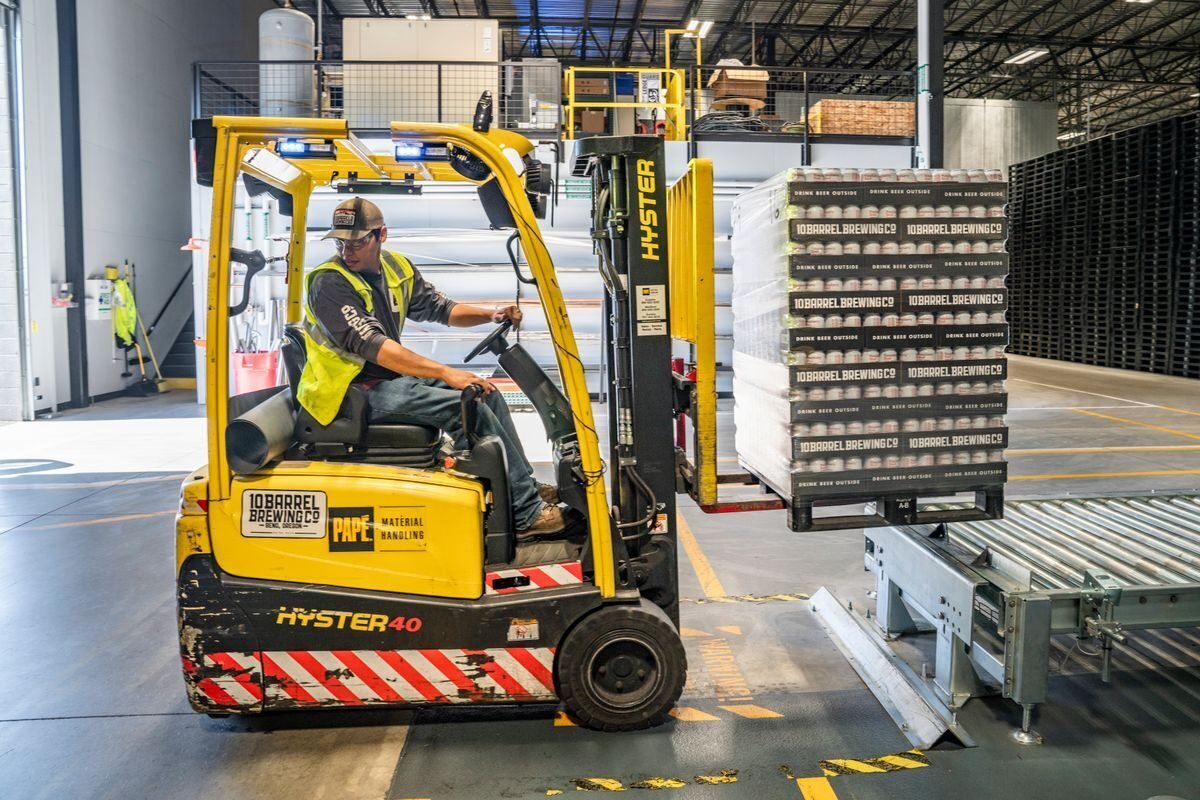
Arrival-end logistics in Zagreb
Three local realities shape the installation schedule. The first is building access. A modern block in the southern business parks has a goods lift and a bay; an older building in the centre has a passenger lift rated for four people and a courtyard entrance under an archway that a 7.5-tonne truck will not clear. In the second case the container is stripped at a warehouse on the edge of the city and the office is delivered in van loads, which adds a day and a handling stage but is entirely routine.
The second is the calendar. Since 2023 Croatia has restricted Sunday trading, and while an office move is not retail, building managers in mixed-use blocks apply the same quiet rules; moves into central buildings are weekday or Saturday work. Public holidays cluster awkwardly — 1 May, 30 May, Corpus Christi and 22 June in early summer; 5 and 15 August in the holiday month; 1 and 18 November in autumn — and an installation that straddles one loses a day of contractor availability.
The third is storage. Because the sea and air legs land at different times, a short stint in a Zagreb-area warehouse between container release and the fit-out date is normal, and cheaper than trying to hit a single day with a thirty-day sea transit. We hold the furniture for the week or two the fit-out contractor needs and deliver it floor by floor.
A realistic corporate timeline
| Weeks before opening | Milestone |
|---|---|
| 12 to 14 | Survey of the India office; Zagreb floor plan and building access confirmed; asset register agreed with finance |
| 10 to 11 | Shipping bill and Croatian import set prepared from the same inventory; EORI verified; container booked |
| 8 to 9 | India office decommissioned and packed; IT imaged and inventoried; container gated in at Nhava Sheva or Mundra |
| 3 to 4 | Vessel at Rijeka or Koper; pre-arrival declaration lodged; release; furniture to the Zagreb holding warehouse |
| 1 to 2 | Air shipment of IT arrives at Zagreb; fit-out complete; furniture installed floor by floor; systems recommissioned and signed off |
| 0 | Team arrives to a working office |
Compressing that to eight weeks is possible with air for the whole shipment and a building that is ready; compressing it to four is not, and we would rather say that in the first meeting than in the last.
Common questions about this move
Anything specific to your situation? A specialist for this corridor is happy to help.
Contact usHow long does a move to Croatia take?
Transit time depends on the freight mode and the volume. Your coordinator gives you a realistic window when quoting — sea freight is slower and more economical, air freight is faster for time-sensitive moves.
Do you handle customs at both ends?
Yes. Export and import documentation is prepared and submitted on your behalf, and clearance is coordinated at both origin and destination.
Is my shipment insured in transit?
Transit insurance is available on every corridor. Your coordinator explains the cover options when quoting so you can choose what suits the shipment.
How far ahead should I book?
Two to four weeks is comfortable for most international moves, but we regularly handle urgent relocations. The earlier you reach out, the more flexibility you have on dates and freight space.
Will I have one point of contact?
Always — a dedicated coordinator owns your move from first quote to final delivery, including the customs and freight handovers in between.