
Household & Personal Moves to Canada
Moving your household from India to Canada — packed at your Indian home, exported through the right gateway, declared as settler’s effects and delivered to your Canadian address.
An India–Canada household move unfolds over a longer arc than most. By the time a family in Bengaluru or Hyderabad has their permanent residency approved, packed their home, cleared Indian customs, waited through a multi-week ocean transit, cleared Canadian customs and received delivery at a new address in Brampton or Calgary, several months have passed. Seemleius International household and personal relocation on this corridor is designed to make that arc manageable — planned clearly, with one coordinator accountable for every stage, and the India-specific export steps handled without putting the administrative burden back on you.
The India export side in detail
Moving household goods out of India is not as simple as handing boxes to a shipper. Indian CBIC customs requires a shipping bill to be filed on ICEGATE for any export, including personal effects. The inventory must be prepared to a standard that satisfies the customs officer at the port of departure, with an AD code registered against the port and FEMA declarations where applicable. In some cases, the shipper’s passport, visa documents and emigration clearance are part of the supporting file. For families moving on a PR or Express Entry pathway, the documentation is typically straightforward once assembled correctly — but it must be assembled correctly before the goods go to the port.
We prepare all of this. Our process begins with building the inventory at your home during the survey, and the export documentation is ready before any carton is sealed.
Sea freight departure cities
Your origin in India determines the sea gateway. Nhava Sheva (JNPT), near Mumbai, serves families moving from Mumbai, Pune, Nashik and the wider Maharashtra region. Mundra in Gujarat serves Ahmedabad, Vadodara and the surrounding area. Chennai Port serves the south — Tamil Nadu, Andhra Pradesh, Bengaluru and parts of Karnataka route through here efficiently. Cochin serves Kerala, including the large migrant community from Kochi, Thrissur, Kozhikode and beyond. We route from your actual city, not a single national departure point.
Where Indian families settle in Canada
The Indo-Canadian community has clear geographic clusters, and Seemleius International coordinators know the delivery context for each. The Greater Toronto Area — Brampton, Mississauga, Scarborough and Markham — is the single largest destination. Greater Vancouver, particularly Surrey, Burnaby and Richmond, comes next. Calgary’s northeast (Saddleridge, Martindale, Taradale) is fast-growing. Edmonton, Winnipeg, Ottawa and Montreal each have established South Asian neighbourhoods. Each address carries its own delivery realities — condo elevator bookings in downtown Toronto, narrow lane access in older Brampton subdivisions, winter-route restrictions in Calgary — and we plan for them up front.
Settling in: SIN, health card, schools
Within days of arrival in Canada, your family will apply for Social Insurance Numbers at a Service Canada office, enrol with the provincial health authority (the OHIP three-month wait in Ontario, MSP in British Columbia and RAMQ in Quebec; Alberta Health Care is immediate), and start school enrolments. Our delivery scheduling is built around those Service Canada and school-enrolment appointments, so essential boxes are unpacked first. For children moving from CBSE, ICSE or state-board schools to the Canadian curriculum, we sequence school-supply and uniform cartons for early access.
What we move
- Furniture — Indian teak, rosewood and upholstered pieces packed for a long sea transit and Canada’s climate
- Electronics and appliances — with voltage compatibility noted for Canada’s 120V / 60Hz standard (most Indian 230V appliances will need step-down transformers or replacement)
- Fragile items, artwork, religious objects (mandir, idols, framed scriptures) and heirlooms — packed and crated individually
- Clothing for Indian summers and Canadian winters — the volume often surprises people in both directions
- Kitchen equipment, pressure cookers, masala dabbas and pantry goods (subject to CFIA food import rules) and everyday household items
The Canadian goods-to-follow declaration
Canada’s duty-free import framework for settler’s effects or goods-to-follow is genuinely favourable for new permanent residents — but it is documentation-intensive. CBSA requires a BSF186 Personal Effects Accounting Document with every item described, valued in Canadian dollars (from your INR purchase price), and dated. The list is reviewed through the CARM client portal; vague entries like “miscellaneous household goods” invite scrutiny. Our coordinator prepares the declaration with you before departure, item by item, so it is accurate and complete when it lands at the Canadian border.
FCL for large households
A full 20’ or 40’ container for your home — the most cost-effective option for a full family move from India.
LCL for smaller volumes
Share a container and pay for the space you use — right for one or two-bedroom households.
Air freight for priority items
Get your essentials in Canada before the sea shipment arrives — direct from BOM, DEL, BLR, MAA or COK.
Port-to-door delivery
Onward trucking from Halifax, Montreal or Vancouver to your actual Canadian address, arranged as part of the move.
How your household move to Canada runs
- Survey and plan. We visit your Indian home (or conduct a video survey), assess volume and contents, and return a quote with sea and air options and an honest transit estimate to your Canadian destination.
- Export documentation. The shipping bill on ICEGATE, AD code, inventory and customs declaration are prepared and verified before packing begins.
- Packing and dispatch. Our crew packs to export standard at your Indian address and dispatches through the appropriate gateway — Nhava Sheva, Mundra, Chennai or Cochin.
- Canadian clearance and delivery. We prepare and submit the BSF186 goods-to-follow declaration, manage CBSA clearance via CARM, and coordinate inland trucking to your Canadian door.
The sea transit from India to Canada is substantial — planning early gives you the most options. Request a quote and we will build a timeline around your Canadian arrival date.
Paperwork at both borders, in plain terms
Household and personal moves from India to Canada succeed or stall on two documents, one at each end. On the Indian side it is the shipping bill — the formal export declaration filed on ICEGATE that turns your cartons into a lawful export, resting entirely on the quality of the inventory beneath it. That is why our surveyors build the list room by room at your home instead of reconstructing it from memory at the port. On the Canadian side it is the accounting of your effects: the BSF186 form, with its goods-to-follow annex — the BSF186A — covering everything still on the water when you first land. The border officer stamps the list at your first entry, and that stamped copy is what the container clears against weeks later. CBSA’s own settlers’ guide, publication BSF5111, walks through the same list-based system in plain language and is worth reading on the flight over.
Three habits keep the Canadian side painless. Describe items specifically — a teak dining table with six chairs clears, while an entry reading assorted furniture invites questions. Value everything in Canadian dollars, converted honestly from what you paid in rupees. Keep the goods-to-follow list final before you fly, because possessions added afterwards fall outside the settler provision that makes owned-and-used goods duty-free. Gold jewellery deserves its own sentence: photograph it, list it with a jeweller’s valuation, and carry it in your hand luggage rather than the container. And note what the provision never covered — alcohol and tobacco pay duty regardless, while foodstuffs answer to CFIA rules, under which commercially packed spices generally travel well and fresh or homemade foods do not.
Keep a thin file of your own as well. Passports, the stamped goods-to-follow copy, the insurance certificate and the packing inventory travel in hand luggage — never in the container — because every document the shipment needs at the Canadian end is useless sealed inside the shipment itself.
The move, month by month
| Month | What happens |
|---|---|
| Month one | Survey at your Indian home, quote and booking; the export file opens — inventory, ICEGATE shipping bill, AD code. |
| Month two | Packing over two to three days, container loading, and sailing from Nhava Sheva, Mundra, Chennai or Cochin. Most families fly during this window. |
| Month three | Ocean transit of 30 to 40 days while you settle into temporary accommodation and present the goods-to-follow list at the border. |
| Month four | Discharge at Vancouver, Prince Rupert or Montreal, CBSA clearance against the stamped list, the rail or truck run inland, then delivery and unpacking. |
Some moves run a month quicker and some a month longer — an address near Montreal trims the inland leg to almost nothing, while a Prairie delivery stretches it. The value of planning it as four months is that nothing in the schedule depends on luck.

Packing for five weeks at sea
A container crossing from Nhava Sheva to Vancouver spends more than a month being lifted, stacked, rolled and vibrated — through the heat of the Arabian Sea, then the swell of the North Pacific — and the packing standard has to assume all of it. Export wrapping on this corridor means layered paper and bubble on furniture faces, corner protection along every hardwood edge, double-walled cartons underneath anything stacked, and custom crates around marble, glass and stone inlay: the categories that arrive damaged whenever a domestic packing standard gets used for an ocean job. Appliances are emptied, defrosted and dried days beforehand, because a refrigerator sealed damp in Mumbai opens mouldy in Brampton. And a few things must not travel at all — gas cylinders, aerosols, paints and solvents are prohibited from the box, and we strike them from the inventory at the survey rather than have a container held over them at either port.
Loading order is the quiet skill. The crew builds the load so weight sits low and nothing migrates in a seaway, photographs the load face as it grows, and seals the doors with a numbered bolt seal recorded on the paperwork — the same number the Canadian crew reads out before cutting it, which is how you know the doors stayed shut for the entire journey.
What a Canadian winter does to delivery day
If your container lands between December and March, delivery still happens — Canadians move house in February all the time — but it happens differently. Crews clear snow before ramps go down. Condo corporations in Toronto and Vancouver hold service-elevator bookings that a storm can shuffle. A Calgary cul-de-sac may need the truck positioned somewhere the summer street view never suggested. Your furniture notices the season too: teak and rosewood arriving from Kerala humidity into a centrally heated Ontario house will acclimatise, and the sensible unpacking order lets solid-wood pieces stand in the home for a few days before anything is refinished, joined or wall-mounted. Winter deliveries in our diary carry an extra buffer day as standard, and the packing done months earlier in India anticipates the humidity swing — which costs nothing and prevents the one category of complaint this corridor genuinely produces. There is a compensation, too: Canadian moving demand collapses after September, so a family able to take winter delivery often finds crews more available and dates more flexible than the summer arrivals ever see.
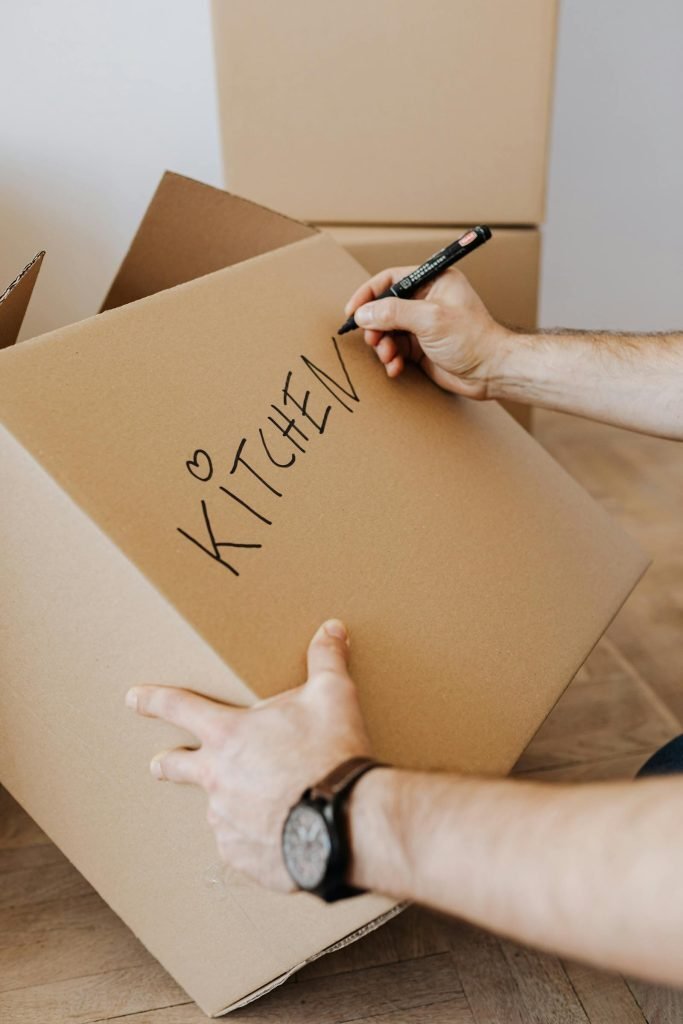
Three questions before you pack
Should the whole house go, or should we sell some of it?
Test each large item three ways: replacement cost in Canada, its share of the freight, and what it means to you. Solid-wood furniture, kitchen equipment and anything with a story usually earn their place. Ageing 230-volt appliances usually do not — Canada’s 120-volt supply strands them behind transformers for the rest of their lives, and Canadian retailers sell their replacements every day. The survey is where this arithmetic happens, item by item, with the numbers in front of you.
Can we ship religious and ceremonial items?
Yes, and they travel as ordinary household effects on the customs lists of both countries. A home mandir, idols, framed scriptures and puja articles are crated individually and described plainly on the inventory. The exception is anything containing ivory or restricted animal material, which falls under wildlife regulation at both ends and is best left out of the shipment altogether.
What if the new home is not ready when the container arrives?
Storage bridges the gap on either shore — a few weeks in our Indian warehouse before sailing, or clean racked storage on the Canadian side after clearance. Decide it early rather than at the terminal, because a container waiting at a port accrues charges that a planned storage booking simply avoids.
How is the shipment insured?
Against a declared-value inventory, item by item, on an all-risk marine basis covering the door-to-door journey rather than just the ocean leg. The valuation is agreed before packing — one more reason the survey inventory is built carefully, since it serves as your customs list and your insurance schedule at the same time.