
Families moving from India to Belgium regularly ask two questions that sit outside the household shipment: what happens to the dog or cat, and is it worth bringing the car. The answer to both is yes, under specific conditions — and both need planning that starts at the India end. Each becomes considerably harder when left to the final weeks. The pet timeline alone, governed by the EU’s rabies antibody requirement and its three-month waiting period for animals from non-listed third countries, can stretch to six months or more. The vehicle path runs through transfer-of-residence relief, an individual approval inspection for a non-EU vehicle, and Belgian registration before the car can lawfully use the roads. Seemleius coordinates pets and vehicles from India to Belgium as a managed part of your move.
Relocating your pet from India to Belgium
Belgium applies the EU’s pet movement rules for cats, dogs and ferrets. For an animal travelling from India — treated as a non-EU, non-listed third country for rabies purposes — the entry requirements are detailed and the order is fixed. The animal must first be implanted with an ISO 11784/11785-compliant microchip. The rabies vaccination must follow the microchip; any vaccination given before the chip was implanted is not valid for EU entry. A rabies antibody titration test must then be carried out on a blood sample taken at least 30 days after the vaccination, at an EU-approved laboratory, and must show an antibody level of at least 0.5 IU/ml. A waiting period of three months must elapse from the date that blood sample was drawn before the animal can enter the EU.
Once those steps are complete, an EU animal health certificate must be issued by an official veterinary authority in India within ten days of travel. The movement is pre-notified to the Belgian authorities through the EU’s electronic certification system, and the animal must enter through a designated travellers’ point of entry — in practice Brussels Airport for most India-origin pets — where documentary and identity checks are carried out on arrival. None of these steps can be reordered or compressed.
India adds its own export requirements. The Animal Quarantine and Certification Service issues the Indian export health certificate, and a No Objection Certificate from the Wildlife Crime Control Bureau is required for certain species and for any CITES-listed animal. The pet must be examined by an authorised veterinary officer and its microchip verified before the certificate is issued. These India-side steps run in parallel with the EU entry preparation, and both must be complete before the animal travels.
- India export health certificate via the Animal Quarantine and Certification Service, with Wildlife Crime Control Bureau No Objection Certificate coordination where applicable
- EU entry sequence — ISO microchip, rabies vaccination, antibody titre test at an EU-approved laboratory, the three-month wait, and the EU animal health certificate issued within ten days of travel
- Pre-notification through the EU electronic certification system and entry through Brussels Airport as the travellers’ point of entry
- Pet-appropriate air travel from BOM or DEL into Brussels on carriers with established live-animal handling, using climate-controlled hold transport
- Liaison with accredited Indian pet movers who understand both the Indian export side and EU animal welfare standards
Shipping a vehicle from India to Belgium
Moving a car or motorcycle from India to Belgium involves Indian export documentation — the registration certificate, a No Objection Certificate from the RTO, AD code and the ICEGATE shipping bill for the vehicle — sea freight from Nhava Sheva or Mundra to Zeebrugge or Antwerp, and a Belgian process that, for a non-EU vehicle, centres on an individual vehicle approval. A car built to Indian specification does not automatically hold EU type approval, so it must pass an individual technical inspection that assesses whether it meets EU and Belgian requirements — covering lighting, emissions, brakes, glazing, mirrors and structural items. Modifications are often needed before approval is granted, and the inspection outcome determines whether the vehicle can be registered at all.
On the customs side, transfer-of-residence relief is the principal route to avoid the EU import duty and 21% BTW/TVA that otherwise apply to a non-EU vehicle import. It is available where the vehicle has genuinely been owned and used at the India address for a qualifying period before the move, as part of a genuine transfer of normal residence, and is generally subject to a restriction on selling or transferring the vehicle for a period after import. Once the vehicle has passed inspection and any required conformity steps, it is registered with the Belgian vehicle registration authority, road tax is set up, and Belgian plates and insurance are arranged. Belgian cities including Brussels, Antwerp and Ghent operate low-emission zones, so a vehicle’s emissions class also affects where it may be driven.
- India-side documentation: registration certificate, RTO No Objection Certificate, AD code, ICEGATE shipping bill and export customs clearance for the vehicle
- Sea freight from Nhava Sheva or Mundra into Zeebrugge — the principal Belgian vehicle and roll-on roll-off gateway — or Antwerp, by container or RoRo depending on the vehicle and your preference
- Transfer-of-residence relief application to Belgian customs, where eligibility is supported by qualifying ownership and use at the India address
- Individual vehicle approval inspection scheduling and modification advice where the vehicle’s Indian specification does not directly map to EU requirements
- Belgian registration, road tax set-up, plates and the low-emission-zone position for Brussels, Antwerp and Ghent
- Delivery to your Belgian address, to a bonded storage facility, or to an inspection point
How the planning works
- Tell us what is moving. Pet details — species, breed, size, microchip and vaccination status — and / or vehicle details — make, model, year, current registration and specification — along with your anticipated departure from India.
- Map both sides. We lay out the India export requirements and the EU and Belgian entry requirements for each, with all fixed waiting periods, titre-test lead times, transfer-of-residence eligibility windows and inspection scheduling identified.
- Coordinate the journeys. Pet air travel and vehicle freight via Zeebrugge are booked and timed to align with your household shipment and your Belgium arrival date.
- Keep you informed. Your coordinator provides updates on both the pet and the vehicle through transit, pre-notification, customs clearance and inspection scheduling — so you always know where they are.
India’s pet export requirements and the EU’s pet entry rules together create a timeline that is often longer than families expect — six months or more in most cases, because of the three-month rabies titre wait. The vehicle path is shorter on the calendar but heavier on documentation. Start both conversations early, and see our overview of moving from India to Belgium for how they fit alongside the wider move. Get in touch as soon as you have a Belgium move in view and we will map the full timeline from the India end.
The pet calendar, counted backwards from the flight
The EU sequence for a dog or cat from India is fixed in order and in minimum intervals, so the only sensible way to plan it is from the flight date backwards.
- Day of travel. EU animal health certificate issued within the previous ten days by the Animal Quarantine and Certification Service officer; Indian export health certificate in hand; crate, water and documents checked at BOM or DEL.
- Three months before travel, at the latest. The blood sample for the rabies antibody test must have been drawn by this date; the three-month wait runs from the sampling date, not from the result.
- At least thirty days before that sample. The rabies vaccination, given after the microchip was implanted and read. A booster given on time keeps an existing titre valid; a lapsed schedule restarts the clock.
- Before the vaccination. An ISO 11784/11785 microchip. A chip fitted after the vaccination invalidates it for EU purposes, however recent the jab.
- Add laboratory time. The sample goes to an EU-approved laboratory — for India-origin animals that usually means a courier to a lab in Europe or an approved lab elsewhere — and results take weeks, not days.
Put together, four and a half months is the theoretical minimum and six is the realistic one, which is why a family with a Belgium move in the autumn should have the vet appointment in the spring. Belgium adds a rule of its own once the animal lands: dogs must be registered in the national DogID database by a Belgian vet within days of arrival, and the three regions run cat registration too. That is a matter between the owner and the vet, and the vet will do it at the first visit.
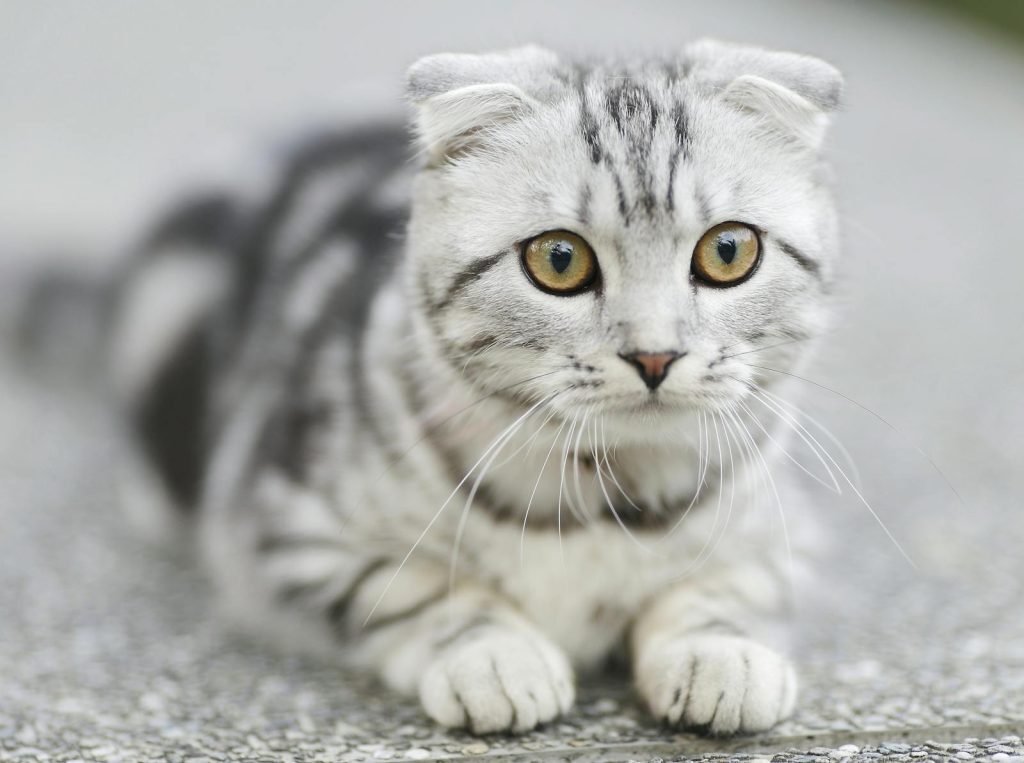
Flying an animal out of India in practice
There is no direct scheduled service between India and Brussels on which a pet can be booked as a matter of routine, so India-origin animals fly one-stop — through Frankfurt, Doha, Dubai or Istanbul — on carriers whose live-animal handling is established and whose hub has a proper animal transit facility. The crate must meet IATA container requirements: rigid, ventilated on three sides, large enough for the animal to stand, turn and lie down, with a water container that can be filled from outside. Airlines refuse a crate that is too small on the day, and that is the single most common reason a pet misses its flight. Brachycephalic breeds — pugs, bulldogs, Persians and the like — are refused outright by many carriers or accepted only in cooler months.
Indian summer is the other constraint. From April into June, carriers apply heat embargoes at Mumbai and Delhi when apron temperatures are high, and animals either travel on early-morning departures or not at all. A pet that flies more than five days apart from its owner is treated by the EU as a commercial movement rather than as a pet travelling with its family: it must then arrive at a border control post, pre-notified in the EU’s TRACES system, rather than as accompanied baggage at Brussels Airport’s travellers’ point of entry, and the paperwork and the landing arrangements change. We plan the flights so the family and the animal travel within that window wherever it can be done.
The vehicle: Zeebrugge, the Belgian inspection and what registration really involves
A car from India reaches Belgium in one of two ways. Ro-ro car carriers load at Mundra, Pipavav and Chennai’s Kamarajar port for Europe because India exports new cars from those terminals, and a used private vehicle can sometimes be placed on those sailings into Zeebrugge, where the car terminals are among the largest in Europe. Where a carrier will not take a used private car, the vehicle travels in a twenty-foot container from Nhava Sheva or Mundra into Antwerp, lashed and blocked, which is more expensive and more secure. Either way the vehicle needs its own ICEGATE shipping bill, the RTO No Objection Certificate and a clean export declaration; it cannot ride on the household inventory.
Customs is the first Belgian hurdle and the transfer-of-residence relief clears it, with the same tests as for household goods: the owner has lived outside the EU for at least twelve months, has possessed and used the car in India for at least six months before the move, imports it within twelve months of taking up residence and does not sell it for twelve months after. The six-month test is on the car; there is no twelve-month ownership rule, and a car bought nine months before departure qualifies. Once cleared, customs issues the clearance record — the vignette 705 — without which no registration application will be looked at.
What follows is the part that Indian owners find longest. An Indian-market car has no EU certificate of conformity, so it goes to individual approval with the regional authority — Flanders, Wallonia and Brussels each run their own — and then to a technical inspection station. Right-hand-drive cars can be registered in Belgium, but the headlamps must be set for driving on the right and the mirrors checked, and Indian emissions certification is not accepted as Euro-standard equivalence on paper, so the inspection tests what it tests. Registration with the DIV produces the plate; the regional registration tax, the BIV or TMC, is charged once, and the annual road tax follows. Then there are the low-emission zones in Brussels, Antwerp and Ghent, which admit cars by Euro standard and age, and which can exclude an older Indian car from the very city its owner has moved to. All of this is the owner’s business with the Belgian authorities; we ship the car, clear it and deliver it to the inspection station or the home, and we say early when a particular car is not worth the process.

Questions owners ask
Is it worth shipping a car to Belgium at all?
For a recent, well-specified car with sentimental or practical value, sometimes. For a mid-range hatchback, the freight, the inspection, any modifications and the regional tax together approach the price of an equivalent used car in Belgium, and the low-emission zones may then keep it out of the city. We would rather say so at the quote than at the inspection.
Does the pet have to be quarantined in Belgium?
No, provided the sequence above was followed and the titre result is in the file. An animal arriving without a valid titre and waiting period faces refusal, return or quarantine at the owner’s cost, which is the whole reason the calendar is counted backwards.
Can a two-wheeler go in the household container?
A motorcycle can share a container with the household, but it must be declared as a vehicle with its own export documents, drained of fuel and with the battery disconnected, and it will go through the same Belgian approval and registration process as a car.