
A household move from India to Belgium is almost always tied to a date that will not move: an arrival date set by residence documentation, an employer’s reporting date, a school term, or the window within which a newly arrived family must report to the local commune or gemeente. The move has to be built around that fixed point, working backwards from the Belgian delivery to the India packing date. Sea transit from Nhava Sheva to Antwerp typically runs around 22 to 30 days; Belgian customs processing and onward road delivery add further time. Getting the planning right at the India end is what keeps the Belgian arrival on schedule — and what protects the transfer-of-residence relief that exempts used personal effects from import duty and VAT when correctly claimed for a genuine residence move into the EU.
Seemleius household and personal moving service from India to Belgium coordinates both ends: the ICEGATE shipping bill, export clearance and packing in India, and the EU import declaration, transfer-of-residence relief and final delivery in Belgium. One coordinator holds the thread from the first survey in Mumbai or Bengaluru to the last piece of furniture placed in a flat in Brussels’ Etterbeek or Ixelles, an Antwerp townhouse, or a family home in Ghent or Leuven.
The India export side
Personal effects and household goods exported from India require a shipping bill filed electronically on ICEGATE, the Indian Customs export declaration system. The goods must be inventoried, valued and described accurately; the shipping bill must agree with what is actually in the container; and the AD code of the originating port must be registered against the exporter or shipper of record. We prepare all of this as a standard part of the move, never as an afterthought. Families who have moved before, and been handed a stack of export forms to complete themselves, tend to notice the difference.
For families with financial assets and investments in India, FEMA — the Foreign Exchange Management Act — is a relevant background consideration when emigrating, particularly around resident-to-non-resident account reclassification, NRO and NRE account structures, and any pending GST refund or LUT position for those leaving a business behind. FEMA compliance itself is a matter for your chartered accountant, but we can point you toward the right questions to raise before the move is finalised, and we will flag where the shipping bill data interacts with downstream tax positions so that nothing is filed in haste.
What travels in a household shipment from India
- Furniture — sofas, beds, wardrobes and dining sets, dismantled for export and reassembled at the Belgian address; worth sizing against typical Belgian apartment dimensions, which often differ from Indian rooms, and against the narrow staircases common in older Brussels and Antwerp townhouses
- Kitchen equipment — appliances, cookware and utensils, packed carefully for sea transit, with a note that 220V Indian appliances generally run on Belgium’s 230V grid, though plug adaptors will be needed for the local socket type
- Religious and cultural items — puja items, artwork and textiles, handled with awareness of what they represent
- Books, personal libraries and study materials — important for the students and academics who move on this corridor
- Electronics — laptops, cameras and entertainment systems, packed against humidity and handling across the sea route
- Clothing and personal effects for the whole family, including for Belgium’s cooler, wetter climate
Freight options from India to Belgium
Sea freight from Nhava Sheva
The primary gateway for Mumbai, Pune, Ahmedabad and western India moves — consolidated groupage for smaller households, full container for larger volumes, into Antwerp-Bruges in around 22 to 30 days.
Sea freight from Chennai or Cochin
The natural gateway for Bengaluru, Hyderabad, Chennai and South India moves, with good connectivity to Antwerp and onward road delivery across Belgium.
Air freight from BOM, DEL or MAA
Direct and one-stop services into Brussels Airport for urgent or time-critical shipments, when the sea timeline will not fit around a job start date.
Belgian delivery anywhere
Onward road delivery from Antwerp or Brussels to any address in the country — Brussels, Antwerp, Ghent, Bruges, Leuven or beyond, including the regional cities of Wallonia.
Commune registration and the first weeks in Belgium
Belgium runs on local administration, and the first weeks after arrival set the tone. A newly arrived family must report to the commune or gemeente of the place they will live, within the period that applies to their situation, and the local police then carry out a verification visit to confirm the family is genuinely resident at the declared address before registration is finalised. That registration enters the family in the national register and produces the residence cards and the national register number that everything else — banking, health insurance, the tax file — depends on. Health cover in Belgium runs through a mutualité or ziekenfonds, the health insurance funds with which residents enrol once registered. Because the commune you report to depends on the region, the language of the process will be Dutch, French or both. We brief families on this sequence in writing so the first month in Belgium holds one less surprise.
Schools, neighbourhoods and finding your way in
For Indian families with school-age children, schooling is a substantial early decision, and it is shaped by Belgium’s language communities: education is organised separately in the Flemish, French and German-speaking systems, so the language of instruction depends on the region and the school chosen. Many internationally mobile Indian families opt for an international or English-language school — the well-known international schools around Brussels serve the large institutional and expatriate community — particularly where a return to India remains possible or English-medium continuity matters. Indian community life is most visible in and around Antwerp, anchored by the diamond-district families and their long-established temples and businesses, and in the international neighbourhoods of Brussels such as Etterbeek, Ixelles and Woluwe, where Indian grocery shops, places of worship and community associations are well settled.
A note on Belgium’s customs expectations
Belgian customs is documentation-driven. A household shipment clears without difficulty when the inventory is accurate, the valuations are defensible, the import declaration agrees with the shipping bill, and the transfer-of-residence relief claim is supported by evidence that the goods were owned and used at the India address and that the family is genuinely transferring its normal residence. We achieve this by preparing the Indian shipping bill and the Belgian import declaration from the same verified inventory — so there is no gap between what India records as leaving and what Belgium sees arriving, and the relief claim stands up to scrutiny.
How the move runs
- Survey in India. We visit your home in Mumbai, Bengaluru, Delhi NCR, Hyderabad, Pune, Chennai or another city, assess the volume and contents, and return a detailed quote with realistic Belgium arrival timing.
- Prepare export documentation. Shipping bill filed on ICEGATE, AD code confirmed, packing list and Indian export paperwork prepared and filed before the shipment moves.
- Pack and ship. Our crew packs to export standard and the shipment departs from Nhava Sheva, Mundra, Chennai or Cochin on the confirmed route.
- Clear in Belgium and deliver. EU import clearance and transfer-of-residence relief managed with Belgian customs; road delivery arranged to your home, including unpacking and furniture placement, and a briefing on the commune-registration sequence ahead.
For the full picture of how this route works, see our overview of moving from India to Belgium. From a two-bedroom flat in Bengaluru to a five-bedroom family home in Pune, the process is the same and the care is identical. Request your quote and we will build the plan around your India departure date and your Belgium arrival date.
What ships well to Belgium, and what needs thought
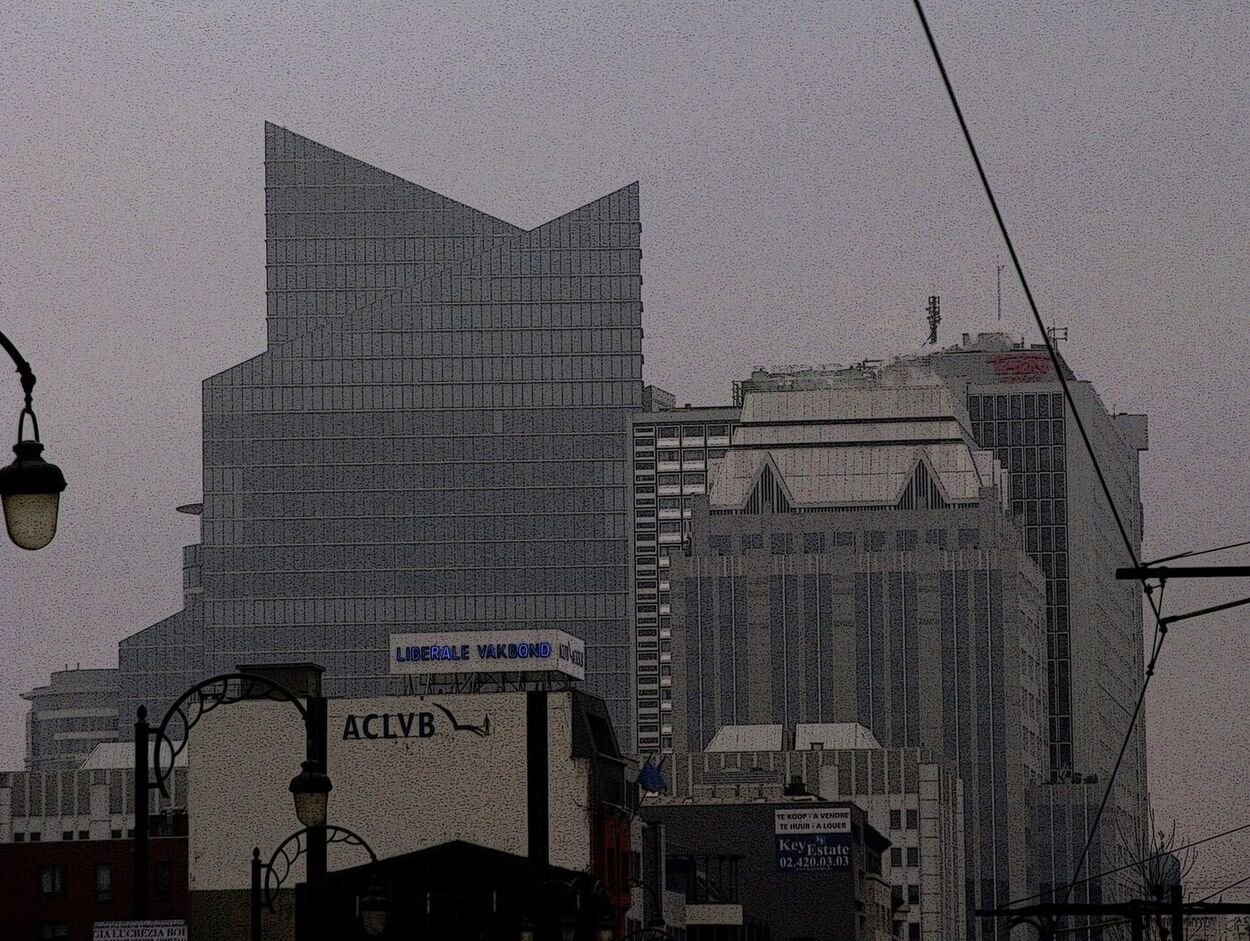
Belgian homes are built to different proportions from Indian ones, and the survey is the moment to be honest about it. The classic Brussels maison de maître or Antwerp herenhuis is tall and narrow: high ceilings, a staircase that turns twice between the front door and the bedrooms, and windows that are the way large furniture actually enters, by ladder-lift from the street. A king-size Indian bed frame in solid sheesham will go up a ladder-lift without trouble; a wardrobe that does not dismantle may not, and a sofa built as one piece needs measuring against the window opening rather than the door. Mattresses are the quiet problem. Belgian beds run 140, 160 or 180 centimetres by 200, and an Indian mattress cut to a 72-by-78-inch frame will not fit a Belgian bed bought later; families who ship the mattress should ship the frame it belongs to.
Kitchen goods travel well and are worth bringing. Pressure cookers, tawas, kadhais and the mixer-grinder are hard to replace at Belgian prices, and the 230-volt supply suits Indian appliances with an adaptor for the Type E socket. Gas cylinders do not travel under any circumstances, and neither do the aerosols, matches and cleaning chemicals that turn up in the back of a cupboard on packing day; the crew removes them. Foodstuffs need a line drawn: dry spices, dals, rice, pickles in sealed jars and packaged snacks in household quantities are declared on the inventory and clear without fuss, while ghee, dairy, meat products and honey are products of animal origin that Belgium’s food safety agency, the FAVV/AFSCA, does not want in a personal consignment and should stay behind.
The pieces that need the most care are the ones that cannot be bought again. The mandir and its murtis are crated, not cartoned. Brass and copper are wrapped against the humidity of a month at sea and the condensation of an Antwerp winter. Sarees and silks go in acid-free tissue in wardrobe cartons. A harmonium or a tabla set travels in a custom crate with the skins slackened. Framed art and mirrors are corner-protected and travel upright in a dedicated crate. None of this is exotic to a crew that packs for export every week, but it is exactly the work that a general packer skips.
How long it takes, honestly
From the day a family decides to move to the day the last carton is unpacked in Belgium, a sea shipment takes eight weeks in a good case and ten in a normal one. The first fortnight is the survey, the quote and the booking; nothing physical happens, but the container space is secured and the inventory drafted. Packing is a day for a flat and two for a house. The Indian export clearance takes the working week that follows, and the container is at Nhava Sheva, Mundra, Chennai or Cochin before the vessel’s cut-off. Then the sea: twenty-two to thirty days to Antwerp on a direct or one-transhipment service, longer if carriers are routing round the Cape of Good Hope. Belgian customs takes three to seven working days once the container is discharged, with the declaration lodged before arrival to keep it at the short end. Delivery follows within a few days of release, subject to the ladder-lift and the street reservation being in place.
Air freight from BOM, DEL, BLR or MAA into Brussels runs ten to fourteen days door to door and is the answer for the essentials when the start date is fixed and the sea timeline is not. The pattern that works for most families is a few air cartons of clothes, documents, school things and the children’s comfort items landing the week they do, with the container three to four weeks behind.
The relief, stated plainly
Used household goods enter Belgium without duty or VAT under the EU’s transfer-of-residence relief, Council Regulation (EC) No 1186/2009. The tests that matter to a family are these: the family must have lived outside the EU for at least twelve continuous months; the goods must have been theirs, and in use, at the India address for at least six months before the move; the goods must arrive within twelve months of the family taking up residence in Belgium; and they cannot be sold or lent out for a year after clearance. The six-month test is on the goods and the twelve-month test is on the residence — the two are often confused, and confusing them costs families furniture they could have kept. Belgian customs will want the inventory, proof of the India residence such as a lease or employer’s letter, and proof that residence in Belgium is beginning, such as a Belgian lease or employer confirmation. This is a customs matter, and the whole of our involvement with it is customs.
Three questions families ask
Can we ship before we have a Belgian address?
Yes. The container can sail on the packing date, clear at Antwerp and wait in storage until the lease is signed. The relief claim is supported by the employer’s letter until the lease exists.
Is groupage safe for a small household, or is a full container better?
Groupage is the sensible choice below ten to twelve cubic metres; the goods travel in a shared container with other Antwerp-bound consignments and are deconsolidated after customs. A full container is worth it once the volume gets near twenty cubic metres, and it is cleared and delivered without the deconsolidation step.
What about the car and the dog?
Both are separate from the household shipment and both have their own timelines, the pet’s in particular. They are covered on the pets and vehicles page for this corridor.