
Moving to South Africa
India to South Africa is one of the shorter deep-sea corridors out of India and one of the oldest — Seemleius International manages the full move from your Indian city to Durban, Johannesburg or Cape Town, with the customs file handled at both ends.
- 20+ years moving households & cargo
- 184 countries destination corridors covered
- In-house customs clearance filed by our own team
- One coordinator from quote to delivery
South Africa sits roughly 7,000 kilometres west of India across the Indian Ocean — the southern tip of the African continent, reached most directly from Mumbai or Chennai on the trade lane that has run between the two regions for generations. The India–South Africa corridor is one of the most established in our network, and not by accident. The Indian-origin community in South Africa is the largest outside India itself, concentrated in Durban, Johannesburg and Cape Town, and the back-and-forth movement of families, businesses and goods between the two countries is a steady, well-trodden route rather than an exotic one.
Seemleius International runs the India–South Africa corridor for a regular and varied mix of clients: families relocating from Mumbai, Delhi, Bengaluru, Chennai or Ahmedabad to Durban’s Indian-heritage suburbs, to Johannesburg’s Sandton and northern belt, or to Cape Town; Indian corporates opening South African subsidiaries; mobility teams transferring employees to South African offices; exporters shipping commercial cargo to the SACU region; and households bringing pets and vehicles along with the rest of life. This page sets out how the corridor actually works from an India origin. From here, pick the audience guide that fits your move.
The transit and routing reality
Sea freight from Nhava Sheva (JNPT) to Durban runs around 10 to 18 days on most liner schedules — this is one of the shorter intercontinental routes from India and is a genuine advantage of this corridor. Mundra and Chennai offer similar transit windows, with Cochin and Kolkata adding a few days depending on the rotation. Cape Town is roughly 14 to 22 days from Indian west-coast ports and is the practical port of entry for the Western Cape. The voyage tracks the southern Indian Ocean trade route, which is comparatively settled in terms of insurance and routing. Air freight from BOM, DEL, BLR or MAA to Johannesburg (O.R. Tambo) is a direct eight-to-ten-hour flight, available daily on several carriers including direct services, and we use it for time-critical commercial consignments, advance household shipments and pet movements where the schedule demands it.
Where in South Africa you are headed
The destination drives the routing more than anything else on this corridor. Almost every sea shipment from India arrives at Durban or Cape Town, and the inland leg from the port determines time, cost and handling.
Durban & KwaZulu-Natal
The natural arrival point for India-origin shipments. Home to the largest concentration of Indian-origin South Africans — Phoenix, Chatsworth, Umhlanga — with a strong Gujarati and Tamil heritage community. Port-to-address delivery is the most direct on this corridor.
Johannesburg & Gauteng
The financial, technology and mining administration centre — Sandton, Rosebank, Bryanston, Fordsburg, Lenasia. Sea freight enters at Durban and travels around 600 kilometres on the N3 to the highveld. We plan the inland leg from the outset.
Cape Town & Western Cape
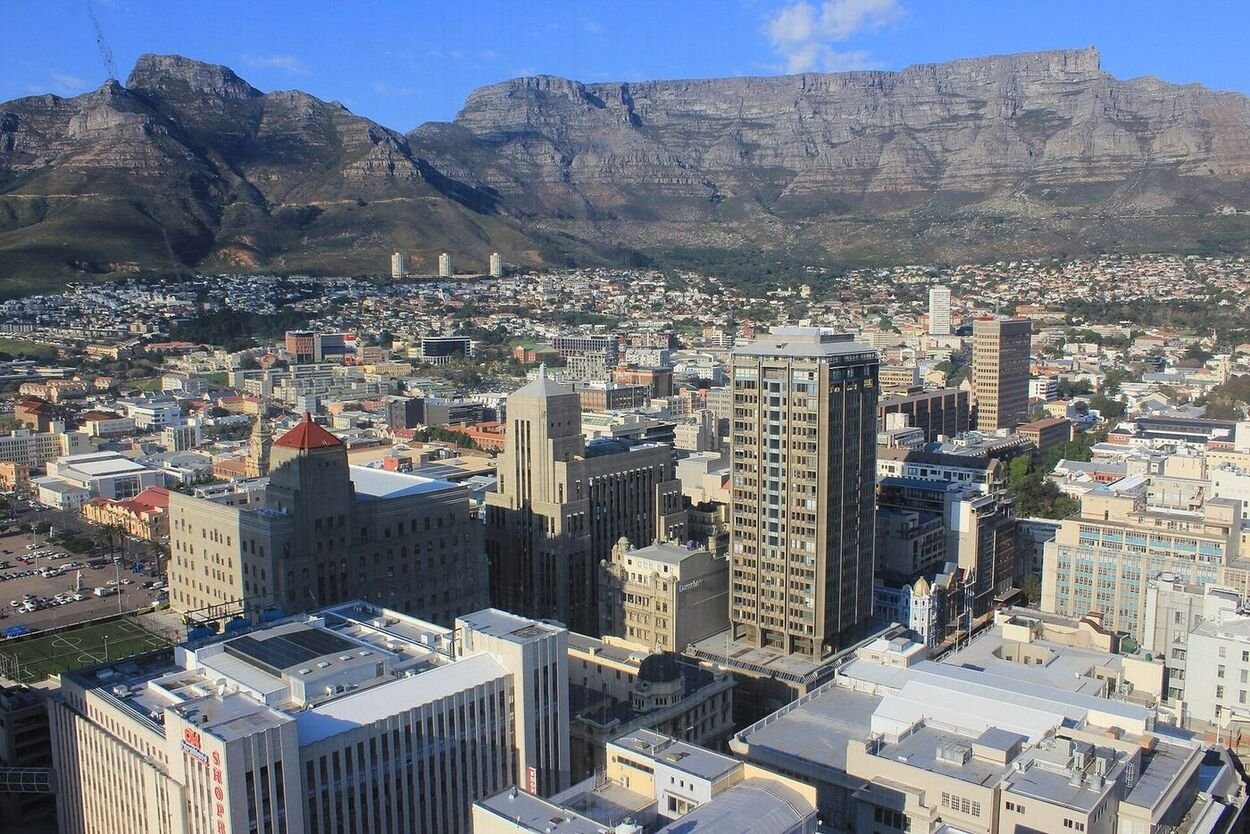
Legislative capital, lifestyle destination and growing tech hub. Sea freight from Indian ports routes via direct calls or transhipment; delivery to the Atlantic Seaboard, Southern Suburbs and the Winelands is direct from Cape Town Harbour.
Pretoria, Port Elizabeth & beyond
Onward transport from Durban or Cape Town is planned and quoted as part of the move from the outset — not bolted on after the quote is accepted.
South African customs and SARS
The South African Revenue Service (SARS) Customs handles all import clearance at Durban, Cape Town and the airports. For unaccompanied personal effects, the import declaration is filed on a DA 304 form, and accurate documentation — a detailed packing inventory, proof of prior ownership and evidence of residence change — determines how cleanly the clearance runs. South Africa applies a standard 15% VAT on imports above the relief threshold, and Returning Resident relief on used personal effects is available where the criteria are met (relevant for many Indian-origin South Africans returning home). Commercial cargo requires an Importer Code (IT number) from SARS, accurate HS classification and proper valuation. We prepare South African import documentation before the vessel sails from India, not after it arrives in Durban.
Indian export — the origin side
The India export side requires its own attention, and this is where local knowledge matters. Every export consignment needs a Shipping Bill filed on ICEGATE, an AD Code registered with the gateway port, and the correct FEMA documentation — Form A2 for any associated remittances. For household and personal effects, the export procedure is straightforward when handled correctly: a clean Shipping Bill, an itemised inventory and CBIC clearance at Nhava Sheva, Mundra, Chennai or Cochin. For commercial cargo, drawback or RoDTEP claims are filed at export and GST refunds processed in parallel. We complete the India side before the container leaves the port, so nothing is left hanging when the vessel sails for Durban.
How an India to South Africa move runs
- Survey and plan. We assess the volume at your Indian address or premises, confirm your South African destination, identify the inland haul if Gauteng-bound, and return a quote in INR that covers the full journey from start to finish.
- Document in advance. Indian export documentation — Shipping Bill, AD Code, FEMA Form A2, drawback or RoDTEP where applicable — and South African import documentation (DA 304 for personal effects, commercial documentation for cargo) prepared before loading. All-Risk marine insurance arranged for the voyage.
- Pack and dispatch. Our crew packs to export standard at your Indian home or premises and builds a full written inventory. The shipment departs Nhava Sheva, Mundra, Chennai or Cochin on the booked sailing.
- Clear and deliver in South Africa. SARS clearance managed at Durban or Cape Town; inland transport coordinated to Johannesburg, Pretoria or beyond if required; delivery confirmed at your South African address with a clean handover.
The corridor rewards early planning. Pick the audience guide that fits your situation below, or request a quote and an India-based coordinator will build the timeline from your origin city forward.
Durban sets the pace, for better and worse
Durban handles the bulk of the container traffic entering South Africa and it is the natural discharge point for anything sailing from Nhava Sheva, Mundra, Chennai or Cochin. It is also the part of this corridor where the honest answer is that schedules move. Berth waiting at Durban has been a persistent operational problem for several years — equipment availability, weather stoppages during the KwaZulu-Natal storm season and vessel bunching after a disrupted rotation all feed into it. In a bad stretch a vessel that arrives on its advertised day can sit at anchorage before it works cargo, and the queue then pushes every berthing window behind it along too.
What that means in practice is simple enough. The sailing date from India is a firm commitment; the discharge date at Durban is a forecast. We quote the transit as a range rather than a single number, we do not book a delivery crew in Johannesburg against an unconfirmed arrival, and we tell you when the vessel actually berths rather than when it was meant to. Families who fix a hard move-in date around an estimated arrival are the ones who end up paying for a hotel. Families who leave a week of slack at the South African end usually never notice the delay at all.
Cape Town has a character of its own — the south-easter that blows through the Western Cape summer regularly stops crane work for hours at a time — while Gqeberha and Ngqura on the Eastern Cape coast are quieter but see fewer direct calls from India. Where the destination is Gauteng, Durban remains the sensible entry point despite all of the above, because the road leg up the N3 is a known quantity and the alternative routings cost more than the delay they avoid.
The seasons run the other way round
South Africa’s calendar mirrors India’s, and this catches people out more often than the customs paperwork does. Leave Mumbai in the June monsoon and you land in a Highveld winter — dry, bright and genuinely cold at night in Johannesburg and Pretoria, where frost is normal and central heating is not. Arrive in December and you arrive in high summer, in the middle of the South African holiday shutdown.
That shutdown is worth planning around. From roughly the second week of December to the second week of January a large part of South African business closes: construction and fit-out trades almost entirely, many corporate offices, and a good deal of the transport sector. Clearing agents work reduced hours, terminals run holiday rosters, and residential estates often decline to authorise a move-in across the period. A container discharged at Durban on 18 December will not reach a Sandton address before the second week of January, whatever anyone promises.
At the Indian end the pressure points sit elsewhere. October and November are the busiest weeks of the year for household packing, because families move around Diwali and the school break. Ocean rates on the lane firm up ahead of Chinese New Year as capacity tightens across the whole Asian export market. And the monsoon affects road access and packing conditions in Mumbai, Kerala and coastal Maharashtra from June through September. The comfortable windows are February to April, and August to early October.
Where the money goes
The largest single variable on this corridor is volume, and the second is whether the destination is coastal or inland. Past those two, the quote is built from a short and fairly predictable list.
- Container size against real volume. The gap between a well-packed twenty-foot container and a half-empty forty-foot one is the biggest avoidable cost on this route. A proper survey settles it before anything is booked.
- Coastal against inland delivery. Durban and Umhlanga are a short drayage from the terminal. Johannesburg, Pretoria or Polokwane add close to 600 kilometres of road haul and a second handling.
- Access at both ends. A ground-floor house with truck access is one price. A fourth-floor Mumbai flat with a narrow stair, or a Cape Town property on a street a trailer cannot turn into, needs a shuttle vehicle and more crew hours.
- Assessment at SARS. Used household effects brought in by a person taking up residence attract relief where the stated conditions are met. Anything outside that relief is assessed on the customs value, and the 15% VAT is calculated on an uplifted figure rather than on the invoice alone.
- Terminal exposure at Durban. Free days at the terminal are finite. A clearance held up for one missing document turns into a daily storage charge fast, which is the practical reason the South African declaration is filed before the vessel sails rather than after it berths.
- Marine insurance. All-risk cover is priced off the declared replacement value of the consignment, so the valued inventory you sign off is doing real work rather than paperwork.
Questions people ask before they commit
How long does the whole move take, door to door?
Allow eight to ten weeks from the first survey to placement in the South African home for a coastal destination, and add a week for Gauteng. Roughly a fortnight of that is preparation and packing in India, the sea leg is the transit range for your gateway port, and the balance is SARS clearance, road transport and delivery. Anyone quoting four weeks door to door on this lane has not allowed for Durban.
Can I ship before I have somewhere to live in South Africa?
Yes, and plenty of people do. The consignment is cleared against your documentation rather than against a signed lease, and the goods can sit in commercial storage in Durban or Johannesburg until the address is confirmed. Storage costs money, so the usual advice is to time the sailing so the container lands a week or two after you do.
Should anything go by air?
Usually a small consignment does. A few cartons of clothes, work equipment, school materials and the things a family cannot do without for six weeks fly ahead on a direct service from Mumbai or Delhi to O.R. Tambo, and the rest goes by sea. It is planned, packed and inventoried as part of the same move file, by the same crew, on the same manifest as the sea consignment.
Is Durban always the right port?
For a Gauteng or KwaZulu-Natal destination, almost always. For the Western Cape, Cape Town is the better entry even where the sailing takes a few days longer, because it removes some 1,600 kilometres of road haul at the far end. For the Eastern Cape we look at both, and at what the Ngqura and Gqeberha schedules offer in the month you are moving.
Your move to South Africa, your way
Every move is different. Pick the guide that matches your situation for advice and pricing built around it.
Commercial Cargo & Freight to South Africa
Commercial cargo and freight from India to South Africa — intercontinental sea freight managed correctly from the Indian export end,…
Read the guideCorporate & Office Relocation to South Africa
Relocating an office or business operation from India to South Africa — Indian export documentation, intercontinental sea freight and inland…
Read the guideEmployee Relocation to South Africa
Employee relocation from India to South Africa, managed for HR and mobility teams — the intercontinental corridor planned correctly from…
Read the guideHousehold & Personal Moves to South Africa
Moving your home from India to South Africa — Indian export customs handled at source, intercontinental sea freight managed carefully,…
Read the guidePets & Vehicle Relocation to South Africa
Relocating pets and vehicles from India to South Africa — the veterinary sequence and the South African vehicle approval chain…
Read the guide